



Same Video, Different Game: How UGC Performs on TikTok vs. Reels
Same Video, Different Game: How UGC Performs on TikTok vs. Reels
The same UGC video performs differently on TikTok vs. Reels. Here's a breakdown of what works where — and how to adapt your content accordingly.
Published:

Read Time:

3 min

Written by:
Fawwaz
Trend Research and Copywriter
SAME VIDEO. DIFFERENT ALGORITHMS.
What succeeds on TikTok can fail on Instagram because each platform is designed to reward completely different behaviors.
SAME VIDEO. DIFFERENT ALGORITHMS.
What succeeds on TikTok can fail on Instagram because each platform is designed to reward completely different behaviors.
SAME VIDEO. DIFFERENT ALGORITHMS.
What succeeds on TikTok can fail on Instagram because each platform is designed to reward completely different behaviors.
If you are treating Tiktok and Instagram as interchangeable distribution channels, you are actively restricting your User-Generated Content (UGC) performance.
Here is the exact technical playbook on how UGC performs across TikTok and Instagram Reels, and the operational workflow required to optimize your assets for both.
Why Discovery Starts and Community Sustains Growth
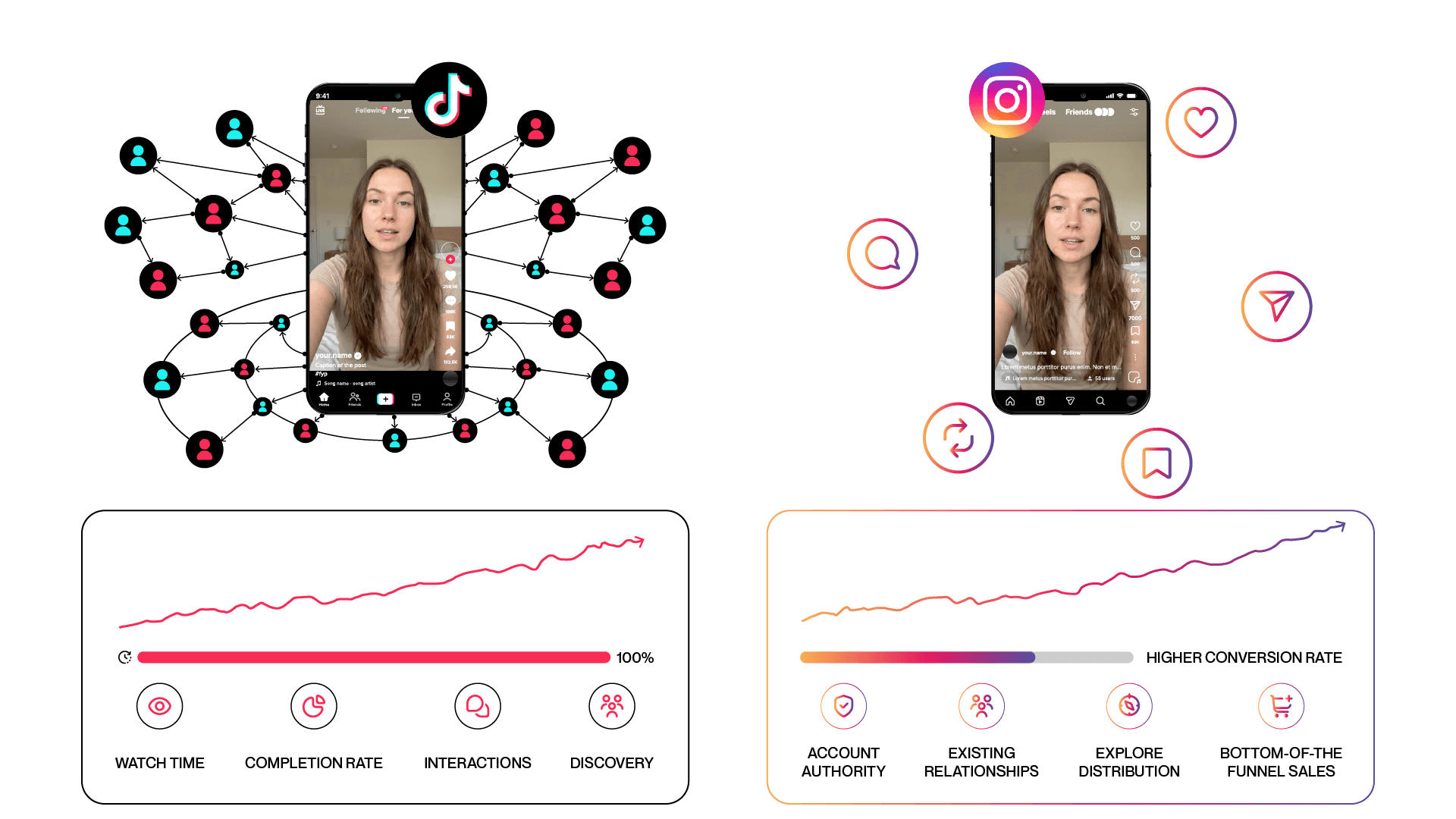
Before adjusting your export settings, you must understand how each platform judges your video.
TikTok (The Content Graph): TikTok tests every single video independently in small-audience batches, regardless of your follower count. The algorithm weighs watch time, completion rate, and user interactions heavily. Because the platform is built for discovery, TikTok is the superior channel for driving massive brand awareness and reaching entirely new demographics.
Instagram Reels (The Social Graph): Instagram heavily factors in account authority and existing relationships. While Reels do appear on the Explore page, a large portion of your initial distribution relies on how your current followers interact with the post. Instagram audiences generally convert at higher rates, making it the superior platform for bottom-of-the-funnel sales.
The Technical Divide: Safe Zones and Aesthetics
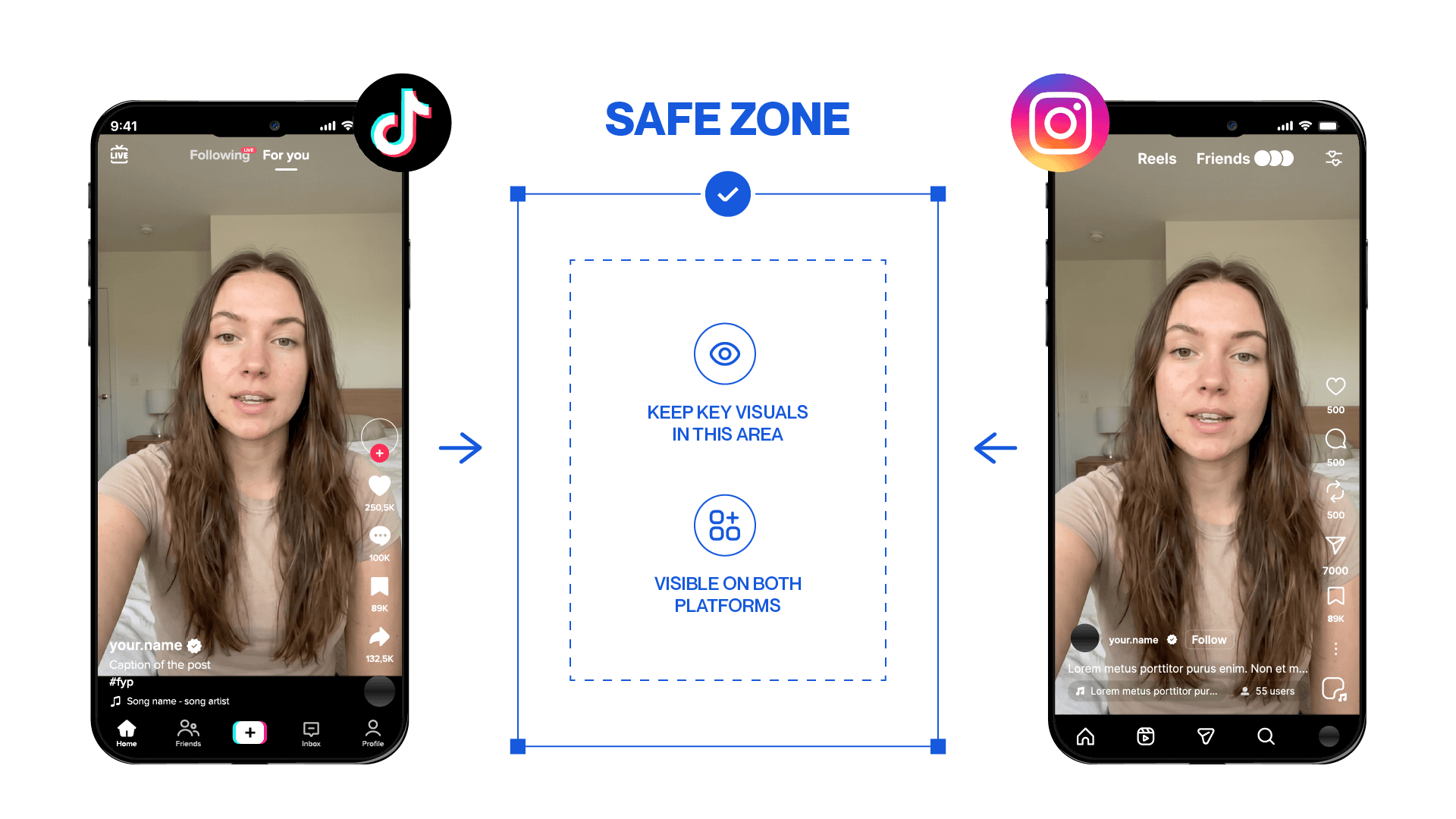
The baseline specifications for both platforms are identical: a 1080x1920 pixel, 9:16 vertical MP4. The critical differences lie in how the user interface interacts with your footage and the visual expectations of the audience.
The Safe Zone Collision: TikTok's user interface covers the right side of the screen with engagement buttons and the bottom with long caption bars. Instagram Reels covers the bottom heavily and introduces profile information near the top. If you place a Call-to-Action or subtitle near the edges of your video, one of these platforms will inevitably cover it up, instantly dropping your conversion rate.
Raw vs. Elevated Editing: TikTok audiences heavily prefer raw, native-looking content. Videos that look like standard user uploads significantly outperform polished studio commercials. Instagram audiences accept an elevated, aspirational aesthetic with clean lighting and brand cohesion.
Optimal Duration: While both platforms support long-form uploads, the retention sweet spot differs. For maximum engagement, TikTok videos perform best in the 15 to 60-second range. On Instagram Reels, the algorithm heavily favors shorter content, with the highest completion rates occurring in the 15 to 30-second window.
The Cross-Posting Playbook: Mirror Content Flawlessly
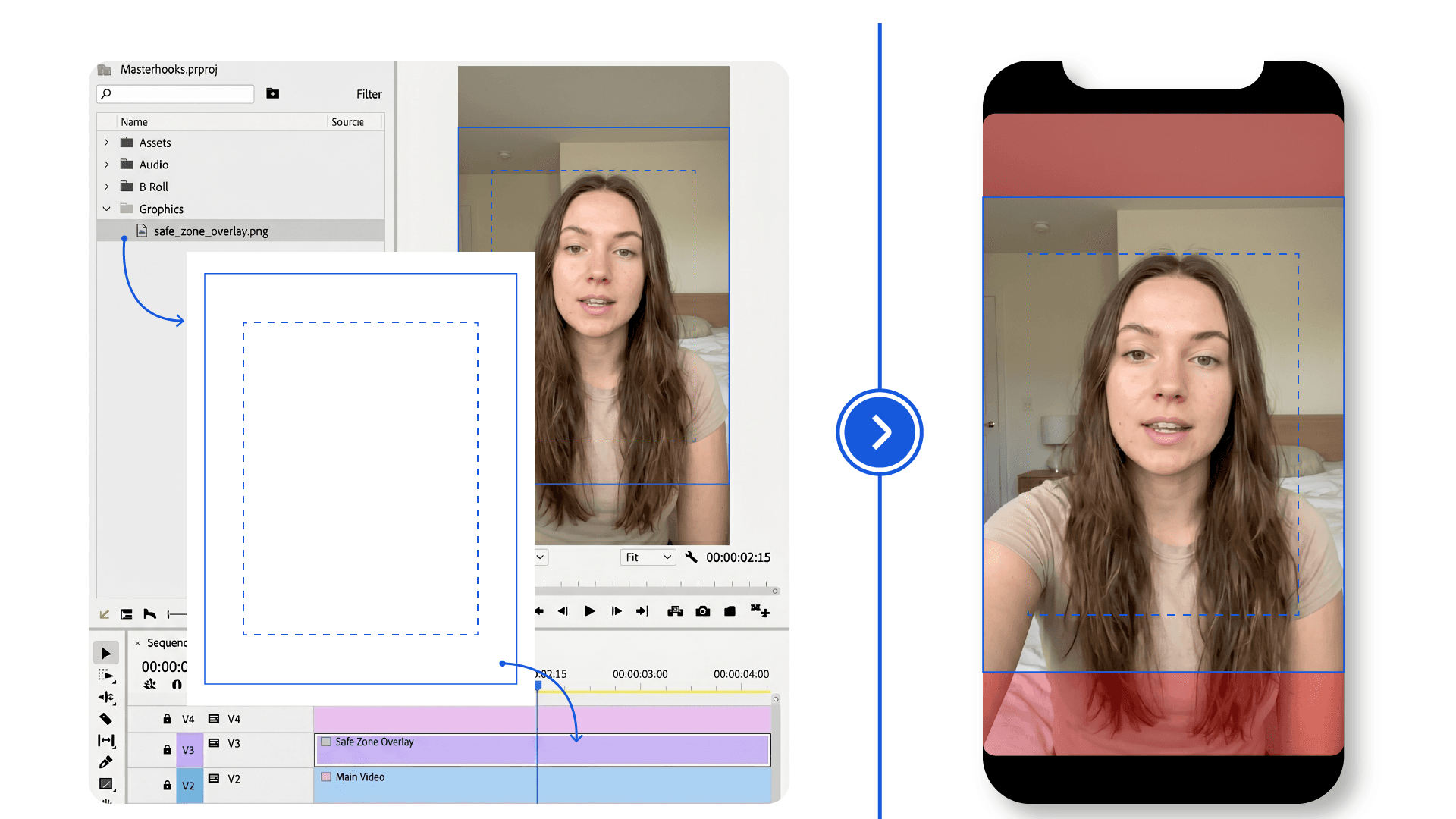
If your marketing budget requires you to repurpose the same UGC asset across both platforms, you must build a unified master file. Never download a watermarked video from one platform and upload it to the other.
Follow this strict mirroring workflow to ensure maximum delivery:
Edit a Central Master File: Export your raw video at 1080x1920 pixels without any platform-specific text baked in.
Strict Center Framing: Force all essential visual elements, faces, and text into the center 1080x1420 pixel box of your canvas. This guarantees your hook will remain visible regardless of which interface is layered on top.
Adapt the Audio and Text Natively: Upload the clean master file to each platform separately. Add your trending audio, captions, and text overlays using the native tools inside TikTok and Instagram. Native text integration signals to the algorithm that the content is original and built specifically for that app.
Pacing for the Lowest Common Denominator: Because modern retention spans require rapid pacing, edit your script to fit a strict 110-word limit. This guarantees the final cut stays punchy, eliminates bloated run-times, and fits perfectly within the high-performing 30-second window that both platforms favor.
Scale Your Omnichannel Strategy
Managing platform-specific formats, algorithms, and editing styles at scale can quickly overwhelm internal teams. Using the same content across every platform often leads to weaker performance and wasted spend.
Masterhooks solves this by creating platform-optimized UGC tailored for where it will be published. From creator sourcing to editing and safe-zone optimization, every asset is designed to maximize attention and performance.
Start optimizing your video distribution today

Start optimizing your video distribution today
If you are treating Tiktok and Instagram as interchangeable distribution channels, you are actively restricting your User-Generated Content (UGC) performance.
Here is the exact technical playbook on how UGC performs across TikTok and Instagram Reels, and the operational workflow required to optimize your assets for both.
Why Discovery Starts and Community Sustains Growth
Before adjusting your export settings, you must understand how each platform judges your video.
TikTok (The Content Graph): TikTok tests every single video independently in small-audience batches, regardless of your follower count. The algorithm weighs watch time, completion rate, and user interactions heavily. Because the platform is built for discovery, TikTok is the superior channel for driving massive brand awareness and reaching entirely new demographics.
Instagram Reels (The Social Graph): Instagram heavily factors in account authority and existing relationships. While Reels do appear on the Explore page, a large portion of your initial distribution relies on how your current followers interact with the post. Instagram audiences generally convert at higher rates, making it the superior platform for bottom-of-the-funnel sales.
The Technical Divide: Safe Zones and Aesthetics
The baseline specifications for both platforms are identical: a 1080x1920 pixel, 9:16 vertical MP4. The critical differences lie in how the user interface interacts with your footage and the visual expectations of the audience.
The Safe Zone Collision: TikTok's user interface covers the right side of the screen with engagement buttons and the bottom with long caption bars. Instagram Reels covers the bottom heavily and introduces profile information near the top. If you place a Call-to-Action or subtitle near the edges of your video, one of these platforms will inevitably cover it up, instantly dropping your conversion rate.
Raw vs. Elevated Editing: TikTok audiences heavily prefer raw, native-looking content. Videos that look like standard user uploads significantly outperform polished studio commercials. Instagram audiences accept an elevated, aspirational aesthetic with clean lighting and brand cohesion.
Optimal Duration: While both platforms support long-form uploads, the retention sweet spot differs. For maximum engagement, TikTok videos perform best in the 15 to 60-second range. On Instagram Reels, the algorithm heavily favors shorter content, with the highest completion rates occurring in the 15 to 30-second window.
The Cross-Posting Playbook: Mirror Content Flawlessly
If your marketing budget requires you to repurpose the same UGC asset across both platforms, you must build a unified master file. Never download a watermarked video from one platform and upload it to the other.
Follow this strict mirroring workflow to ensure maximum delivery:
Edit a Central Master File: Export your raw video at 1080x1920 pixels without any platform-specific text baked in.
Strict Center Framing: Force all essential visual elements, faces, and text into the center 1080x1420 pixel box of your canvas. This guarantees your hook will remain visible regardless of which interface is layered on top.
Adapt the Audio and Text Natively: Upload the clean master file to each platform separately. Add your trending audio, captions, and text overlays using the native tools inside TikTok and Instagram. Native text integration signals to the algorithm that the content is original and built specifically for that app.
Pacing for the Lowest Common Denominator: Because modern retention spans require rapid pacing, edit your script to fit a strict 110-word limit. This guarantees the final cut stays punchy, eliminates bloated run-times, and fits perfectly within the high-performing 30-second window that both platforms favor.
Scale Your Omnichannel Strategy
Managing platform-specific formats, algorithms, and editing styles at scale can quickly overwhelm internal teams. Using the same content across every platform often leads to weaker performance and wasted spend.
Masterhooks solves this by creating platform-optimized UGC tailored for where it will be published. From creator sourcing to editing and safe-zone optimization, every asset is designed to maximize attention and performance.
Start optimizing your video distribution today
Related Reading


Need help scaling?
Book a strategy call with our expert team to audit your current UGC setup.
Related Reading

How Apple Turns a Product Launch Into a Yearly UGC Event That Runs Itself
How Apple's September launch cycle turns anticipation, information scarcity, creators, and product novelty into a recurring UGC engine.
4 min
|
How Apple Turns a Product Launch Into a Yearly UGC Event That Runs Itself
How Apple's September launch cycle turns anticipation, information scarcity, creators, and product novelty into a recurring UGC engine.
4 min
|

The Sydney Sweeney Novig Playbook: Why the Most Talked-About Ad of NFL Week 1 Was Also the Smartest
How Sydney Sweeney and Novig built a smarter celebrity partnership through equity, creative control, brand fit, and strategic timing.
4 min
|
The Sydney Sweeney Novig Playbook: Why the Most Talked-About Ad of NFL Week 1 Was Also the Smartest
How Sydney Sweeney and Novig built a smarter celebrity partnership through equity, creative control, brand fit, and strategic timing.
4 min
|
Why “September” by Earth, Wind & Fire Is the Most Viral Song on TikTok Every Year
Discover why Earth, Wind & Fire’s September goes viral on TikTok each year, and how brands can plan for predictable seasonal virality.
4 min
|
Why “September” by Earth, Wind & Fire Is the Most Viral Song on TikTok Every Year
Discover why Earth, Wind & Fire’s September goes viral on TikTok each year, and how brands can plan for predictable seasonal virality.
4 min
|