



They Came for Soccer. They Went Viral for Everything Else
World Cup fans came to America for football but went viral for Costco, free refills, and fireworks. Here's why authentic reactions spread further.
Published:

Read Time:

5 min

Written by:
Fawwaz
Trend Research and Copywriter
FIFA WORLD CUP IS A BIG MOMENTUM, BUT IT’S NOT THE REASON
Hundreds of thousands of football fans traveled to the United States for the 2026 FIFA World Cup. Yet when many of those fans opened TikTok and Instagram after arriving, they got confused because what is booming is not something they expected.
FIFA WORLD CUP IS A BIG MOMENTUM, BUT IT’S NOT THE REASON
Hundreds of thousands of football fans traveled to the United States for the 2026 FIFA World Cup. Yet when many of those fans opened TikTok and Instagram after arriving, they got confused because what is booming is not something they expected.
FIFA WORLD CUP IS A BIG MOMENTUM, BUT IT’S NOT THE REASON
Hundreds of thousands of football fans traveled to the United States for the 2026 FIFA World Cup. Yet when many of those fans opened TikTok and Instagram after arriving, they got confused because what is booming is not something they expected.
What went viral when these visitors arrived in the United States had absolutely nothing to do with soccer. What went viral and trended online was content showing things that these international tourists are experiencing or discovering for the first time, which are actually things that Americans themselves have not paid attention to.
None of that was part of a campaign because none of it resulted from a creative brief, was funded by a brand, or was coordinated by a production team. The most frequently shared content related to the World Cup often came from people experiencing these amazing moments there for the first time in their lives.
This reveals an important lesson about how content spreads: the most authentic content often begins as a personal story that was never intended to be promotional in the first place.
What Actually Happened?
As international visitors arrive across the United States, a trend has emerged in which fans are documenting their “first-time” experiences that Americans no longer even notice. These range from visits to Costco, soda machines offering unlimited refills, and enormous food portions, to the Fourth of July fireworks displays celebrating American independence.

Videos of these moments began spreading rapidly on TikTok and Instagram, following a similar structure. Most of them feature visitors’ genuine reactions when they encounter something they’re seeing for the first time, and these authentic reactions in the content cause viewers to react along with them.
Here are a few examples of this recurring format:
Costco Shock
Visitors film themselves walking through warehouse stores and reacting to the size of products, shopping carts, and the culture of bulk buying.
Free Refill Culture
Many international visitors are fascinated by unlimited drink refills, a concept that isn’t common in many countries.
American Portion Sizes
Food portions in the U.S. appear much larger than in many other countries. This comes as a shock to international visitors, and they turn their reactions to it into content with predictable reactions.
Country Roads In Stadiums
This is indeed a unique event where fans are surprised to see tens of thousands of people singing along to a song titled “Country Roads” at a stadium in a way that feels very American.
Fourth of July Content
Many visitors happened to experience the Independence Day celebrations during the tournament. The abundance of activities, festivals, and fireworks prompted many international visitors to document them, turning these celebrations into content in their own right.
Why This Content Works Better Than Produced Content
From this incident, marketers can learn that the success of these videos is no coincidence, but rather the result of a powerful distribution mechanism working in tandem. Here are some key points for marketers to keep in mind:
Genuine Reactions Are Difficult To FakeMost audiences can immediately tell when a reaction is staged, and World Cup content feels different because it’s truly unique. Viewers have absolutely no idea what they’re about to experience, so the surprise, confusion, and joy in their reactions are genuine. This authenticity builds trust, which in turn can drive engagement. |
Discovery Travels Further Than PresentationMany branded videos present information, whereas these videos document discovery. This distinction is important to note because people naturally enjoy watching someone discover something new. The audience experiences a part of that discovery themselves, so the content feels more like an exploration than a communication. This discovery sparks curiosity, which then encourages people to share the content. |
Cultural Contrast Creates Two AudiencesOne reason these videos consistently perform well is that they appeal to multiple groups simultaneously. International viewers perceive these videos as something new, while American viewers react with surprise at tourists’ reactions to things they consider ordinary. Both groups of viewers feel their perspectives are validated, giving them a reason to share. All of this dramatically expands the potential for distribution. |
What Brands Can Learn
Many companies underestimate how appealing their products are to people encountering them for the first time. This is actually understandable from a brand’s perspective, since internal teams go through the same processes every day. However, the situation is different when viewed from the customer’s perspective, as they don’t see the things that are considered routine within the organization. This creates a blind spot that brands can leverage, rather than constantly trying to generate excitement around specific features.
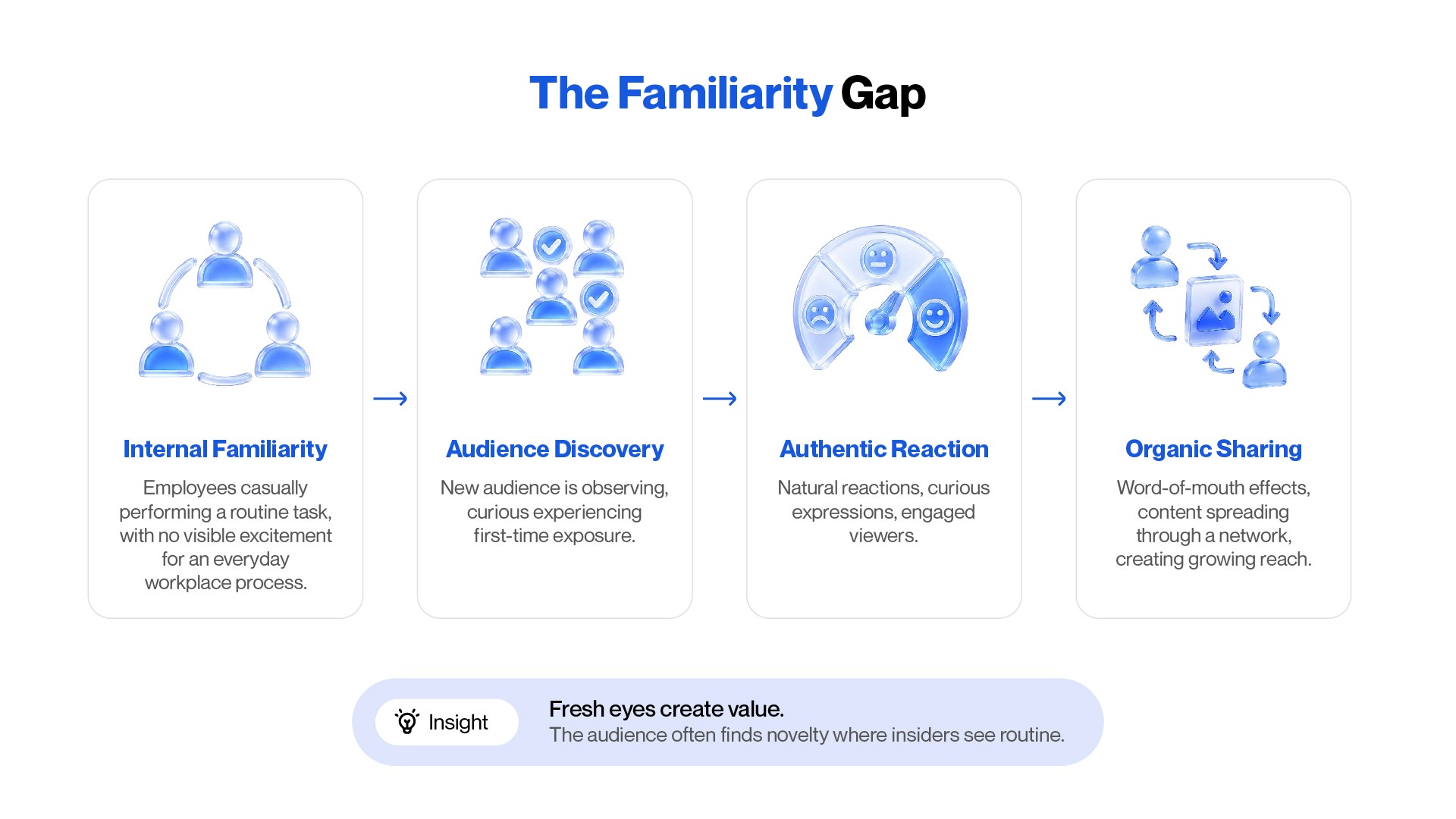
Creators are naturally drawn to things that employees stopped noticing years ago, and this is one reason why highly structured UGC sometimes underperforms. Since the reaction is predetermined, creators never have the chance to discover something on their own. The audience can sense this, which is why the most powerful UGC often leaves room for genuine surprises.
Practical Brand Takeaway
Instead of scripting every moment, ask:
What would surprise someone seeing this for the first time?
What would a new customer find unusual?
What part of our process feels normal internally but remarkable externally?
Those answers often reveal stronger content opportunities than a detailed creative brief.
What Creators Can Learn
Most creators spend their time searching for better hooks but overlook the strongest one: genuine curiosity.
The World Cup fans who went viral weren’t trying to optimize their content; they were simply documenting their sincere reactions. You can apply this principle intentionally by seeking out environments where you’re truly unfamiliar with what others consider normal.
Record what surprises you, ask questions about it, and then share your observations. The goal of doing all this isn’t to feign surprise, but to be genuinely surprised. This is important to keep in mind because audiences respond differently when they sense that authenticity.
The Content Nobody Planned
One of the most interesting outcomes of the 2026 World Cup had nothing to do with football. International fans accidentally demonstrated a principle that many marketers spend years trying to understand. Some of the strongest content emerges when people are focused on having an experience rather than creating content about it.
For brands and creators, that insight is valuable because it shifts attention away from production and toward observation. Authentic reactions, unexpected discoveries, and genuine curiosity often create stronger engagement than perfectly scripted moments. This is one reason Masterhooks frequently studies audience behavior, creator ecosystems, and organic UGC. The most effective content is often discovered before it is designed.
Want to better understand how to go viral naturally?

Want to better understand how to go viral naturally?
What went viral when these visitors arrived in the United States had absolutely nothing to do with soccer. What went viral and trended online was content showing things that these international tourists are experiencing or discovering for the first time, which are actually things that Americans themselves have not paid attention to.
None of that was part of a campaign because none of it resulted from a creative brief, was funded by a brand, or was coordinated by a production team. The most frequently shared content related to the World Cup often came from people experiencing these amazing moments there for the first time in their lives.
This reveals an important lesson about how content spreads: the most authentic content often begins as a personal story that was never intended to be promotional in the first place.
What Actually Happened?
As international visitors arrive across the United States, a trend has emerged in which fans are documenting their “first-time” experiences that Americans no longer even notice. These range from visits to Costco, soda machines offering unlimited refills, and enormous food portions, to the Fourth of July fireworks displays celebrating American independence.
Videos of these moments began spreading rapidly on TikTok and Instagram, following a similar structure. Most of them feature visitors’ genuine reactions when they encounter something they’re seeing for the first time, and these authentic reactions in the content cause viewers to react along with them.
Here are a few examples of this recurring format:
Costco Shock
Visitors film themselves walking through warehouse stores and reacting to the size of products, shopping carts, and the culture of bulk buying.
Free Refill Culture
Many international visitors are fascinated by unlimited drink refills, a concept that isn’t common in many countries.
American Portion Sizes
Food portions in the U.S. appear much larger than in many other countries. This comes as a shock to international visitors, and they turn their reactions to it into content with predictable reactions.
Country Roads In Stadiums
This is indeed a unique event where fans are surprised to see tens of thousands of people singing along to a song titled “Country Roads” at a stadium in a way that feels very American.
Fourth of July Content
Many visitors happened to experience the Independence Day celebrations during the tournament. The abundance of activities, festivals, and fireworks prompted many international visitors to document them, turning these celebrations into content in their own right.
Why This Content Works Better Than Produced Content
From this incident, marketers can learn that the success of these videos is no coincidence, but rather the result of a powerful distribution mechanism working in tandem. Here are some key points for marketers to keep in mind:
Genuine Reactions Are Difficult To FakeMost audiences can immediately tell when a reaction is staged, and World Cup content feels different because it’s truly unique. Viewers have absolutely no idea what they’re about to experience, so the surprise, confusion, and joy in their reactions are genuine. This authenticity builds trust, which in turn can drive engagement. |
Discovery Travels Further Than PresentationMany branded videos present information, whereas these videos document discovery. This distinction is important to note because people naturally enjoy watching someone discover something new. The audience experiences a part of that discovery themselves, so the content feels more like an exploration than a communication. This discovery sparks curiosity, which then encourages people to share the content. |
Cultural Contrast Creates Two AudiencesOne reason these videos consistently perform well is that they appeal to multiple groups simultaneously. International viewers perceive these videos as something new, while American viewers react with surprise at tourists’ reactions to things they consider ordinary. Both groups of viewers feel their perspectives are validated, giving them a reason to share. All of this dramatically expands the potential for distribution. |
What Brands Can Learn
Many companies underestimate how appealing their products are to people encountering them for the first time. This is actually understandable from a brand’s perspective, since internal teams go through the same processes every day. However, the situation is different when viewed from the customer’s perspective, as they don’t see the things that are considered routine within the organization. This creates a blind spot that brands can leverage, rather than constantly trying to generate excitement around specific features.
Creators are naturally drawn to things that employees stopped noticing years ago, and this is one reason why highly structured UGC sometimes underperforms. Since the reaction is predetermined, creators never have the chance to discover something on their own. The audience can sense this, which is why the most powerful UGC often leaves room for genuine surprises.
Practical Brand Takeaway
Instead of scripting every moment, ask:
What would surprise someone seeing this for the first time?
What would a new customer find unusual?
What part of our process feels normal internally but remarkable externally?
Those answers often reveal stronger content opportunities than a detailed creative brief.
What Creators Can Learn
Most creators spend their time searching for better hooks but overlook the strongest one: genuine curiosity.
The World Cup fans who went viral weren’t trying to optimize their content; they were simply documenting their sincere reactions. You can apply this principle intentionally by seeking out environments where you’re truly unfamiliar with what others consider normal.
Record what surprises you, ask questions about it, and then share your observations. The goal of doing all this isn’t to feign surprise, but to be genuinely surprised. This is important to keep in mind because audiences respond differently when they sense that authenticity.
The Content Nobody Planned
One of the most interesting outcomes of the 2026 World Cup had nothing to do with football. International fans accidentally demonstrated a principle that many marketers spend years trying to understand. Some of the strongest content emerges when people are focused on having an experience rather than creating content about it.
For brands and creators, that insight is valuable because it shifts attention away from production and toward observation. Authentic reactions, unexpected discoveries, and genuine curiosity often create stronger engagement than perfectly scripted moments. This is one reason Masterhooks frequently studies audience behavior, creator ecosystems, and organic UGC. The most effective content is often discovered before it is designed.
Want to better understand how to go viral naturally?
Related Reading
Related Reading
What ComplexCon Reveals About Turning Product Drops Into Event UGC
4 min
|
What ComplexCon Reveals About Turning Product Drops Into Event UGC
Explore how ComplexCon product launch create opportunities for event UGC, with practical lessons for product drops, smaller pop-ups, and measurement.
4 min
|
How to Turn Product Photos Into AI Video Ads That Are Ready to Run
4 min
|
How to Turn Product Photos Into AI Video Ads That Are Ready to Run
Learn how to turn product photos into AI video ads using a practical workflow for storyboarding, generation, editing, quality control, and delivery.
4 min
|

What Fourth Wing Reveals About BookTok and Community Marketing
4 min
|
What Fourth Wing Reveals About BookTok and Community Marketing
See how Fourth Wing fans turn one book into reactions, theories, recommendations, and rituals, and what brands can learn from community-led marketing.
4 min
|


Need help scaling?
Book a strategy call with our expert team to audit your current UGC setup.

