



Designed for Distraction: Why UGC Is the Only Ad Format That Survives the 3-Second Filter
Designed for Distraction: Why UGC Is the Only Ad Format That Survives the 3-Second Filter
Polished ads get skipped in seconds. See why UGC and clipping feel native, build trust, and actually drive conversions in a crowded feed.
Published:

Read Time:

4 min

Written by:
Fawwaz
Trend Research and Copywriter
ATTENTION IS THE NEW BOTTLENECK
If an ad cannot get past the viewer’s first distraction filter, increasing ad spend will only make the problem more expensive.
ATTENTION IS THE NEW BOTTLENECK
If an ad cannot get past the viewer’s first distraction filter, increasing ad spend will only make the problem more expensive.
ATTENTION IS THE NEW BOTTLENECK
If an ad cannot get past the viewer’s first distraction filter, increasing ad spend will only make the problem more expensive.
Modern viewers do not want to feel like they are being sold to. They are more likely to pay attention when content entertains them, teaches them something, or feels like a recommendation from someone they trust.
This is why many brands are shifting away from traditional ad formats and using UGC and high-volume clipping networks to stay relevant in a market where audience attention is harder to win.
The Attention Problem in Modern Marketing
Marketers often focus too much on impressions. The problem is that a view means very little when people forget the brand as soon as they swipe away.
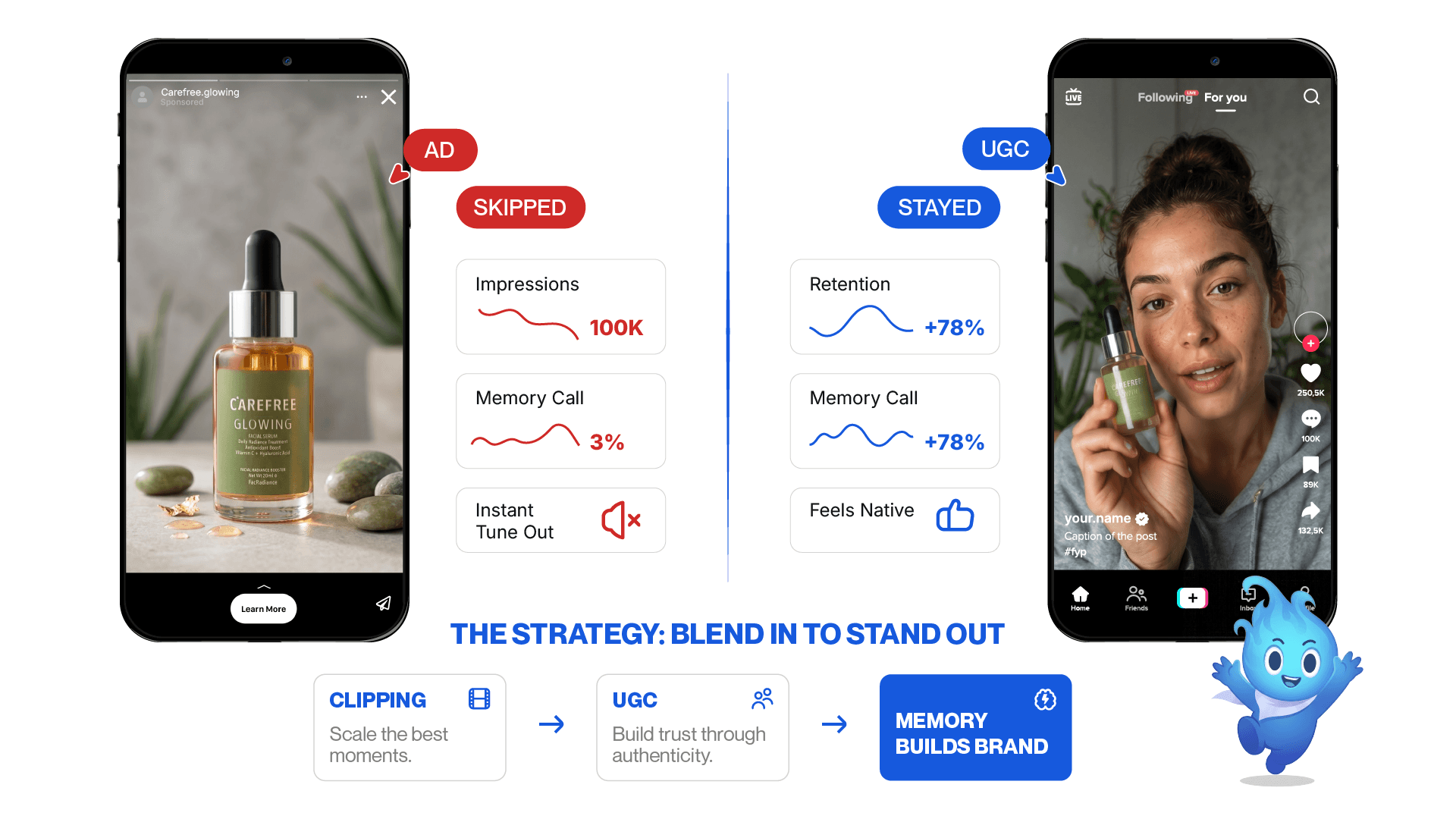
Mobile users make decisions fast. In just a moment, they decide whether a video feels worth watching or worth skipping. When an ad looks too polished, with perfect lighting and a corporate voiceover, people often recognize it as advertising and tune out. It interrupts the flow of what they were already watching.
To make a brand stick, the video needs to feel native to the platform. It should blend into the type of content people already enjoy, while still giving them a reason to remember the brand. This is why two major distribution strategies have become so important in modern marketing: clipping and UGC.
The Clipping Culture Shift
To bypass ad fatigue, brands and media figures are turning to decentralized distribution models. This has birthed "Clipping Culture."
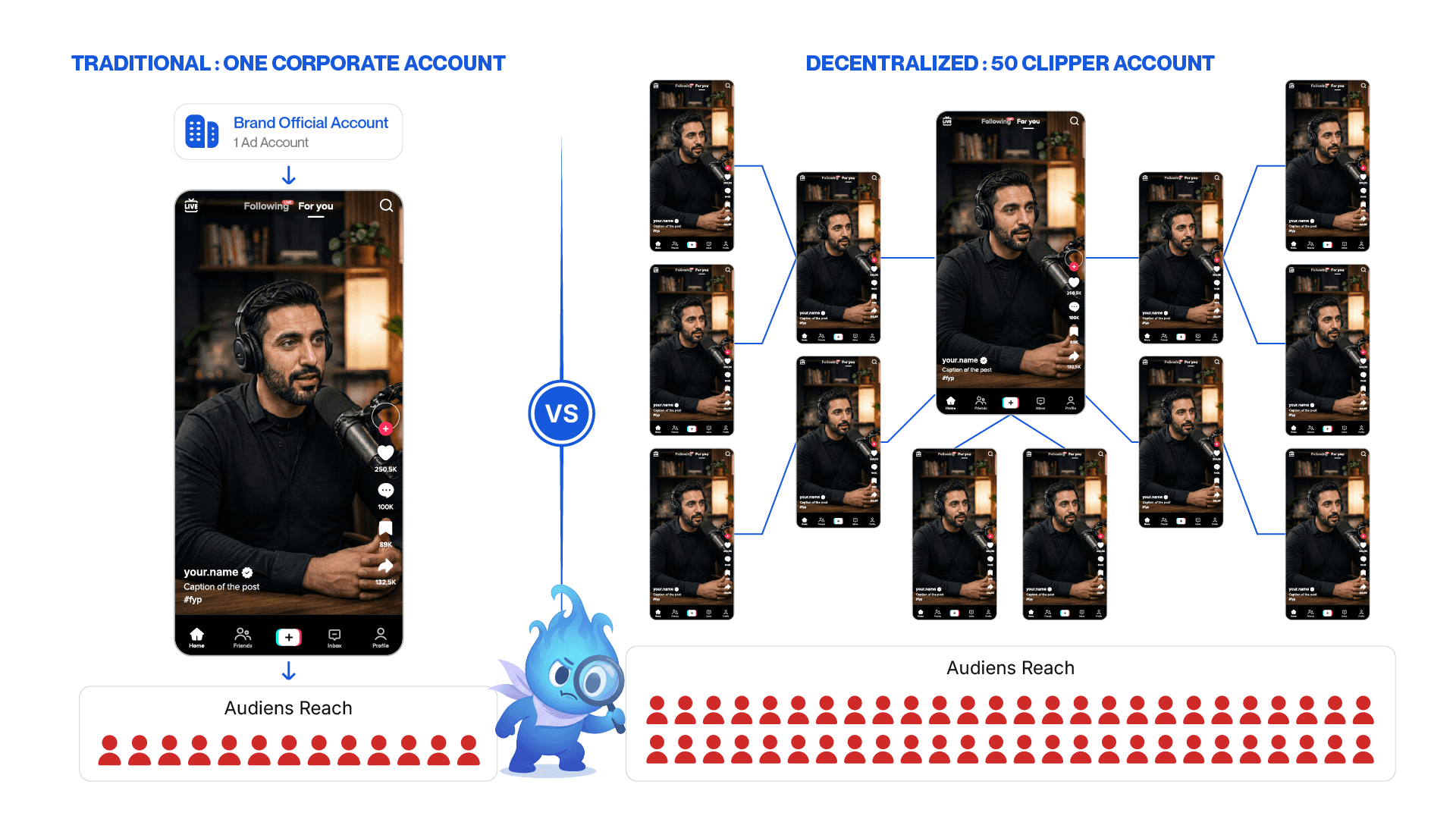
In a clipping strategy, a brand or creator starts with long-form content, such as a podcast, product demo, interview, or livestream. That content is then handed to a large network of independent editors, often called clippers, who cut it into short vertical videos designed for TikTok, Reels, and Shorts.
These clips are posted across many fan pages, theme accounts, and creator-style profiles. The editors are usually paid based on performance, such as a set amount for every thousand views they generate. This makes the system heavily driven by volume. By putting out many versions of the same core idea, brands can test different hooks, formats, and angles while reaching a much larger audience without relying only on traditional paid ads.
Clipping vs. UGC: Understanding the Divide
While both strategies utilize vertical video, they serve entirely different functions within your growth pipeline.
Clipping Builds Awareness
Clipping helps brands spread content fast. Clippers turn long-form content into short, attention-grabbing videos and post them across multiple accounts. Since they are paid based on views, the focus is usually on reach and visibility. The tradeoff is less control over the message, CTA, and sales path.
UGC Drives Conversions
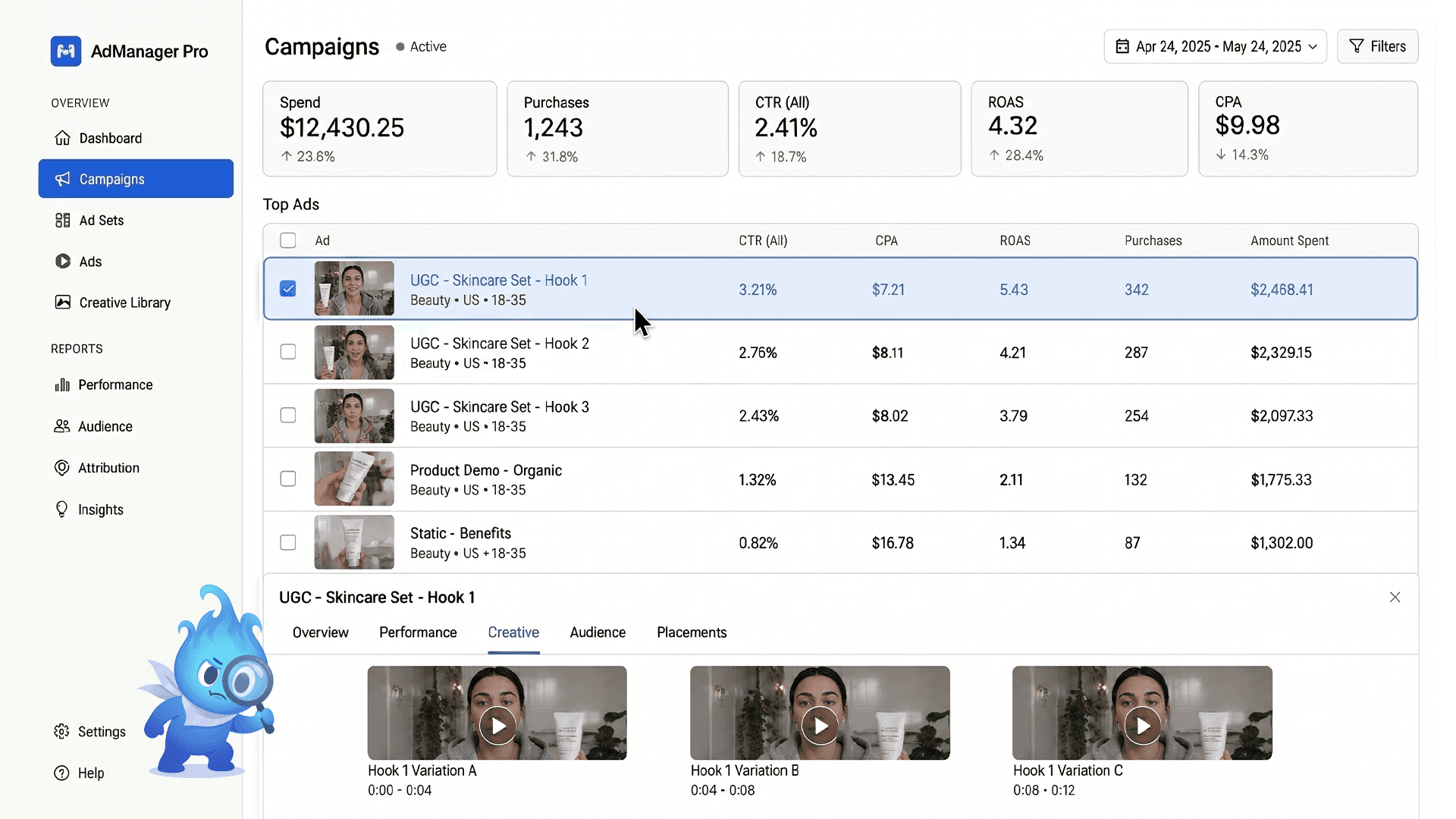
Paid UGC gives brands more control over the creative. A creator films a native-looking video based on a clear brief, with a specific hook, message, and CTA. The brand can then use the video in its own ad accounts to test angles and drive action.
Control: You dictate the exact 3-second hook, the visual angles, and the final offer.
Trust: A real human face applying a product or explaining a software tool builds immediate credibility that a repurposed podcast clip cannot match.
Iteration: If an ad fails, you can edit the UGC file, swap the first three seconds, and test a new angle immediately.
Scale Your Creative Engine
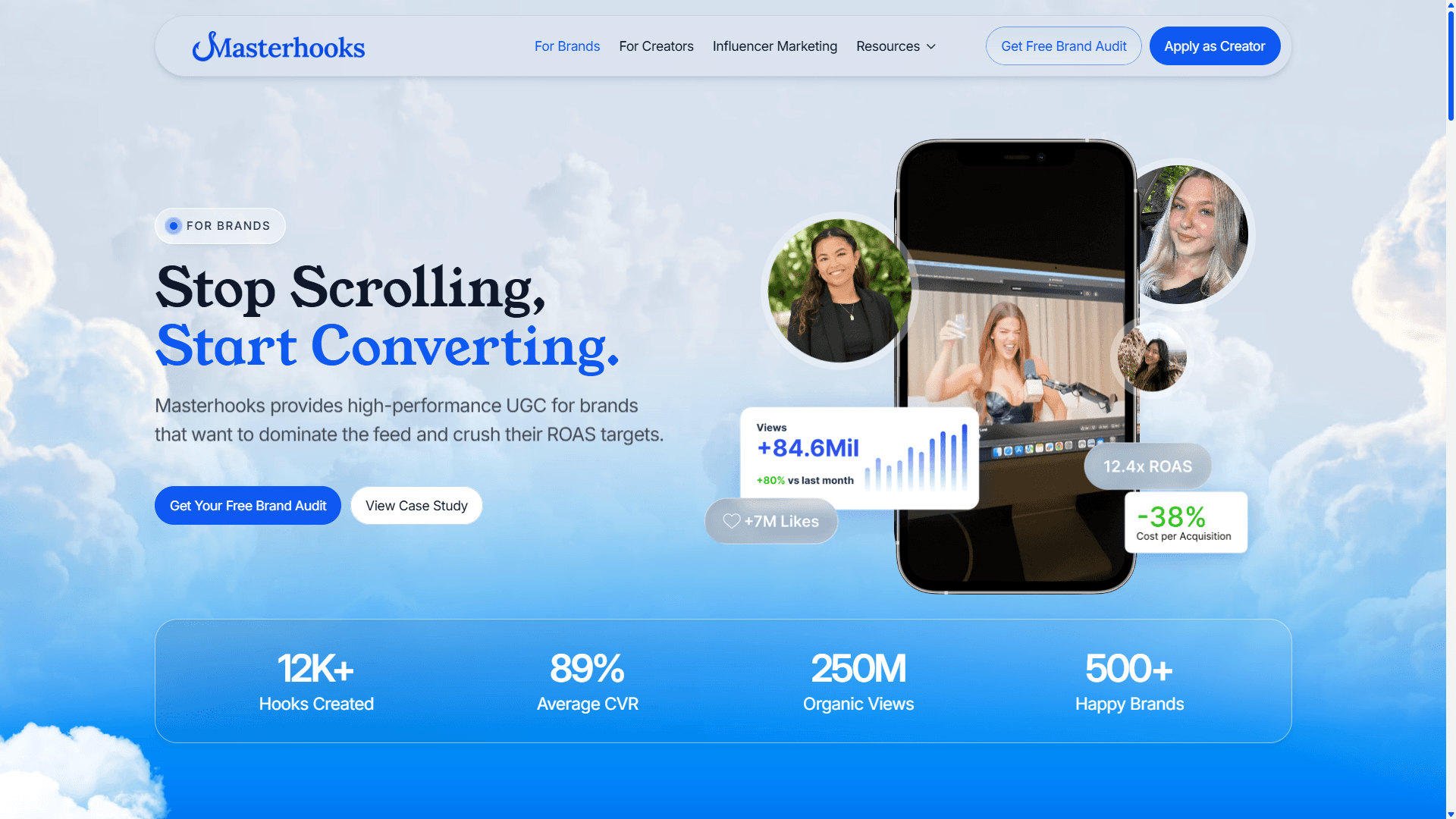
Managing creator networks, content production, and campaign logistics at scale can quickly overwhelm internal teams.
Masterhooks handles the entire process, from creator sourcing and scripting to content execution, helping brands build authentic, high-converting UGC libraries designed to capture attention and drive growth.
Audit your creative strategy today

Audit your creative strategy today
Modern viewers do not want to feel like they are being sold to. They are more likely to pay attention when content entertains them, teaches them something, or feels like a recommendation from someone they trust.
This is why many brands are shifting away from traditional ad formats and using UGC and high-volume clipping networks to stay relevant in a market where audience attention is harder to win.
The Attention Problem in Modern Marketing
Marketers often focus too much on impressions. The problem is that a view means very little when people forget the brand as soon as they swipe away.
Mobile users make decisions fast. In just a moment, they decide whether a video feels worth watching or worth skipping. When an ad looks too polished, with perfect lighting and a corporate voiceover, people often recognize it as advertising and tune out. It interrupts the flow of what they were already watching.
To make a brand stick, the video needs to feel native to the platform. It should blend into the type of content people already enjoy, while still giving them a reason to remember the brand. This is why two major distribution strategies have become so important in modern marketing: clipping and UGC.
The Clipping Culture Shift
To bypass ad fatigue, brands and media figures are turning to decentralized distribution models. This has birthed "Clipping Culture."
In a clipping strategy, a brand or creator starts with long-form content, such as a podcast, product demo, interview, or livestream. That content is then handed to a large network of independent editors, often called clippers, who cut it into short vertical videos designed for TikTok, Reels, and Shorts.
These clips are posted across many fan pages, theme accounts, and creator-style profiles. The editors are usually paid based on performance, such as a set amount for every thousand views they generate. This makes the system heavily driven by volume. By putting out many versions of the same core idea, brands can test different hooks, formats, and angles while reaching a much larger audience without relying only on traditional paid ads.
Clipping vs. UGC: Understanding the Divide
While both strategies utilize vertical video, they serve entirely different functions within your growth pipeline.
Clipping Builds Awareness
Clipping helps brands spread content fast. Clippers turn long-form content into short, attention-grabbing videos and post them across multiple accounts. Since they are paid based on views, the focus is usually on reach and visibility. The tradeoff is less control over the message, CTA, and sales path.
UGC Drives Conversions
Paid UGC gives brands more control over the creative. A creator films a native-looking video based on a clear brief, with a specific hook, message, and CTA. The brand can then use the video in its own ad accounts to test angles and drive action.
Control: You dictate the exact 3-second hook, the visual angles, and the final offer.
Trust: A real human face applying a product or explaining a software tool builds immediate credibility that a repurposed podcast clip cannot match.
Iteration: If an ad fails, you can edit the UGC file, swap the first three seconds, and test a new angle immediately.
Scale Your Creative Engine
Managing creator networks, content production, and campaign logistics at scale can quickly overwhelm internal teams.
Masterhooks handles the entire process, from creator sourcing and scripting to content execution, helping brands build authentic, high-converting UGC libraries designed to capture attention and drive growth.
Audit your creative strategy today
Related Reading
How Blumhouse Built a $740M Horror Franchise by Spending Less Than Any Competitor
4 min
|
How to Find & Choose the Right Influencer for Your Brand (Without Getting Burned)
5 min
|

What Is Influencer Marketing? A No-Fluff Guide for Brands Ready to Actually Use It
5 min
|

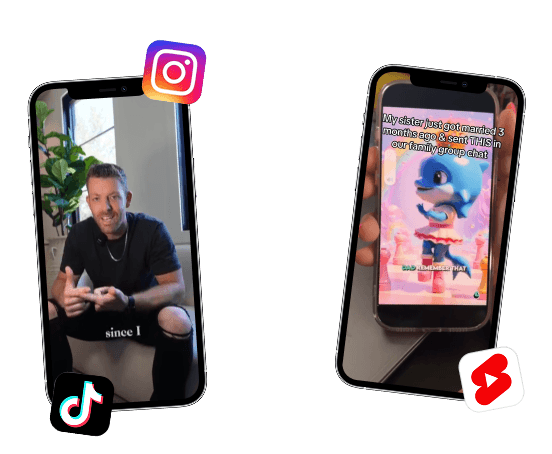

Need help scaling?
Book a strategy call with our expert team to audit your current UGC setup.
Related Reading
How Blumhouse Built a $740M Horror Franchise by Spending Less Than Any Competitor
How Blumhouse turned low-budget horror into a repeatable franchise model using controlled costs, social amplification, and audience-driven content.
4 min
|
How Blumhouse Built a $740M Horror Franchise by Spending Less Than Any Competitor
How Blumhouse turned low-budget horror into a repeatable franchise model using controlled costs, social amplification, and audience-driven content.
4 min
|
How to Find & Choose the Right Influencer for Your Brand (Without Getting Burned)
Learn how to find influencers for your brand using audience fit, engagement quality, growth patterns, content quality, and campaign history.
5 min
|
How to Find & Choose the Right Influencer for Your Brand (Without Getting Burned)
Learn how to find influencers for your brand using audience fit, engagement quality, growth patterns, content quality, and campaign history.
5 min
|
What Is Influencer Marketing? A No-Fluff Guide for Brands Ready to Actually Use It
Ready to use influencer marketing for your brands? Learn influencer types, campaign models, costs, ROI, measurement, and how to choose the right creators.
5 min
|
What Is Influencer Marketing? A No-Fluff Guide for Brands Ready to Actually Use It
Ready to use influencer marketing for your brands? Learn influencer types, campaign models, costs, ROI, measurement, and how to choose the right creators.
5 min
|