



When Brand Copy Loses Its Humanity: The Nike Boston Disaster and What Every Marketer Must Learn From It
When Brand Copy Loses Its Humanity: The Nike Boston Disaster and What Every Marketer Must Learn From It
Nike's "Walkers Tolerated" sign sparked massive backlash. Here's why unedited AI copy destroys brand trust and what the Human Premium means for marketers.
Published:

Read Time:

4 min

Written by:
Fawwaz
Trend Research and Copywriter
ARTIFICIAL INTELLIGENCE IS NOT A FREE SENIOR COPYWRITER.
Many brands do this, and it costs one of the largest sportswear companies in the world a massive share of its cultural credibility.
ARTIFICIAL INTELLIGENCE IS NOT A FREE SENIOR COPYWRITER.
Many brands do this, and it costs one of the largest sportswear companies in the world a massive share of its cultural credibility.
ARTIFICIAL INTELLIGENCE IS NOT A FREE SENIOR COPYWRITER.
Many brands do this, and it costs one of the largest sportswear companies in the world a massive share of its cultural credibility.
As AI makes content creation faster and cheaper, generic marketing becomes easier to ignore. Brands that rely on unedited AI output risk losing consumer trust instead of building it.
Here’s a breakdown of the Nike Boston Marathon backlash, the rise of the “Human Premium”, and why successful brands are balancing AI efficiency with genuine human connection.
Nike In 2026 Boston Marathon: When Copy Loses Its Soul
To understand the danger of unchecked AI integration, you have to look at the backlash that hit Nike just weeks ago during the 2026 Boston Marathon.
The brand put up a bright red vinyl window at its Newbury Street store, just around the corner from the finish line, reading: "Runners Welcome. Walkers Tolerated." The copy went viral within hours. Marathon Handbook
The running community and disability advocates hit back immediately, calling the sign ableist and accusing Nike of gatekeeping and pace-shaming. Competing brands piled on too. Altra publicly encouraged runners to "go where you're celebrated, not where you're tolerated."
But the problem runs deeper than the backlash. The parallel structure ("Runners Welcome. Walkers Tolerated.") has the clean, templated symmetry of something optimized for pattern rather than written for people. No copywriter with real context would have let that second line through.
The real issue is not whether AI drafted the copy or whether a human simply failed to think it through. Either way, the writing does not feel like it came from someone who knows what running actually feels like, and the audience noticed immediately.
The Failure of the Generic Pitch
For years, marketers optimized for search engines and algorithms by stuffing keywords and generating mass variations of the same message. Generative AI made this process effortless. But the Nike incident highlights a massive shift in 2026 consumer behavior: people are actively hunting for the human element.
When a brand publishes content that feels automated, consumers interpret it as disrespect. If a company does not care enough to have a human being craft a message, the consumer will not care enough to buy the product. Relying on AI to generate your final consumer-facing copy strips away the nuanced cultural context that actually drives conversions.
The Rise of the "Human Premium"
This backlash has accelerated a massive economic shift known as the Human Premium.
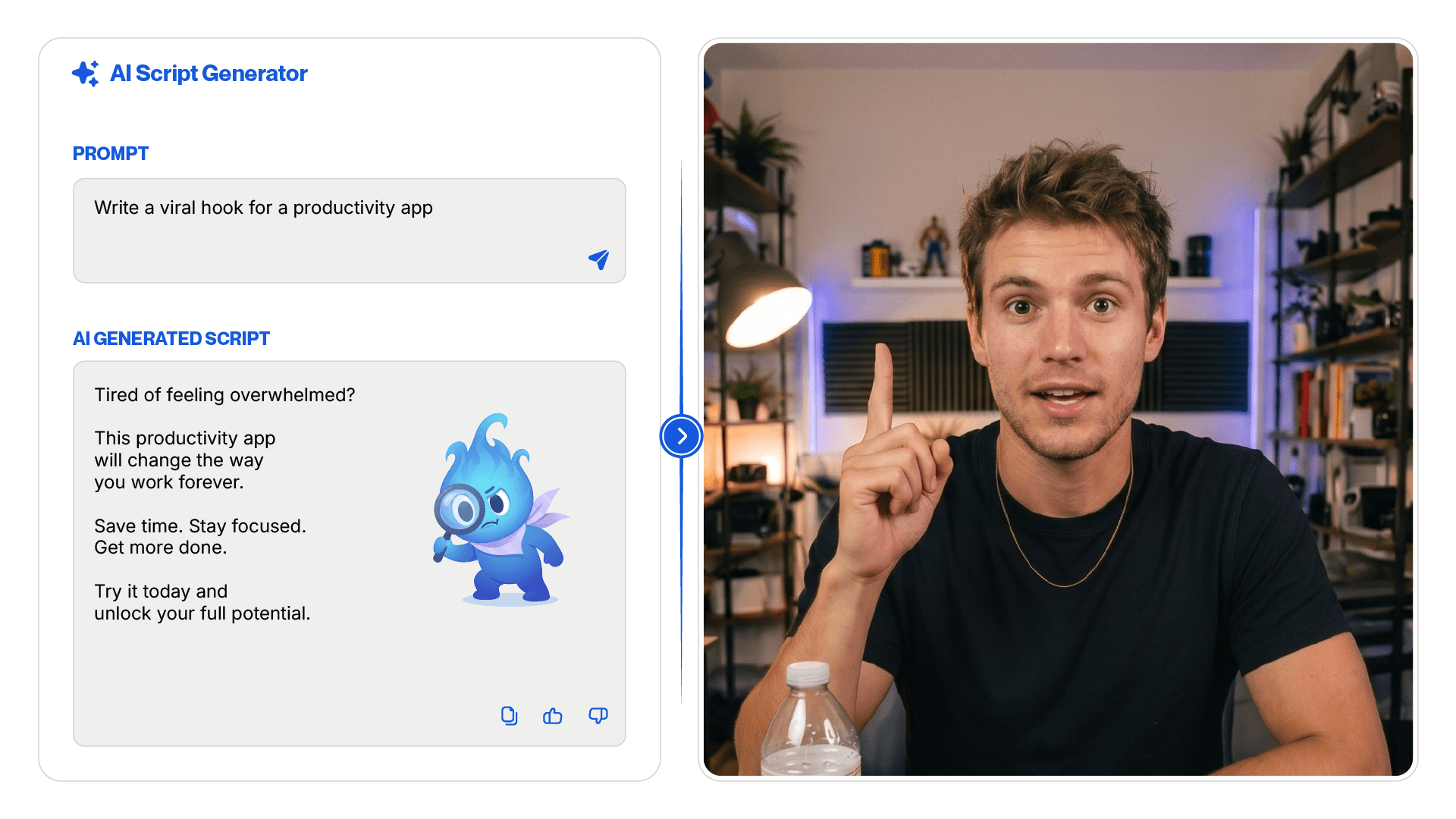
As AI saturates the market with flawless but sterile content, authentic human perspective has become a luxury asset.
Consumers are now willing to pay more, engage deeper, and show higher loyalty to brands that prove a human hand was involved in their creation process. The Human Premium is the tangible financial return a brand receives when it injects genuine empathy, cultural awareness, and lived experience into its marketing.
AI can synthesize a list of marathon statistics in one second. Only a human knows what it feels like to hit "the wall" at mile 20. The brands that win the feed are the ones leveraging that exact human feeling.
What Brands Should Notice: The New AI Playbook
You cannot ignore artificial intelligence, but you must completely change where it sits in your operational pipeline. To protect your brand from the "AI slop" label while maintaining high-volume output, implement these rigid boundaries.
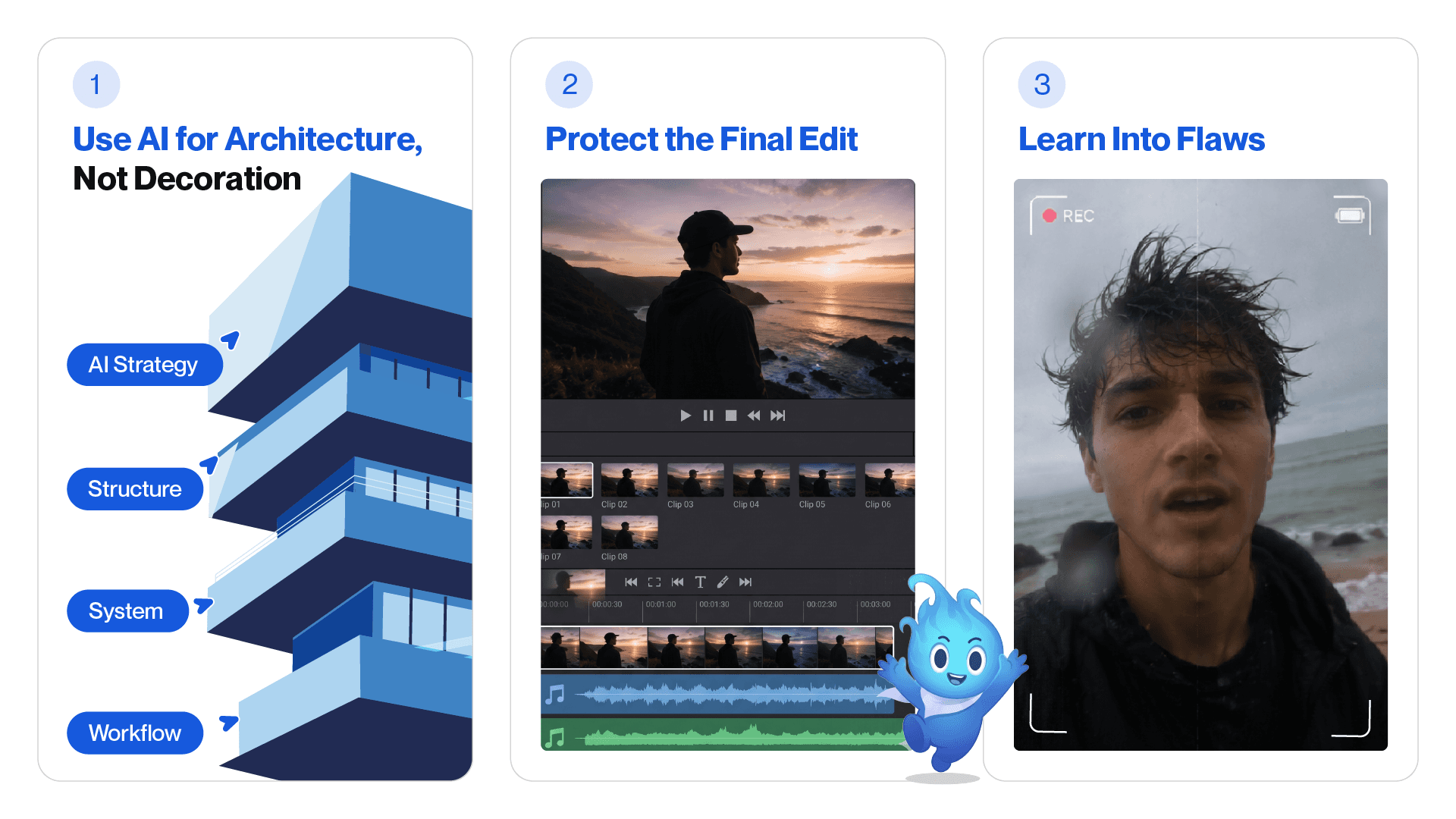
1. Use AI for Architecture, Not Decoration
Never allow an AI to write your final script. Use AI to analyze large datasets, outline video structures, and generate rapid iterations of marketing angles. AI is the scaffolding. The human writer is the architect.
2. Protect the Final Edit
Every piece of copy must pass through an operator who understands the specific cultural nuances of your target audience. If you are marketing to runners, the final script must be vetted by someone who actually runs. This is because empathy grows through real experience and cannot be created by force.
3. Lean Into Flaws
AI writes perfectly. Humans do not. The most successful User-Generated Content currently dominating TikTok and Instagram Reels features slight vocal stumbles, raw lighting, and conversational pacing. Stop editing the humanity out of your videos. Those imperfections are exactly what prove the content is real.
Scale Your Human Premium with Masterhooks
Combining AI efficiency with authentic human connection requires more than just technology. Without the right strategy, AI-generated content can feel generic or miss important cultural nuances.
Masterhooks bridges that gap by pairing proven marketing psychology with vetted creators, helping brands produce authentic, high-converting content that scales without losing credibility.
Protect your brand's creative strategy today

Protect your brand's creative strategy today
As AI makes content creation faster and cheaper, generic marketing becomes easier to ignore. Brands that rely on unedited AI output risk losing consumer trust instead of building it.
Here’s a breakdown of the Nike Boston Marathon backlash, the rise of the “Human Premium”, and why successful brands are balancing AI efficiency with genuine human connection.
Nike In 2026 Boston Marathon: When Copy Loses Its Soul
To understand the danger of unchecked AI integration, you have to look at the backlash that hit Nike just weeks ago during the 2026 Boston Marathon.
The brand put up a bright red vinyl window at its Newbury Street store, just around the corner from the finish line, reading: "Runners Welcome. Walkers Tolerated." The copy went viral within hours. Marathon Handbook
The running community and disability advocates hit back immediately, calling the sign ableist and accusing Nike of gatekeeping and pace-shaming. Competing brands piled on too. Altra publicly encouraged runners to "go where you're celebrated, not where you're tolerated."
But the problem runs deeper than the backlash. The parallel structure ("Runners Welcome. Walkers Tolerated.") has the clean, templated symmetry of something optimized for pattern rather than written for people. No copywriter with real context would have let that second line through.
The real issue is not whether AI drafted the copy or whether a human simply failed to think it through. Either way, the writing does not feel like it came from someone who knows what running actually feels like, and the audience noticed immediately.
The Failure of the Generic Pitch
For years, marketers optimized for search engines and algorithms by stuffing keywords and generating mass variations of the same message. Generative AI made this process effortless. But the Nike incident highlights a massive shift in 2026 consumer behavior: people are actively hunting for the human element.
When a brand publishes content that feels automated, consumers interpret it as disrespect. If a company does not care enough to have a human being craft a message, the consumer will not care enough to buy the product. Relying on AI to generate your final consumer-facing copy strips away the nuanced cultural context that actually drives conversions.
The Rise of the "Human Premium"
This backlash has accelerated a massive economic shift known as the Human Premium.
As AI saturates the market with flawless but sterile content, authentic human perspective has become a luxury asset.
Consumers are now willing to pay more, engage deeper, and show higher loyalty to brands that prove a human hand was involved in their creation process. The Human Premium is the tangible financial return a brand receives when it injects genuine empathy, cultural awareness, and lived experience into its marketing.
AI can synthesize a list of marathon statistics in one second. Only a human knows what it feels like to hit "the wall" at mile 20. The brands that win the feed are the ones leveraging that exact human feeling.
What Brands Should Notice: The New AI Playbook
You cannot ignore artificial intelligence, but you must completely change where it sits in your operational pipeline. To protect your brand from the "AI slop" label while maintaining high-volume output, implement these rigid boundaries.
1. Use AI for Architecture, Not Decoration
Never allow an AI to write your final script. Use AI to analyze large datasets, outline video structures, and generate rapid iterations of marketing angles. AI is the scaffolding. The human writer is the architect.
2. Protect the Final Edit
Every piece of copy must pass through an operator who understands the specific cultural nuances of your target audience. If you are marketing to runners, the final script must be vetted by someone who actually runs. This is because empathy grows through real experience and cannot be created by force.
3. Lean Into Flaws
AI writes perfectly. Humans do not. The most successful User-Generated Content currently dominating TikTok and Instagram Reels features slight vocal stumbles, raw lighting, and conversational pacing. Stop editing the humanity out of your videos. Those imperfections are exactly what prove the content is real.
Scale Your Human Premium with Masterhooks
Combining AI efficiency with authentic human connection requires more than just technology. Without the right strategy, AI-generated content can feel generic or miss important cultural nuances.
Masterhooks bridges that gap by pairing proven marketing psychology with vetted creators, helping brands produce authentic, high-converting content that scales without losing credibility.
Protect your brand's creative strategy today
Related Reading
How Blumhouse Built a $740M Horror Franchise by Spending Less Than Any Competitor
4 min
|
How to Find & Choose the Right Influencer for Your Brand (Without Getting Burned)
5 min
|

What Is Influencer Marketing? A No-Fluff Guide for Brands Ready to Actually Use It
5 min
|



Need help scaling?
Book a strategy call with our expert team to audit your current UGC setup.
Related Reading
How Blumhouse Built a $740M Horror Franchise by Spending Less Than Any Competitor
How Blumhouse turned low-budget horror into a repeatable franchise model using controlled costs, social amplification, and audience-driven content.
4 min
|
How Blumhouse Built a $740M Horror Franchise by Spending Less Than Any Competitor
How Blumhouse turned low-budget horror into a repeatable franchise model using controlled costs, social amplification, and audience-driven content.
4 min
|
How to Find & Choose the Right Influencer for Your Brand (Without Getting Burned)
Learn how to find influencers for your brand using audience fit, engagement quality, growth patterns, content quality, and campaign history.
5 min
|
How to Find & Choose the Right Influencer for Your Brand (Without Getting Burned)
Learn how to find influencers for your brand using audience fit, engagement quality, growth patterns, content quality, and campaign history.
5 min
|
What Is Influencer Marketing? A No-Fluff Guide for Brands Ready to Actually Use It
Ready to use influencer marketing for your brands? Learn influencer types, campaign models, costs, ROI, measurement, and how to choose the right creators.
5 min
|
What Is Influencer Marketing? A No-Fluff Guide for Brands Ready to Actually Use It
Ready to use influencer marketing for your brands? Learn influencer types, campaign models, costs, ROI, measurement, and how to choose the right creators.
5 min
|