How Cantina Hit 132 Million Views in 30 Days Using Masterhooks' UGC Engine
3 min
read
GROWTH LEAVES A TRAIL OF NUMBERS
132 million views and millions of engagements reveal what happens when content is engineered for distribution.
GROWTH LEAVES A TRAIL OF NUMBERS
132 million views and millions of engagements reveal what happens when content is engineered for distribution.
GROWTH LEAVES A TRAIL OF NUMBERS
132 million views and millions of engagements reveal what happens when content is engineered for distribution.
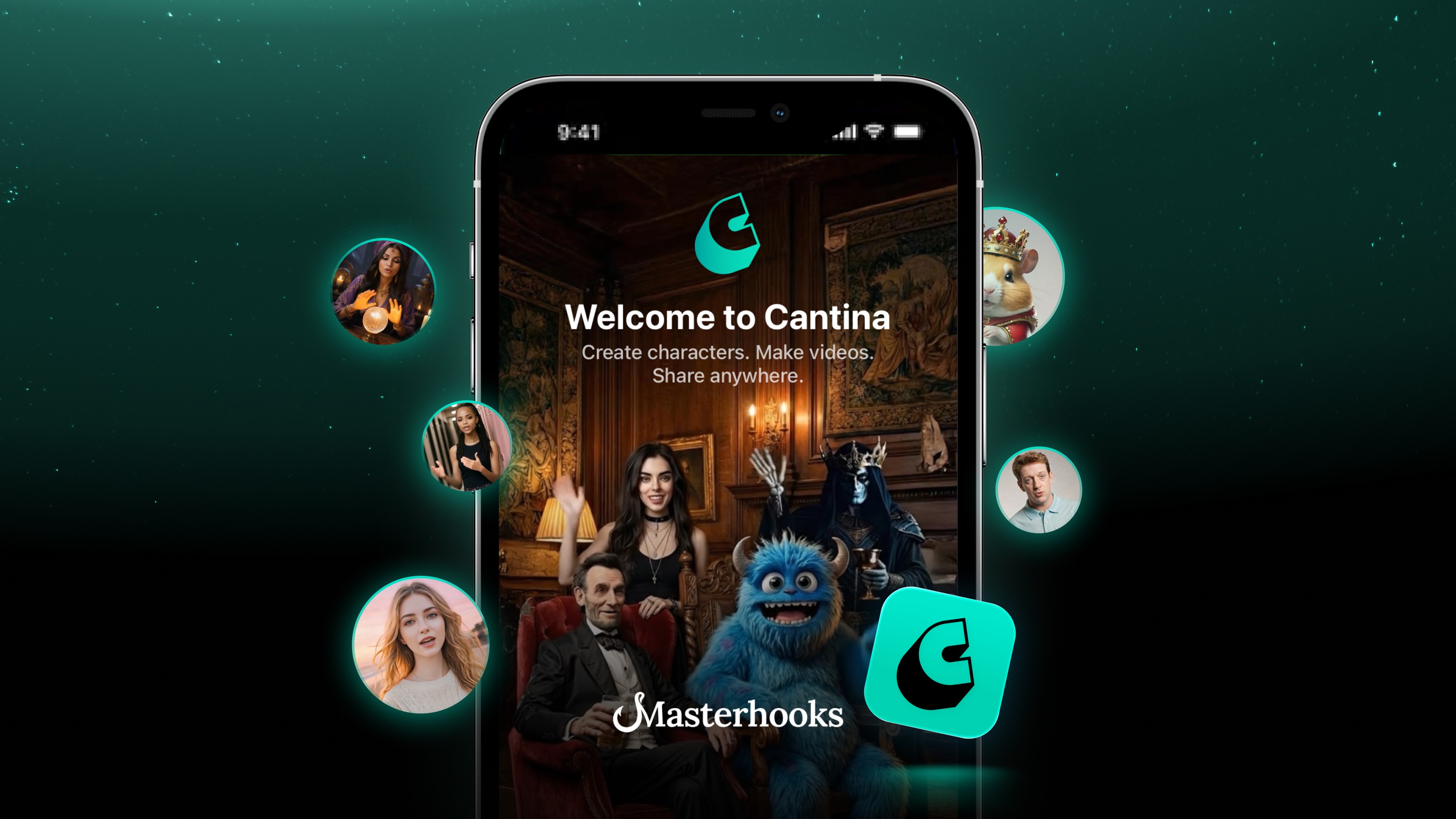
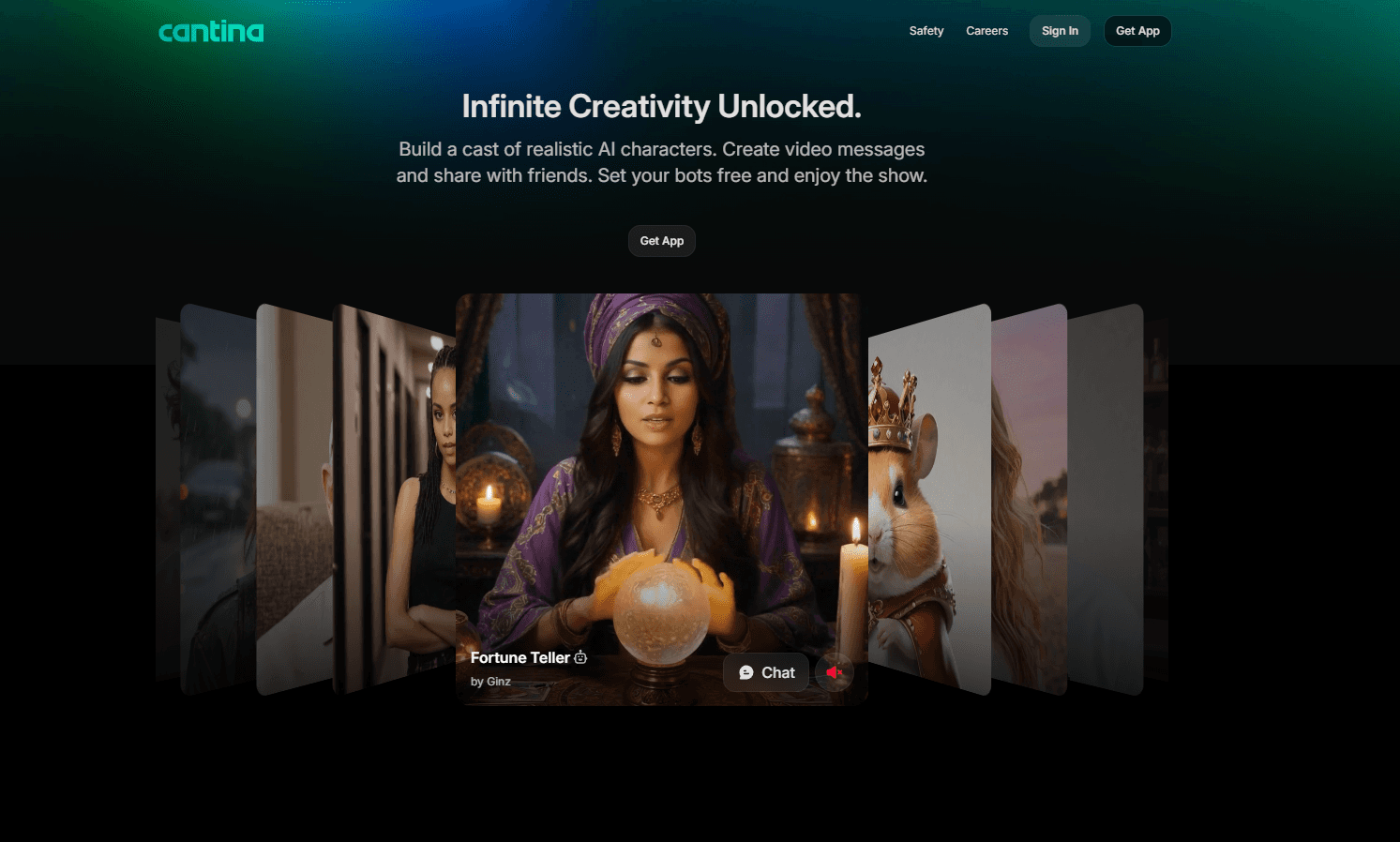
Cantina is an AI character app that lets users create and chat with realistic AI personas. Like many AI products, its biggest challenge is showing the in-app experience in a short-form video without losing viewer attention.
This is a breakdown of what the content strategy looked like and why it worked.
The Problem Cantina Came in With
Before partnering with Masterhooks, Cantina had a product that people loved once they used it. The challenge was getting them to that moment in the first place.
AI character apps sit in a category where the "wow moment" is deeply personal: it only lands when the user is actually inside the product, building their own AI persona and experiencing the conversation. That moment is almost impossible to replicate in a three-second hook on TikTok.
Most content teams solving this problem default to screen recordings, feature walkthroughs, or founder-to-camera explanations. All of these fail for the same reason: they lead with the product rather than the feeling the product creates. By the time the viewer understands what they're looking at, they've already scrolled.
Cantina also faced a bandwidth problem. Their internal team had the product knowledge but not the capacity to continuously produce and test short-form content at the volume that organic growth requires. Ideating hooks, writing scripts, casting creators, managing filming, and editing for platform-native formats simultaneously is not a one-person or two-person job — it's a production system.
What Masterhooks Built for Cantina
Masterhooks stepped in as Cantina's dedicated creative production team, taking on everything from hook ideation through final delivery. Cantina's team focused on the product. Masterhooks focused on making sure the right people found it.
The production system operated across three areas.
Direct-Response Scriptwriting Built Around the Feeling, Not the Feature
Every script Masterhooks wrote for Cantina started with the same question: what is the viewer feeling in the moment before they discover this product?
For Cantina, the answer was consistent across audience segments: curiosity about AI, the desire to connect with a character that felt genuinely responsive, and the novelty of interacting with something that didn't feel like a chatbot. Scripts were structured to lead with those feelings, create an open loop that required watching to close, and bring Cantina's product in as the resolution rather than the introduction.
The 3-second hook was engineered first, not written as an afterthought. Each video opened with either a visual that created immediate curiosity, a call-out that identified a specific viewer identity, or an audio choice that signaled something unexpected was coming. The product reveal happened only after the viewer's attention was already committed.
Platform-Native Editing That Didn't Look Like an Ad
A well-written script fails if the editing signals "advertisement" in the first second. Masterhooks' editing approach for Cantina was built around a single constraint: the video had to feel like something a creator genuinely made, not something a brand produced.
This meant platform-native text overlays rather than polished lower-thirds, audio choices drawn from what was trending on TikTok rather than licensed production music, and pacing built around fast cuts and pattern interrupts every two to three seconds to hold viewer attention through the full video.
The result was content that sat naturally inside a For You Page feed rather than breaking the scrolling experience and triggering the mental skip response that most paid-feeling content produces.
A Production Pipeline That Kept Creative Fresh
The 132 million views Cantina accumulated in 30 days didn't come from one video. They came from a sustained cadence of fresh creative that the Masterhooks production pipeline was built to deliver.
Content fatigue is one of the most consistent killers of organic growth momentum. When the same format and the same hook structure appear repeatedly, even an audience that initially responded well will begin to disengage. Masterhooks' role was to prevent that by continuously iterating on what was working and replacing what wasn't before the drop-off became visible in the data.
Cantina received final, platform-ready assets directly. No internal editing queue, no creative briefing bottleneck, no back-and-forth on format decisions. The pipeline removed the operational friction that typically slows content output and replaced it with a system that could sustain volume without sacrificing quality.
The Numbers After 30 Days
The output of this system in Cantina's first month with Masterhooks:
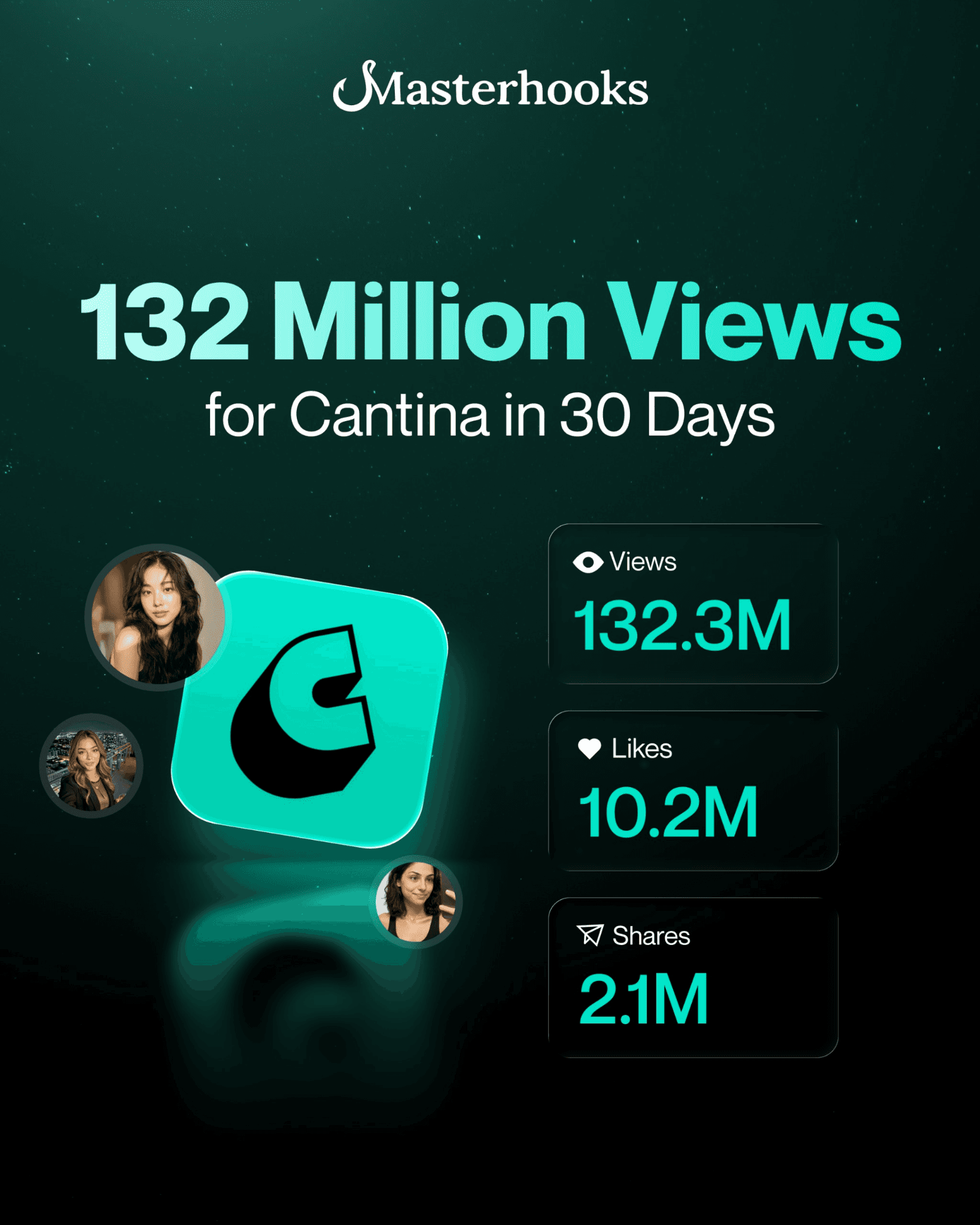
132 million views in 30 days for a product in a competitive AI app category is not a vanity metric. Shares specifically indicate content that viewers found worth sending to someone else — which for an AI character app means the content was doing the job of word-of-mouth distribution at scale.
The share volume (2.1 million) is particularly meaningful for Cantina's category. AI apps grow fastest when someone sends the product to a friend rather than discovering it through a search. Content that generates shares is doing organic distribution work that no ad budget can replicate directly.
What Made This Work
The underlying principle across everything Masterhooks produced for Cantina was the same: lead with the viewer's experience, not the product's features.
Cantina's app is built around the feeling of connecting with an AI character that feels genuinely responsive and surprising. That feeling is what the content was designed to communicate — not the technical capability behind it, not the feature list, and not the UI.
For AI apps with a strong emotional core to their product experience, this reframe is consistently the difference between content that gets skipped and content that gets shared. The product doesn't need to be explained in the first three seconds. It needs to make the viewer feel something.
Running an app or DTC brand and looking for a content strategy that scales?
Running an app or DTC brand and looking for a content strategy that scales?
Cantina is an AI character app that lets users create and chat with realistic AI personas. Like many AI products, its biggest challenge is showing the in-app experience in a short-form video without losing viewer attention.
This is a breakdown of what the content strategy looked like and why it worked.
The Problem Cantina Came in With
Before partnering with Masterhooks, Cantina had a product that people loved once they used it. The challenge was getting them to that moment in the first place.
AI character apps sit in a category where the "wow moment" is deeply personal: it only lands when the user is actually inside the product, building their own AI persona and experiencing the conversation. That moment is almost impossible to replicate in a three-second hook on TikTok.
Most content teams solving this problem default to screen recordings, feature walkthroughs, or founder-to-camera explanations. All of these fail for the same reason: they lead with the product rather than the feeling the product creates. By the time the viewer understands what they're looking at, they've already scrolled.
Cantina also faced a bandwidth problem. Their internal team had the product knowledge but not the capacity to continuously produce and test short-form content at the volume that organic growth requires. Ideating hooks, writing scripts, casting creators, managing filming, and editing for platform-native formats simultaneously is not a one-person or two-person job — it's a production system.
What Masterhooks Built for Cantina
Masterhooks stepped in as Cantina's dedicated creative production team, taking on everything from hook ideation through final delivery. Cantina's team focused on the product. Masterhooks focused on making sure the right people found it.
The production system operated across three areas.
Direct-Response Scriptwriting Built Around the Feeling, Not the Feature
Every script Masterhooks wrote for Cantina started with the same question: what is the viewer feeling in the moment before they discover this product?
For Cantina, the answer was consistent across audience segments: curiosity about AI, the desire to connect with a character that felt genuinely responsive, and the novelty of interacting with something that didn't feel like a chatbot. Scripts were structured to lead with those feelings, create an open loop that required watching to close, and bring Cantina's product in as the resolution rather than the introduction.
The 3-second hook was engineered first, not written as an afterthought. Each video opened with either a visual that created immediate curiosity, a call-out that identified a specific viewer identity, or an audio choice that signaled something unexpected was coming. The product reveal happened only after the viewer's attention was already committed.
Platform-Native Editing That Didn't Look Like an Ad
A well-written script fails if the editing signals "advertisement" in the first second. Masterhooks' editing approach for Cantina was built around a single constraint: the video had to feel like something a creator genuinely made, not something a brand produced.
This meant platform-native text overlays rather than polished lower-thirds, audio choices drawn from what was trending on TikTok rather than licensed production music, and pacing built around fast cuts and pattern interrupts every two to three seconds to hold viewer attention through the full video.
The result was content that sat naturally inside a For You Page feed rather than breaking the scrolling experience and triggering the mental skip response that most paid-feeling content produces.
A Production Pipeline That Kept Creative Fresh
The 132 million views Cantina accumulated in 30 days didn't come from one video. They came from a sustained cadence of fresh creative that the Masterhooks production pipeline was built to deliver.
Content fatigue is one of the most consistent killers of organic growth momentum. When the same format and the same hook structure appear repeatedly, even an audience that initially responded well will begin to disengage. Masterhooks' role was to prevent that by continuously iterating on what was working and replacing what wasn't before the drop-off became visible in the data.
Cantina received final, platform-ready assets directly. No internal editing queue, no creative briefing bottleneck, no back-and-forth on format decisions. The pipeline removed the operational friction that typically slows content output and replaced it with a system that could sustain volume without sacrificing quality.
The Numbers After 30 Days
The output of this system in Cantina's first month with Masterhooks:
132 million views in 30 days for a product in a competitive AI app category is not a vanity metric. Shares specifically indicate content that viewers found worth sending to someone else — which for an AI character app means the content was doing the job of word-of-mouth distribution at scale.
The share volume (2.1 million) is particularly meaningful for Cantina's category. AI apps grow fastest when someone sends the product to a friend rather than discovering it through a search. Content that generates shares is doing organic distribution work that no ad budget can replicate directly.
What Made This Work
The underlying principle across everything Masterhooks produced for Cantina was the same: lead with the viewer's experience, not the product's features.
Cantina's app is built around the feeling of connecting with an AI character that feels genuinely responsive and surprising. That feeling is what the content was designed to communicate — not the technical capability behind it, not the feature list, and not the UI.
For AI apps with a strong emotional core to their product experience, this reframe is consistently the difference between content that gets skipped and content that gets shared. The product doesn't need to be explained in the first three seconds. It needs to make the viewer feel something.
Running an app or DTC brand and looking for a content strategy that scales?
Need help scaling?
Book a strategy call with our expert team to audit your current UGC setup.