


Influencer CRM vs. Managed UGC for Shopify Brands
Influencer CRM vs. Managed UGC for Shopify Brands
What Shopify brands get wrong when scaling creative — and how to choose between a creator CRM and managed UGC production.
Published:

Read Time:

5 min

Written by:
Fawwaz
Trend Research and Copywriter
SCALING CREATOR PROGRAMS REQUIRES A SYSTEM
For brands running creator programs, manual coordination works at small volumes, but breaks down as influencer campaigns expand.
SCALING CREATOR PROGRAMS REQUIRES A SYSTEM
For brands running creator programs, manual coordination works at small volumes, but breaks down as influencer campaigns expand.
SCALING CREATOR PROGRAMS REQUIRES A SYSTEM
For brands running creator programs, manual coordination works at small volumes, but breaks down as influencer campaigns expand.
But for brands whose primary bottleneck is creative quality rather than creator volume, the self-serve model creates a different kind of problem.
What Insense Does Well

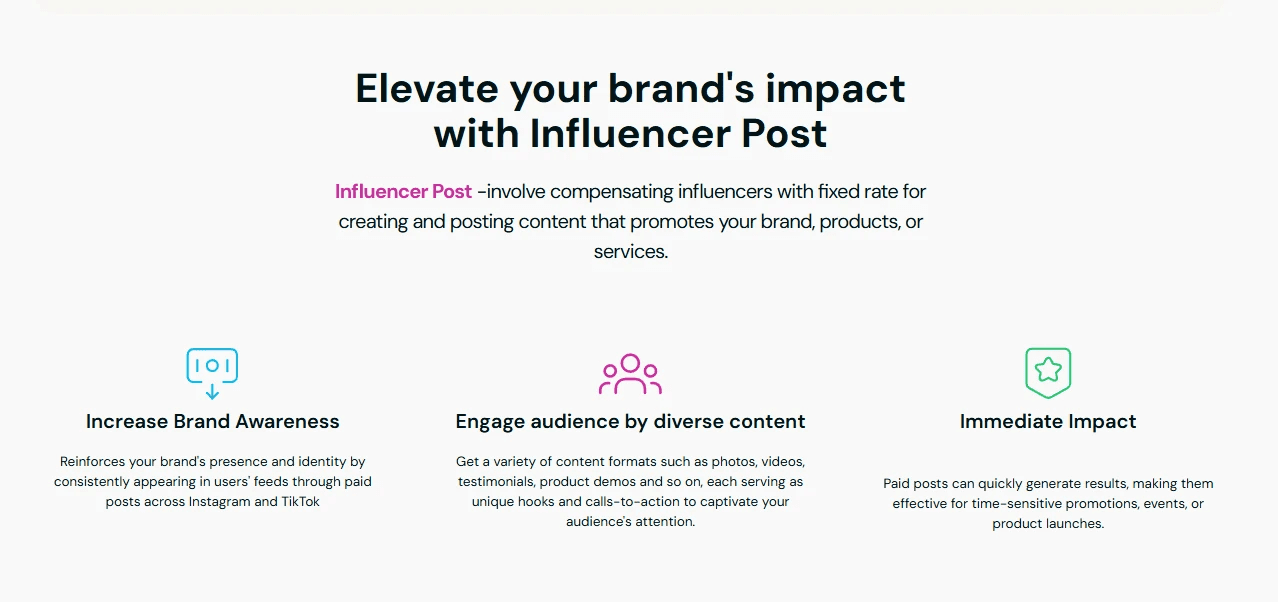
Insense integrates directly with Shopify, Amazon, and Meta, making it a natural fit for DTC brands already operating in those ecosystems. The platform provides a structured environment for managing creator briefs, payments, content rights, and campaign tracking — all in one place.
Its standout feature is influencer whitelisting: the ability to run paid ads directly through a creator's account handle rather than the brand's own. For brands with a whitelisting-heavy Meta strategy, having a CRM built specifically for that workflow has real operational value.
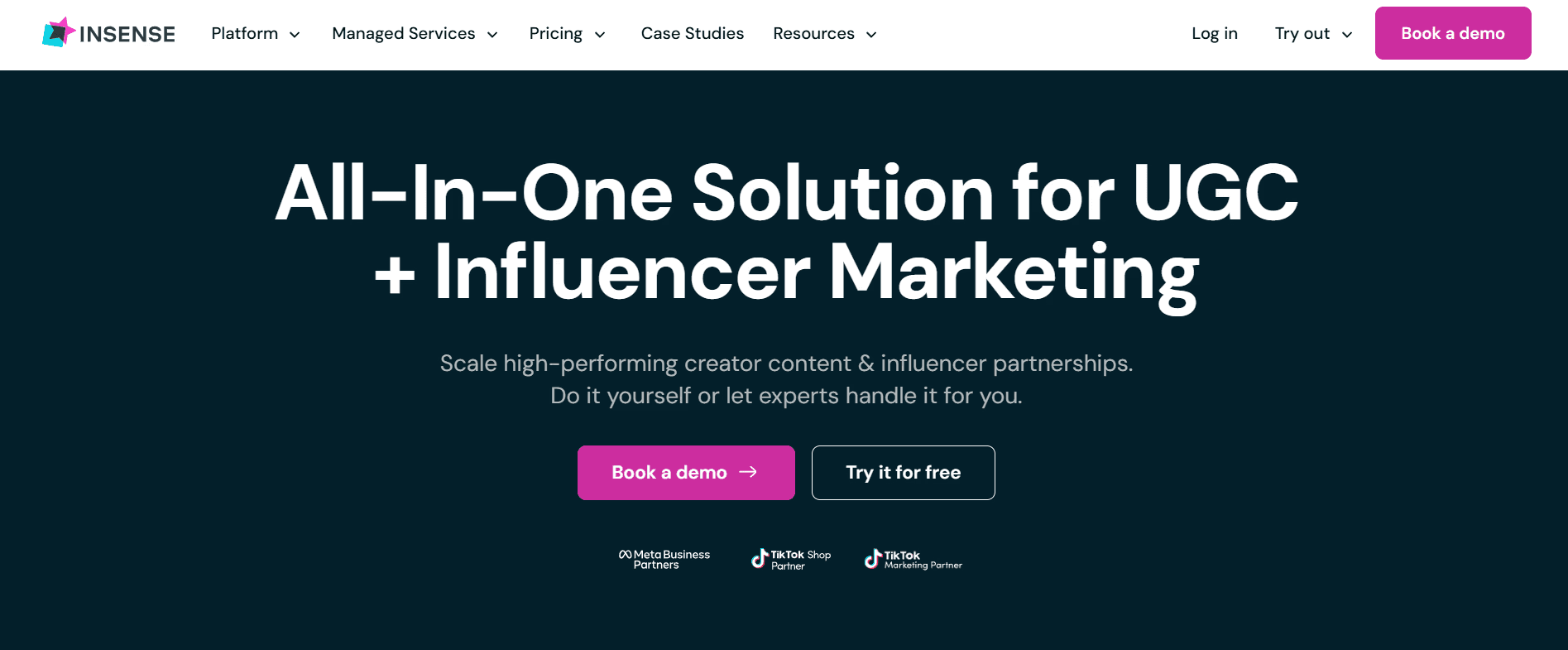
The platform costs roughly $1,500 per quarter for access, and it's genuinely worth that investment for brands with the team capacity to operate it effectively. The creators in the network are accessible and the rights management is handled within the platform, removing one of the more friction-heavy parts of the influencer marketing process.
Where Insense's limitations surface is in creative strategy. The platform matches brands with creators and facilitates the production workflow, but the quality of the brief and the creative direction remain the brand's responsibility. A weak brief produces weak content regardless of the platform it's managed on.
What Masterhooks Does Differently
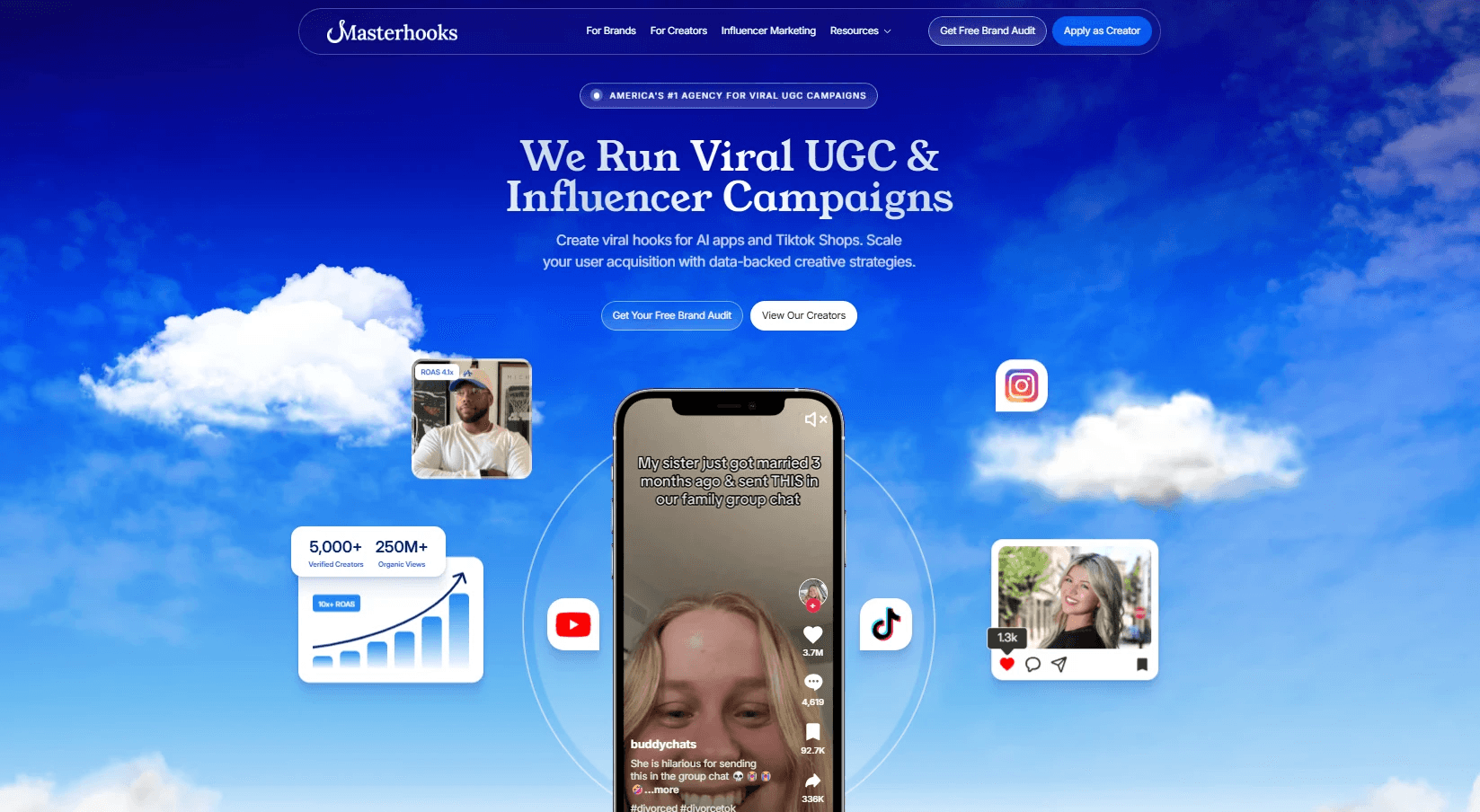
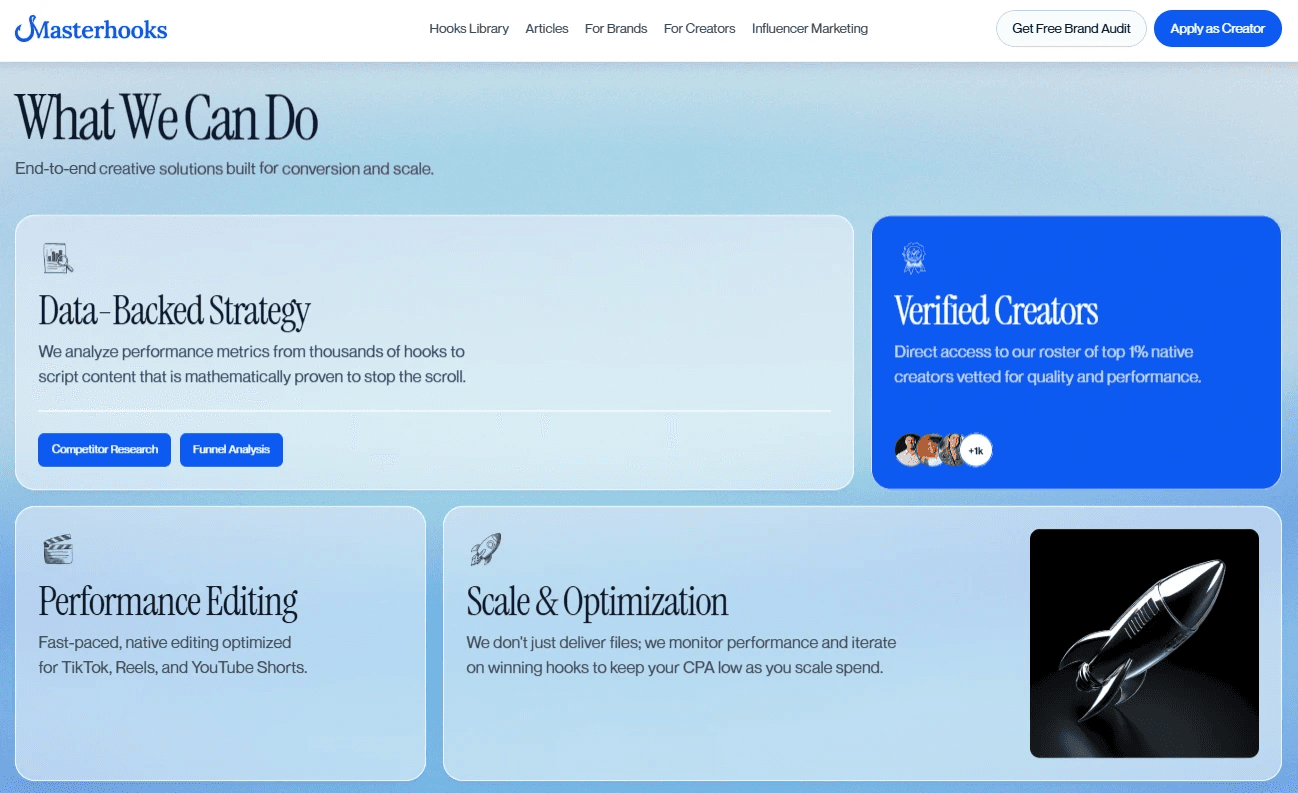
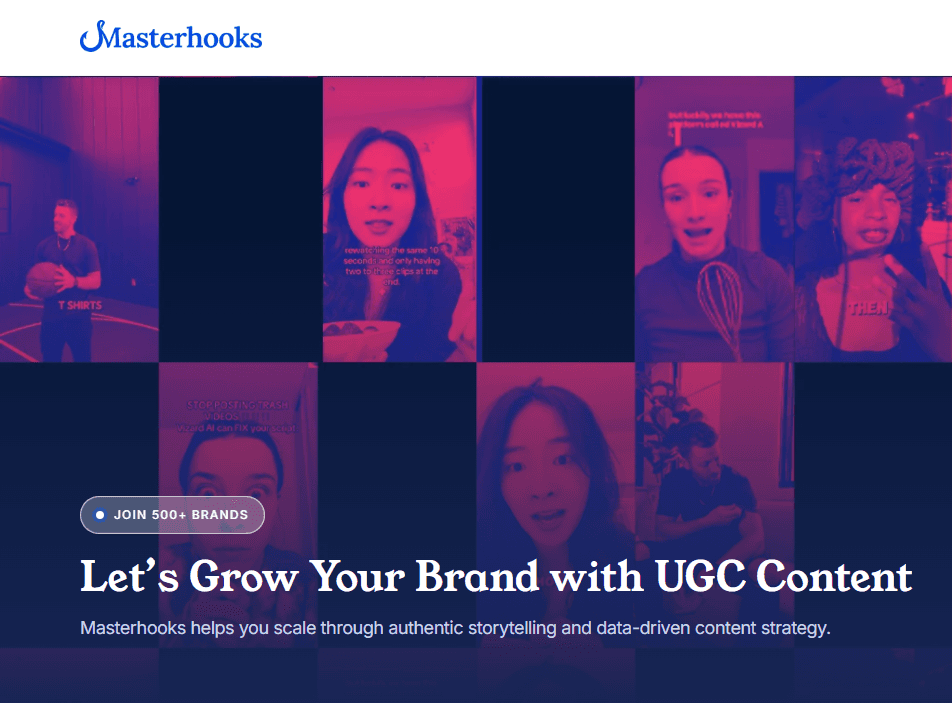
Masterhooks doesn't function as a creator CRM or a whitelisting tool. The model is closer to a contracted creative production team: the agency takes ownership of scripting, creator selection, direction, and editing, and delivers a final asset ready for the ad account.
For Shopify brands where the primary constraint is creative output rather than creator relationship management, this removes a significant layer of operational complexity. The brand provides the product and the performance goals; Masterhooks produces the content and handles the iteration cycle when initial assets don't perform.
The honest tradeoff: Masterhooks is not the right tool for brands whose strategy depends on whitelisting through specific creators' handles, or for teams that want direct control over creator selection and brief development. If whitelisting is central to your Meta strategy, Insense's infrastructure for managing that process is more purpose-built than anything a managed production service provides.
The Central Question: Do You Need a Tool or a Team?
The distinction between Insense and Masterhooks maps onto a practical organizational question: where is your brand's actual bottleneck?
If the bottleneck is managing creator relationships at scale, running whitelisting campaigns efficiently, and keeping content rights organized across a large creator roster, Insense addresses that directly. The platform is built for operational scale in influencer management.
If the bottleneck is producing content that actually performs in a paid social feed then the platform layer isn't solving the right problem. That's a creative strategy problem, and it requires creative strategy expertise.
Which Model Fits Your Situation
Masterhooks | Insense | |
|---|---|---|
Model type | Managed creative production | Self-serve influencer CRM |
Creative direction | Fully managed by Masterhooks | Brand's responsibility |
Whitelisting support | Not purpose-built for whitelisting | Core feature |
Best for | Brands needing a done-for-you paid social creative partner | Brands running large-scale whitelisting with a dedicated influencer manager |
Trying to figure out whether your Shopify brand's creative setup is actually optimized for paid performance?
But for brands whose primary bottleneck is creative quality rather than creator volume, the self-serve model creates a different kind of problem.
What Insense Does Well
Insense integrates directly with Shopify, Amazon, and Meta, making it a natural fit for DTC brands already operating in those ecosystems. The platform provides a structured environment for managing creator briefs, payments, content rights, and campaign tracking — all in one place.
Its standout feature is influencer whitelisting: the ability to run paid ads directly through a creator's account handle rather than the brand's own. For brands with a whitelisting-heavy Meta strategy, having a CRM built specifically for that workflow has real operational value.
The platform costs roughly $1,500 per quarter for access, and it's genuinely worth that investment for brands with the team capacity to operate it effectively. The creators in the network are accessible and the rights management is handled within the platform, removing one of the more friction-heavy parts of the influencer marketing process.
Where Insense's limitations surface is in creative strategy. The platform matches brands with creators and facilitates the production workflow, but the quality of the brief and the creative direction remain the brand's responsibility. A weak brief produces weak content regardless of the platform it's managed on.
What Masterhooks Does Differently
Masterhooks doesn't function as a creator CRM or a whitelisting tool. The model is closer to a contracted creative production team: the agency takes ownership of scripting, creator selection, direction, and editing, and delivers a final asset ready for the ad account.
For Shopify brands where the primary constraint is creative output rather than creator relationship management, this removes a significant layer of operational complexity. The brand provides the product and the performance goals; Masterhooks produces the content and handles the iteration cycle when initial assets don't perform.
The honest tradeoff: Masterhooks is not the right tool for brands whose strategy depends on whitelisting through specific creators' handles, or for teams that want direct control over creator selection and brief development. If whitelisting is central to your Meta strategy, Insense's infrastructure for managing that process is more purpose-built than anything a managed production service provides.
The Central Question: Do You Need a Tool or a Team?
The distinction between Insense and Masterhooks maps onto a practical organizational question: where is your brand's actual bottleneck?
If the bottleneck is managing creator relationships at scale, running whitelisting campaigns efficiently, and keeping content rights organized across a large creator roster, Insense addresses that directly. The platform is built for operational scale in influencer management.
If the bottleneck is producing content that actually performs in a paid social feed then the platform layer isn't solving the right problem. That's a creative strategy problem, and it requires creative strategy expertise.
Which Model Fits Your Situation
Masterhooks | Insense | |
|---|---|---|
Model type | Managed creative production | Self-serve influencer CRM |
Creative direction | Fully managed by Masterhooks | Brand's responsibility |
Whitelisting support | Not purpose-built for whitelisting | Core feature |
Best for | Brands needing a done-for-you paid social creative partner | Brands running large-scale whitelisting with a dedicated influencer manager |
Trying to figure out whether your Shopify brand's creative setup is actually optimized for paid performance?
Related Reading


Need help scaling?
Book a strategy call with our expert team to audit your current UGC setup.
Related Reading

How Marvel Built a 2.86 Billion Reach UGC Machine for Spider-Man: Brand New Day
Discover how Marvel generated 2.86 billion social reach for Spider-Man: Brand New Day using fan contests, brand partnerships, and emotional storytelling.
4 min
|
How Marvel Built a 2.86 Billion Reach UGC Machine for Spider-Man: Brand New Day
Discover how Marvel generated 2.86 billion social reach for Spider-Man: Brand New Day using fan contests, brand partnerships, and emotional storytelling.
4 min
|

How Latin America Became Spain's UGC Army at the World Cup Final
Spain won the World Cup, but its biggest advantage was millions of unpaid creators. Learn why emotional stakes generate stronger UGC than budgets.
2 min
|
How Latin America Became Spain's UGC Army at the World Cup Final
Spain won the World Cup, but its biggest advantage was millions of unpaid creators. Learn why emotional stakes generate stronger UGC than budgets.
2 min
|

Top 10 Best UGC Agencies in America (2026)
We ranked the top 10 UGC agencies in the US by model type creator quality and paid social performance. See who made the cut and why.
7 min
|
Top 10 Best UGC Agencies in America (2026)
We ranked the top 10 UGC agencies in the US by model type creator quality and paid social performance. See who made the cut and why.
7 min
|