


Micro-Influencer Seeding vs. Direct-Response UGC
Micro-Influencer Seeding vs. Direct-Response UGC
Seeding builds credibility. Direct-response UGC drives acquisition. Find out which CPG model fits your current growth stage.
Published:

Read Time:

5 min

Written by:
Fawwaz
Trend Research and Copywriter
TWO DISTINCT UGC PROBLEMS IN CPG BRANDS
The first is social proof, building authenticity. The second is acquisition, getting that product in front of new audiences.
TWO DISTINCT UGC PROBLEMS IN CPG BRANDS
The first is social proof, building authenticity. The second is acquisition, getting that product in front of new audiences.
TWO DISTINCT UGC PROBLEMS IN CPG BRANDS
The first is social proof, building authenticity. The second is acquisition, getting that product in front of new audiences.
Minisocial and Masterhooks are both credible options in the CPG space, but they're optimized for different problems. Here's an honest breakdown of what each does well and where each falls short.
What Minisocial Does Well
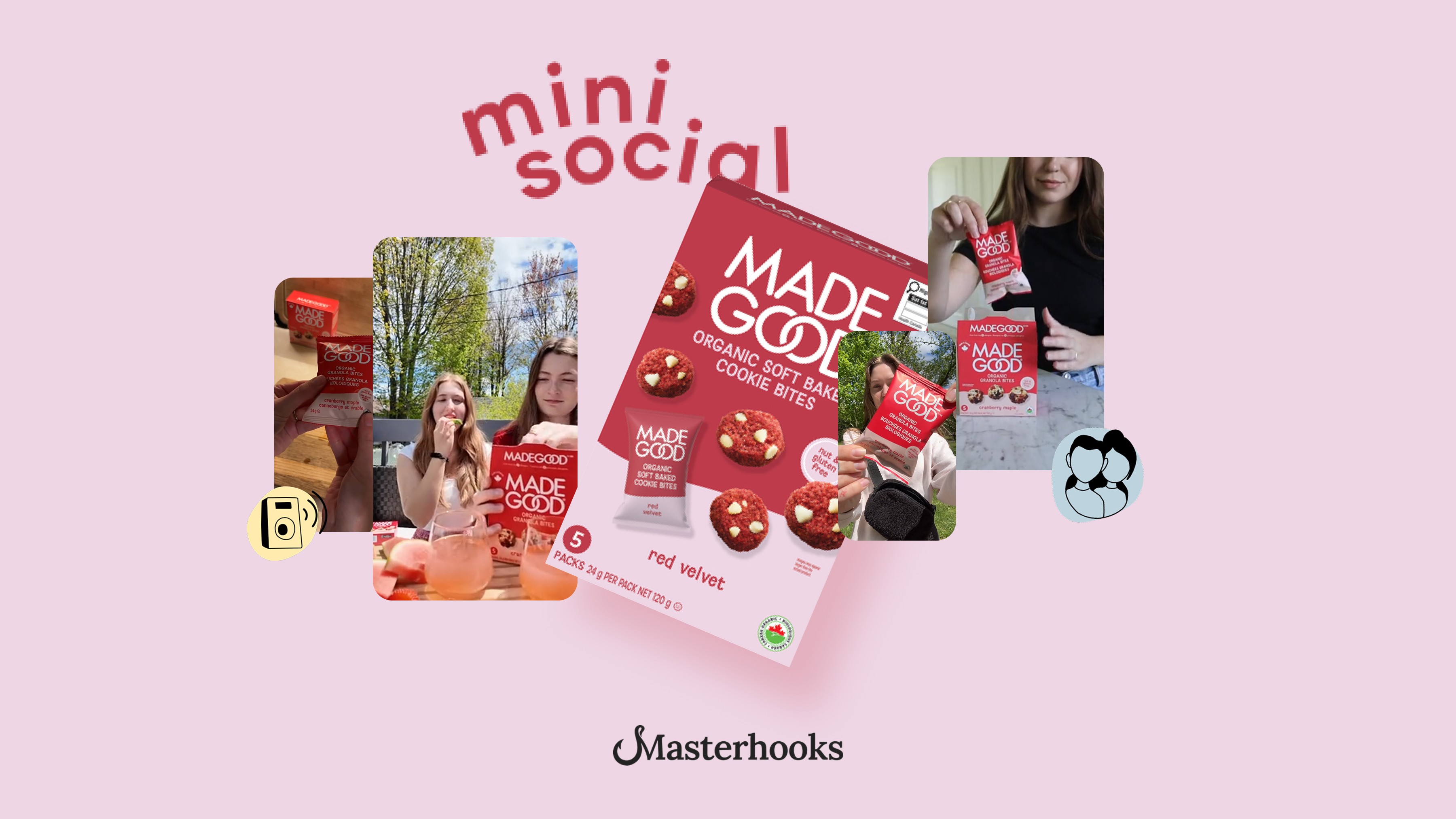
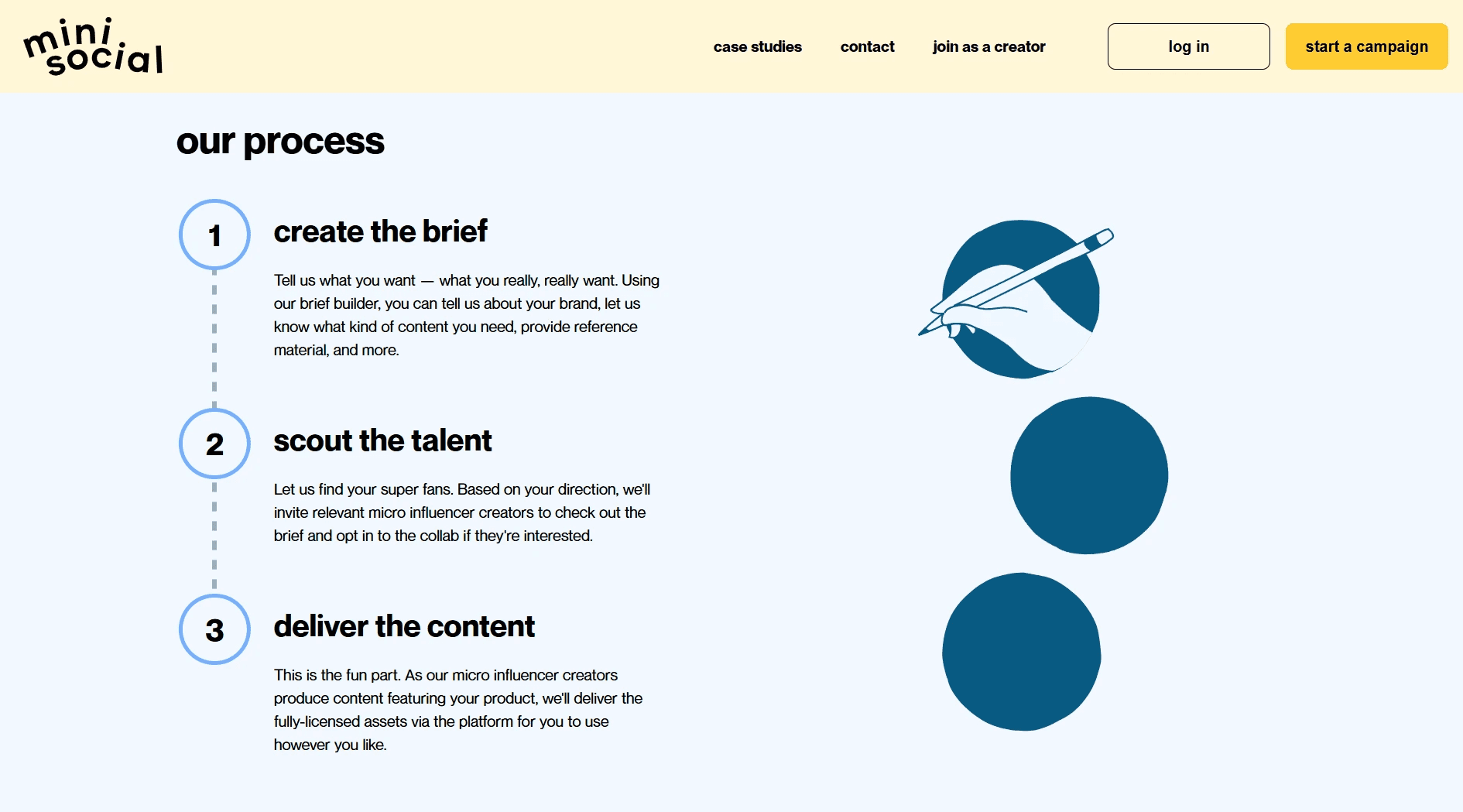
Minisocial has built a strong model around micro-influencer seeding. With campaigns typically starting around $3,000, the platform connects CPG brands with a curated group of micro-influencers who receive the product, share it authentically with their audience, and hand back the content with full usage rights through their "mini license" system.
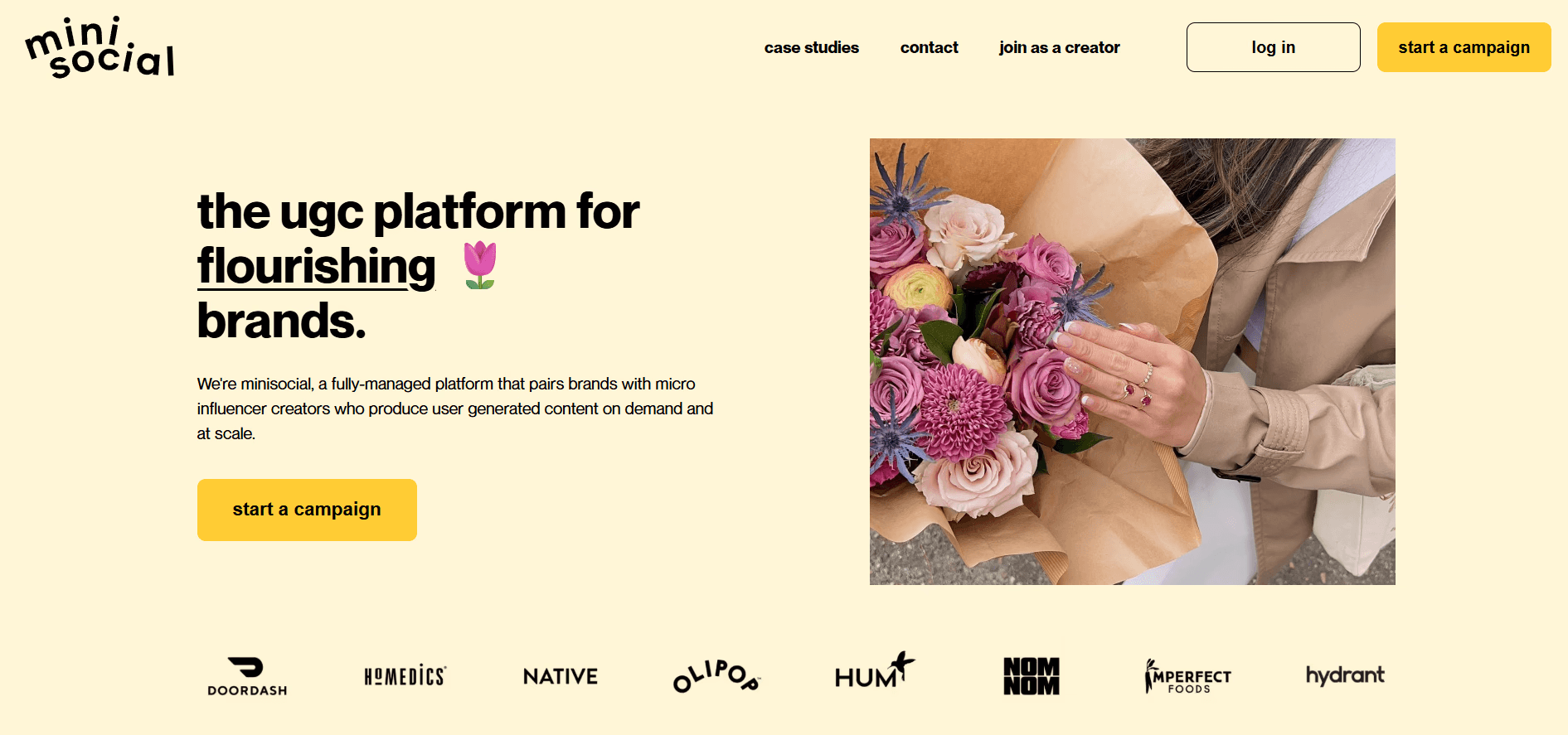
The content that comes out of this model tends to feel genuinely organic because it largely is: real people using a real product and sharing their honest reaction with an audience that actually follows them. That authenticity carries real value for social proof, product page content, and email marketing assets.
Minisocial is a strong fit for brands in a launch phase that need to build credibility quickly — accumulating lifestyle content, early reviews, and word-of-mouth momentum before scaling paid spend. The content volume can be significant, and the micro-influencer distribution provides organic reach that paid campaigns don't replicate.
The limitation surfaces when the goal shifts to paid social performance. Most Minisocial content is lifestyle-focused and not structured around direct-response frameworks. Converting it into high-performing TikTok or Meta ads typically requires additional editing, hook restructuring, and text overlay work from the brand's internal team.
What Masterhooks Does Well
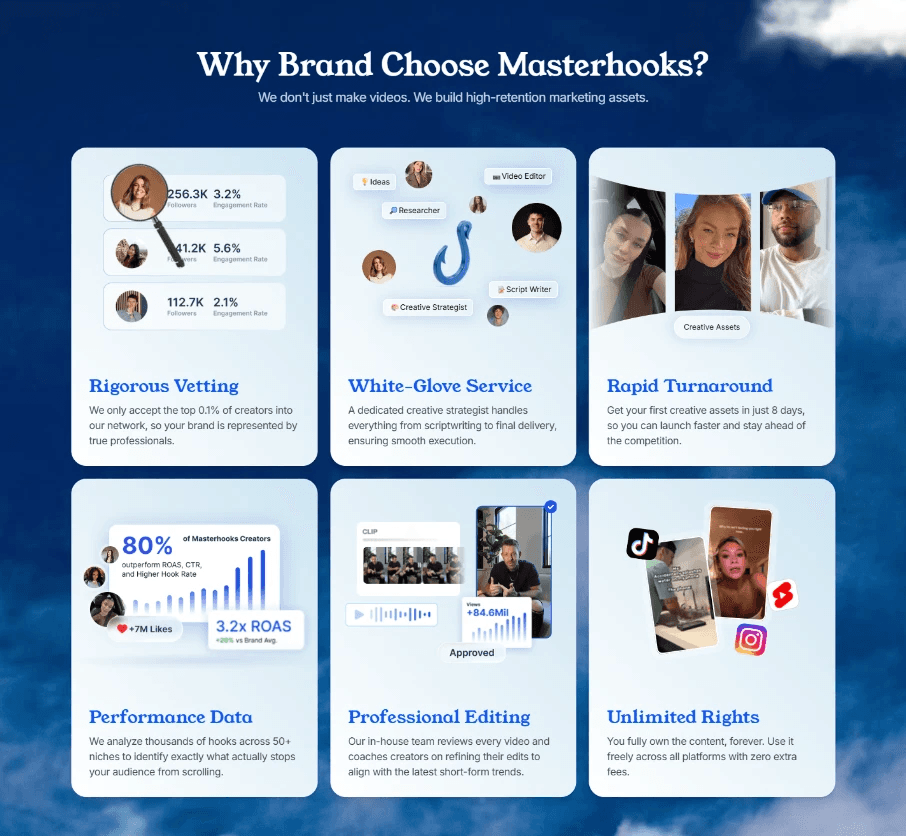
Masterhooks is built specifically for the paid acquisition problem. The agency produces UGC assets designed from the brief stage to run as paid ads on TikTok and Meta, with scripts built around direct-response principles and hooks engineered to capture cold audience attention in the first two seconds.
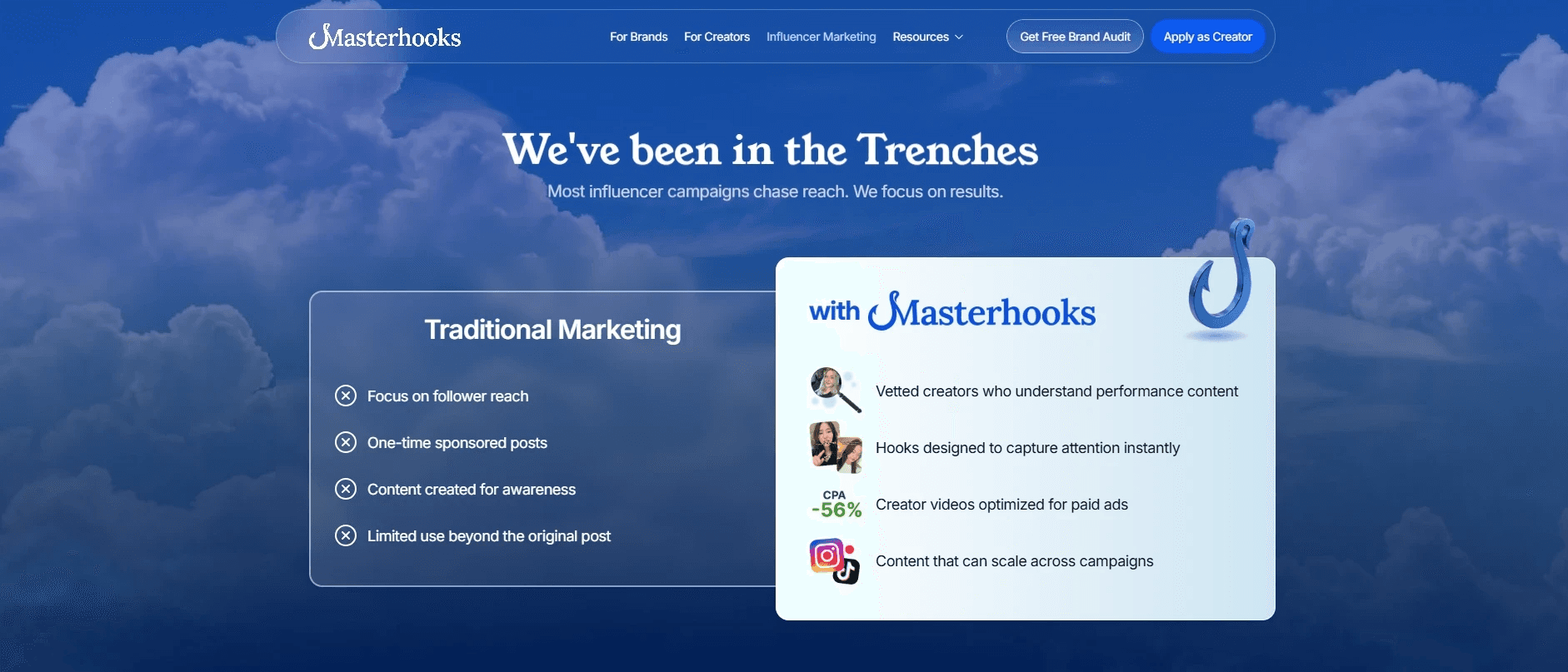
For CPG brands that have already established product-market fit and want to scale paid spend efficiently, this model removes a significant amount of friction. The output is a fully edited, fully licensed video that goes directly into the ad account without additional post-production work from the internal team. The focus on hook engineering and fast-paced native editing means the content is built to compete in a paid feed rather than an organic one.
The honest limitation: Masterhooks content doesn't serve the social proof use case. It's not designed to build product page review volume, generate organic word-of-mouth, or create the kind of lifestyle content that makes a new brand feel established and trusted. Brands that don't yet have a strong social proof foundation may find that even well-engineered paid content underperforms because the trust infrastructure isn't in place when new customers click through.
How to Think About the Sequencing
For most CPG brands, the practical question isn't which agency to choose permanently. It's which problem to solve first.
Brands early in their lifecycle typically need Minisocial's model first: building social proof, gathering authentic content, and creating the kind of organic presence that makes paid acquisition more efficient when it starts. A product page with strong review volume and lifestyle photography converts paid traffic at a significantly higher rate than one that's sparse.
Brands with an established product, a converting product page, and a need to scale new customer acquisition efficiently are better positioned to use Masterhooks. The paid social engine performs best when there's already something credible for new customers to land on.
Which Model Fits Your Situation
Masterhooks | Minisocial | |
|---|---|---|
Primary goal | Paid acquisition, CAC reduction | Social proof, organic reach, brand trust |
Content output | Direct-response paid social video | Lifestyle UGC, micro-influencer posts |
Additional editing needed | No — ad-ready on delivery | Often yes, for paid social use |
Best for | Brands scaling paid spend with an established product | Brands building credibility in launch or early growth phase |
Trying to figure out whether your CPG brand is ready to scale or still needs to build the foundation?
Trying to figure out whether your CPG brand is ready to scale or still needs to build the foundation?
Minisocial and Masterhooks are both credible options in the CPG space, but they're optimized for different problems. Here's an honest breakdown of what each does well and where each falls short.
What Minisocial Does Well
Minisocial has built a strong model around micro-influencer seeding. With campaigns typically starting around $3,000, the platform connects CPG brands with a curated group of micro-influencers who receive the product, share it authentically with their audience, and hand back the content with full usage rights through their "mini license" system.
The content that comes out of this model tends to feel genuinely organic because it largely is: real people using a real product and sharing their honest reaction with an audience that actually follows them. That authenticity carries real value for social proof, product page content, and email marketing assets.
Minisocial is a strong fit for brands in a launch phase that need to build credibility quickly — accumulating lifestyle content, early reviews, and word-of-mouth momentum before scaling paid spend. The content volume can be significant, and the micro-influencer distribution provides organic reach that paid campaigns don't replicate.
The limitation surfaces when the goal shifts to paid social performance. Most Minisocial content is lifestyle-focused and not structured around direct-response frameworks. Converting it into high-performing TikTok or Meta ads typically requires additional editing, hook restructuring, and text overlay work from the brand's internal team.
What Masterhooks Does Well
Masterhooks is built specifically for the paid acquisition problem. The agency produces UGC assets designed from the brief stage to run as paid ads on TikTok and Meta, with scripts built around direct-response principles and hooks engineered to capture cold audience attention in the first two seconds.
For CPG brands that have already established product-market fit and want to scale paid spend efficiently, this model removes a significant amount of friction. The output is a fully edited, fully licensed video that goes directly into the ad account without additional post-production work from the internal team. The focus on hook engineering and fast-paced native editing means the content is built to compete in a paid feed rather than an organic one.
The honest limitation: Masterhooks content doesn't serve the social proof use case. It's not designed to build product page review volume, generate organic word-of-mouth, or create the kind of lifestyle content that makes a new brand feel established and trusted. Brands that don't yet have a strong social proof foundation may find that even well-engineered paid content underperforms because the trust infrastructure isn't in place when new customers click through.
How to Think About the Sequencing
For most CPG brands, the practical question isn't which agency to choose permanently. It's which problem to solve first.
Brands early in their lifecycle typically need Minisocial's model first: building social proof, gathering authentic content, and creating the kind of organic presence that makes paid acquisition more efficient when it starts. A product page with strong review volume and lifestyle photography converts paid traffic at a significantly higher rate than one that's sparse.
Brands with an established product, a converting product page, and a need to scale new customer acquisition efficiently are better positioned to use Masterhooks. The paid social engine performs best when there's already something credible for new customers to land on.
Which Model Fits Your Situation
Masterhooks | Minisocial | |
|---|---|---|
Primary goal | Paid acquisition, CAC reduction | Social proof, organic reach, brand trust |
Content output | Direct-response paid social video | Lifestyle UGC, micro-influencer posts |
Additional editing needed | No — ad-ready on delivery | Often yes, for paid social use |
Best for | Brands scaling paid spend with an established product | Brands building credibility in launch or early growth phase |
Trying to figure out whether your CPG brand is ready to scale or still needs to build the foundation?
Related Reading


Need help scaling?
Book a strategy call with our expert team to audit your current UGC setup.
Related Reading

How Marvel Built a 2.86 Billion Reach UGC Machine for Spider-Man: Brand New Day
Discover how Marvel generated 2.86 billion social reach for Spider-Man: Brand New Day using fan contests, brand partnerships, and emotional storytelling.
4 min
|
How Marvel Built a 2.86 Billion Reach UGC Machine for Spider-Man: Brand New Day
Discover how Marvel generated 2.86 billion social reach for Spider-Man: Brand New Day using fan contests, brand partnerships, and emotional storytelling.
4 min
|

How Latin America Became Spain's UGC Army at the World Cup Final
Spain won the World Cup, but its biggest advantage was millions of unpaid creators. Learn why emotional stakes generate stronger UGC than budgets.
2 min
|
How Latin America Became Spain's UGC Army at the World Cup Final
Spain won the World Cup, but its biggest advantage was millions of unpaid creators. Learn why emotional stakes generate stronger UGC than budgets.
2 min
|
Top 10 Best UGC Agencies in America (2026)
We ranked the top 10 UGC agencies in the US by model type creator quality and paid social performance. See who made the cut and why.
7 min
|
Top 10 Best UGC Agencies in America (2026)
We ranked the top 10 UGC agencies in the US by model type creator quality and paid social performance. See who made the cut and why.
7 min
|