



The Hülkenberg Effect: Why "Finally" Is a Powerful Hook
The Hülkenberg Effect: Why "Finally" Is a Powerful Hook
Nico Hülkenberg's first Formula 1 podium created more buzz than the race winner. Here's why "finally" is one of content's strongest hooks.
Published:

Read Time:

3 min

Written by:
Fawwaz
Trend Research and Copywriter
NUMBER THREE ON THE CIRCUIT, NUMBER ONE ON THE INTERNET
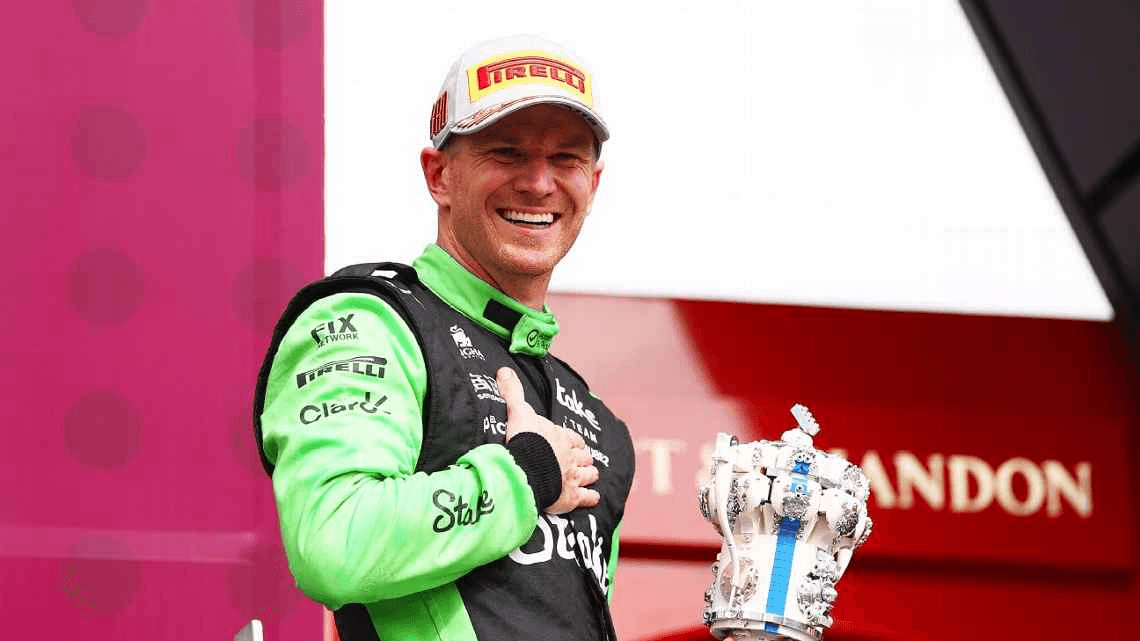
Hülkenberg is not on the first place, he only finished in the top three, but he “finally” became the champion.
NUMBER THREE ON THE CIRCUIT, NUMBER ONE ON THE INTERNET
Hülkenberg is not on the first place, he only finished in the top three, but he “finally” became the champion.
NUMBER THREE ON THE CIRCUIT, NUMBER ONE ON THE INTERNET
Hülkenberg is not on the first place, he only finished in the top three, but he “finally” became the champion.
Before Nico Hülkenberg finished third at the 2026 British Grand Prix, the content already existed. Not the highlight clips or the podium photos, but the story that made those clips matter: 239 races, 5,593 days, and a career defined by near-misses that never quite resolved.
When the resolution arrived at Silverstone, it produced one of the most widely distributed sports content moments of the year. Not because the podium was unexpected, but because the internet recognized a structure it had been waiting to complete.
The Content That Outperformed the Race Winner
Lando Norris won the British Grand Prix. He did so on home soil, in front of his own crowd, in one of the most emotionally charged settings in the Formula 1 calendar. By any conventional measure, Norris was the story.
Online, Hülkenberg won the content battle by a significant margin. The clips that circulated were not race highlights. Fans uploaded videos of Magnussen wiping away tears, commentators replayed Bortoleto’s enthusiastic radio commentary, and Mercedes even congratulated the rival team by sending them champagne. This content became bigger than the race result itself because every reaction reinforced the same message: “It finally happened.”
Each of these was a piece of content that did not require the race result to explain itself. The tears, the radio call, the champagne, the applause: they were all self-contained emotional moments that communicated the weight of what had happened to anyone who watched, regardless of whether they had followed Hülkenberg's career at all. The story inside those reactions was legible on its own. And that is exactly what made them share-worthy.
Why the Reactions Were Bigger Than the Result
This is where the content lesson begins, because the reactions were not generated by the podium. They were generated by the specific conditions that surrounded the podium.
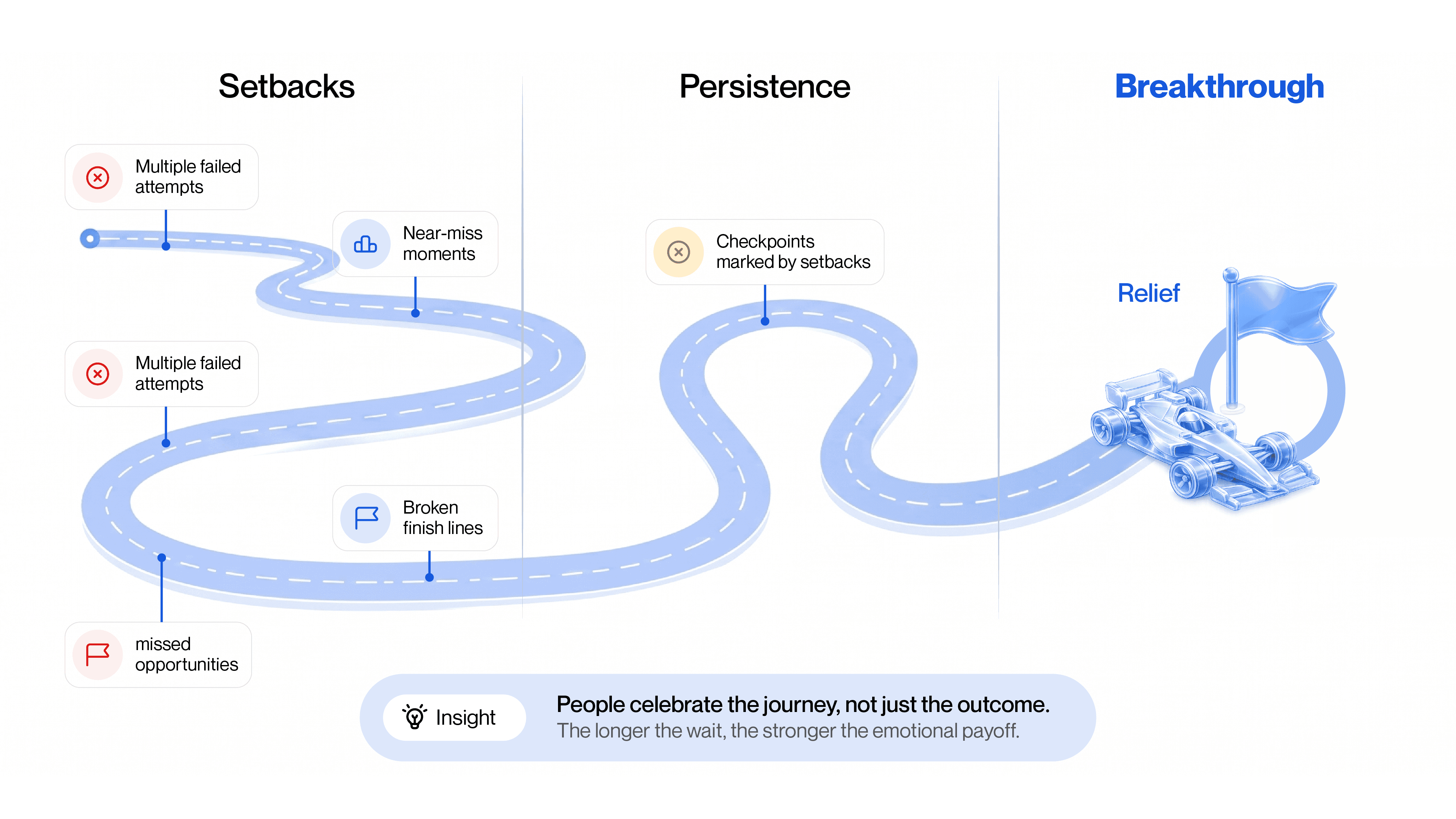
Hülkenberg was never seen as lacking talent, but rather as unlucky. This distinction is important because people sympathize with efforts that don’t yield results. Sympathy does not attach itself to failure, but to effort that keeps meeting circumstances outside its control. A driver who simply could not reach the podium is forgotten. A driver who deserved the podium and came close repeatedly for fifteen years becomes something the audience has an emotional stake in. That’s why the breakthrough that finally happens feels like justice, not a surprise.
By the time Silverstone happened, the audience already owned part of the story. They had followed the near-misses. They had watched the years accumulate. The podium did not introduce them to the narrative, it completed one they had been carrying.
The media center applause is the clearest evidence of this. Journalists are professionally trained to maintain neutrality toward results. They applauded because they had a stake in this outcome too. The moment was not surprising in the sense of being unexpected. It was surprising in the sense that things audiences have been waiting a long time for feel disproportionately powerful when they arrive.
Why "Finally" Is Such A Powerful Content Hook
The word “finally” carries an unspoken context, implying a long struggle with several failed attempts and perseverance that lead to a satisfying resolution.
Compare the sentence “We launched our product” with “After three years of failed prototypes, we finally launched.” The second sentence has great potential to spark curiosity among the audience, making them eager to find out what happened during those three years, so that the wait itself becomes part of the story.
This is the structural principle behind what happened at Silverstone. The podium was the noun, and the 239 races were what gave it meaning.
In storytelling terms, delayed success consistently produces stronger emotional responses than immediate success because the audience is not celebrating the achievement. They are experiencing relief. The distinction between those two emotional states is significant for anyone thinking about content: relief is a more powerful sharing motivator than celebration, because sharing relief validates the wait for the person sharing it.
How Brands Can Use The Same Narrative Arc
An important lesson to be learned from this case is not to create artificial challenges, as audiences can spot a forced narrative. Hülkenberg's podium demonstrates that the moment of success is only powerful in proportion to what precedes it.
Brands need to do a better job of documenting their actual journey. This can be done by showcasing the initial experimental process, failed ideas, customer feedback, iterations, unexpected setbacks, and small improvements. By capturing these elements, the audience can immediately understand the sacrifices made along the way when success finally arrives. The story of the struggle that led to victory feels well-deserved because they’ve witnessed the process. Without that context, even impressive achievements can feel emotionally flat.
The practical implication is not to manufacture struggle for content purposes. Audiences can identify a forced narrative. The implication is to start documenting earlier, when the outcome is still uncertain, rather than waiting until there is something polished to show. The early documentation is what creates the prior. The prior is what creates the "finally."
What Creators Can Learn From Hülkenberg
For creators, the same principle applies directly. Documenting the progression, the failures, the iterations, the near-misses, creates an audience that has a stake in the outcome before the outcome exists.
Creators often wait until everything is going smoothly before sharing it. This makes it difficult to capture the audience’s attention because they only see the success without knowing the struggles that went into it. Ironically, documenting progress usually creates a stronger long-term story than documenting perfection.
To capture the audience’s attention, creators need to document and share the struggles they’ve had to go through first. Because when the audience sees the obstacles first, they feel invested in the outcome. As a result, every update builds anticipation, every improvement feels meaningful, and by the time success arrives, the audience is already eager to celebrate it with you.
The Story Behind Every Breakthrough
One of the reasons Hülkenberg's podium generated so much conversation is that people weren't simply watching a race. They were watching the conclusion of a story that had unfolded over more than a decade.
That lesson extends far beyond Formula 1. Many brands focus heavily on announcing achievements while overlooking the journey that gives those achievements emotional weight. Progress documented over time often creates stronger engagement than polished success presented without context.

This is one reason Masterhooks frequently analyzes narrative structures alongside creative execution. Strong content rarely begins at the finish line. It begins long before the breakthrough, giving audiences a reason to care when the words "it finally worked" eventually become true.
Still confused about how to create a story that touches the audience's feelings?

Still confused about how to create a story that touches the audience's feelings?
Before Nico Hülkenberg finished third at the 2026 British Grand Prix, the content already existed. Not the highlight clips or the podium photos, but the story that made those clips matter: 239 races, 5,593 days, and a career defined by near-misses that never quite resolved.
When the resolution arrived at Silverstone, it produced one of the most widely distributed sports content moments of the year. Not because the podium was unexpected, but because the internet recognized a structure it had been waiting to complete.
The Content That Outperformed the Race Winner
Lando Norris won the British Grand Prix. He did so on home soil, in front of his own crowd, in one of the most emotionally charged settings in the Formula 1 calendar. By any conventional measure, Norris was the story.
Online, Hülkenberg won the content battle by a significant margin. The clips that circulated were not race highlights. Fans uploaded videos of Magnussen wiping away tears, commentators replayed Bortoleto’s enthusiastic radio commentary, and Mercedes even congratulated the rival team by sending them champagne. This content became bigger than the race result itself because every reaction reinforced the same message: “It finally happened.”
Each of these was a piece of content that did not require the race result to explain itself. The tears, the radio call, the champagne, the applause: they were all self-contained emotional moments that communicated the weight of what had happened to anyone who watched, regardless of whether they had followed Hülkenberg's career at all. The story inside those reactions was legible on its own. And that is exactly what made them share-worthy.
Why the Reactions Were Bigger Than the Result
This is where the content lesson begins, because the reactions were not generated by the podium. They were generated by the specific conditions that surrounded the podium.
Hülkenberg was never seen as lacking talent, but rather as unlucky. This distinction is important because people sympathize with efforts that don’t yield results. Sympathy does not attach itself to failure, but to effort that keeps meeting circumstances outside its control. A driver who simply could not reach the podium is forgotten. A driver who deserved the podium and came close repeatedly for fifteen years becomes something the audience has an emotional stake in. That’s why the breakthrough that finally happens feels like justice, not a surprise.
By the time Silverstone happened, the audience already owned part of the story. They had followed the near-misses. They had watched the years accumulate. The podium did not introduce them to the narrative, it completed one they had been carrying.
The media center applause is the clearest evidence of this. Journalists are professionally trained to maintain neutrality toward results. They applauded because they had a stake in this outcome too. The moment was not surprising in the sense of being unexpected. It was surprising in the sense that things audiences have been waiting a long time for feel disproportionately powerful when they arrive.
Why "Finally" Is Such A Powerful Content Hook
The word “finally” carries an unspoken context, implying a long struggle with several failed attempts and perseverance that lead to a satisfying resolution.
Compare the sentence “We launched our product” with “After three years of failed prototypes, we finally launched.” The second sentence has great potential to spark curiosity among the audience, making them eager to find out what happened during those three years, so that the wait itself becomes part of the story.
This is the structural principle behind what happened at Silverstone. The podium was the noun, and the 239 races were what gave it meaning.
In storytelling terms, delayed success consistently produces stronger emotional responses than immediate success because the audience is not celebrating the achievement. They are experiencing relief. The distinction between those two emotional states is significant for anyone thinking about content: relief is a more powerful sharing motivator than celebration, because sharing relief validates the wait for the person sharing it.
How Brands Can Use The Same Narrative Arc
An important lesson to be learned from this case is not to create artificial challenges, as audiences can spot a forced narrative. Hülkenberg's podium demonstrates that the moment of success is only powerful in proportion to what precedes it.
Brands need to do a better job of documenting their actual journey. This can be done by showcasing the initial experimental process, failed ideas, customer feedback, iterations, unexpected setbacks, and small improvements. By capturing these elements, the audience can immediately understand the sacrifices made along the way when success finally arrives. The story of the struggle that led to victory feels well-deserved because they’ve witnessed the process. Without that context, even impressive achievements can feel emotionally flat.
The practical implication is not to manufacture struggle for content purposes. Audiences can identify a forced narrative. The implication is to start documenting earlier, when the outcome is still uncertain, rather than waiting until there is something polished to show. The early documentation is what creates the prior. The prior is what creates the "finally."
What Creators Can Learn From Hülkenberg
For creators, the same principle applies directly. Documenting the progression, the failures, the iterations, the near-misses, creates an audience that has a stake in the outcome before the outcome exists.
Creators often wait until everything is going smoothly before sharing it. This makes it difficult to capture the audience’s attention because they only see the success without knowing the struggles that went into it. Ironically, documenting progress usually creates a stronger long-term story than documenting perfection.
To capture the audience’s attention, creators need to document and share the struggles they’ve had to go through first. Because when the audience sees the obstacles first, they feel invested in the outcome. As a result, every update builds anticipation, every improvement feels meaningful, and by the time success arrives, the audience is already eager to celebrate it with you.
The Story Behind Every Breakthrough
One of the reasons Hülkenberg's podium generated so much conversation is that people weren't simply watching a race. They were watching the conclusion of a story that had unfolded over more than a decade.
That lesson extends far beyond Formula 1. Many brands focus heavily on announcing achievements while overlooking the journey that gives those achievements emotional weight. Progress documented over time often creates stronger engagement than polished success presented without context.
This is one reason Masterhooks frequently analyzes narrative structures alongside creative execution. Strong content rarely begins at the finish line. It begins long before the breakthrough, giving audiences a reason to care when the words "it finally worked" eventually become true.
Still confused about how to create a story that touches the audience's feelings?
Related Reading
Related Reading

Why Pretty Little Liars and The Love Hypothesis Are Going Viral in the Same Week
5 min
|
Why Pretty Little Liars and The Love Hypothesis Are Going Viral in the Same Week
Learn how Pretty Little Liars and The Love Hypothesis turn fans into engines for fan-generated content, and what brands can learn about community-led growth.
5 min
|

What Is a Content Pillar? (And How to Build One That Actually Works for UGC)
4 min
|
What Is a Content Pillar? (And How to Build One That Actually Works for UGC)
Learn what a content pillar is, why it matters for UGC, and how to build a practical content pillar strategy with creator briefs and real examples.
4 min
|

First Day of Fall, First Day of Content: The UGC Formats That Win in October
4 min
|
First Day of Fall, First Day of Content: The UGC Formats That Win in October
Discover five October UGC formats brands can use this fall, from seasonal transitions and cozy routines to Halloween teasers and reset content.
4 min
|


Need help scaling?
Book a strategy call with our expert team to audit your current UGC setup.

