



Trends
The Viking Row Effect: What Happens When Fan Culture Becomes the Content
The Viking Row Effect: What Happens When Fan Culture Becomes the Content
Viking Row spread from Norway to Times Square without ads, creators, or sponsorships. Here's what brands can learn from its viral growth.
Published:

Read Time:

4 min

Written by:
Fawwaz
Trend Research and Copywriter
Most viral content starts the same way.
Someone creates a video, then people watch it, and some of them even share it. But this method doesn't always work, because several others got viral in different ways.
Most viral content starts the same way.
Someone creates a video, then people watch it, and some of them even share it. But this method doesn't always work, because several others got viral in different ways.
Most viral content starts the same way.
Someone creates a video, then people watch it, and some of them even share it. But this method doesn't always work, because several others got viral in different ways.
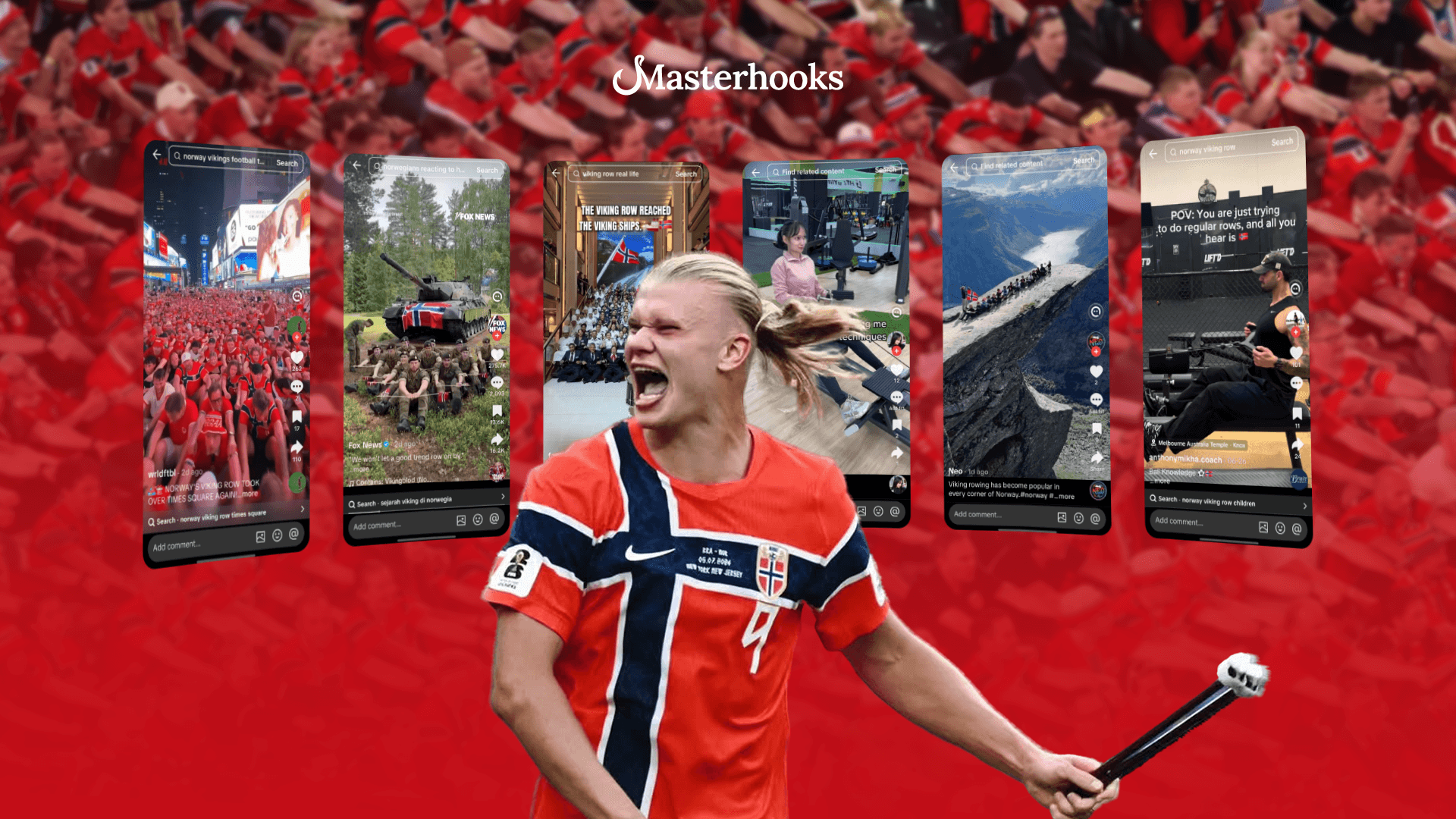
Viking Row is one of those trends that took an unusual path to going viral because people didn’t just watch, but joined into the trend. What’s interesting is that this trend took off without a media budget, brand sponsors, or a network of paid creators.
This article will explore how the “Viking Row” trend represents an intriguing phenomenon for marketers. While it is not a campaign, its performance demonstrates that this trend has become a massive distribution system for Viking and Norwegian culture.
How Viking Row Was Born
This movement originated in Norway in early 2026 and is credited to a Norwegian fan named Ole Frøystad. Ole first introduced this rowing-style celebration which was inspired by Viking imagery and Norwegian cultural identity during a friendly match between Norway and Switzerland in March 2026.
Tap to play
The movement itself is very simple: participants sit or stand together, then perform synchronized rowing motions while singing. Although simple, this movement immediately conveys a sense of unity among Norwegian fans, so much so that even someone seeing it for the first time will instantly understand what’s happening.
When Norway qualified for the 2026 FIFA World Cup, this celebration took center stage on a much larger scale. This was largely because Norwegian players, including Erling Haaland and Martin Ødegaard, adopted the rowing celebration during key moments of the tournament.
Tap to play
This ritual moved from the fans to the players, and then from the players back to fans in packed stadiums, Times Square, The New York subway, a Mets game, all around the world. This transition transformed everything, from a local celebration into a global one that could be shared and enjoyed by the entire world.
Tap to play
Tap to play
Tap to play
Why Did It Spread So Quickly?
Many viral moments fade away after a few days, but Viking Row continues to grow. This is likely because the Viking Row format has three characteristics that make this celebration very easy to share.
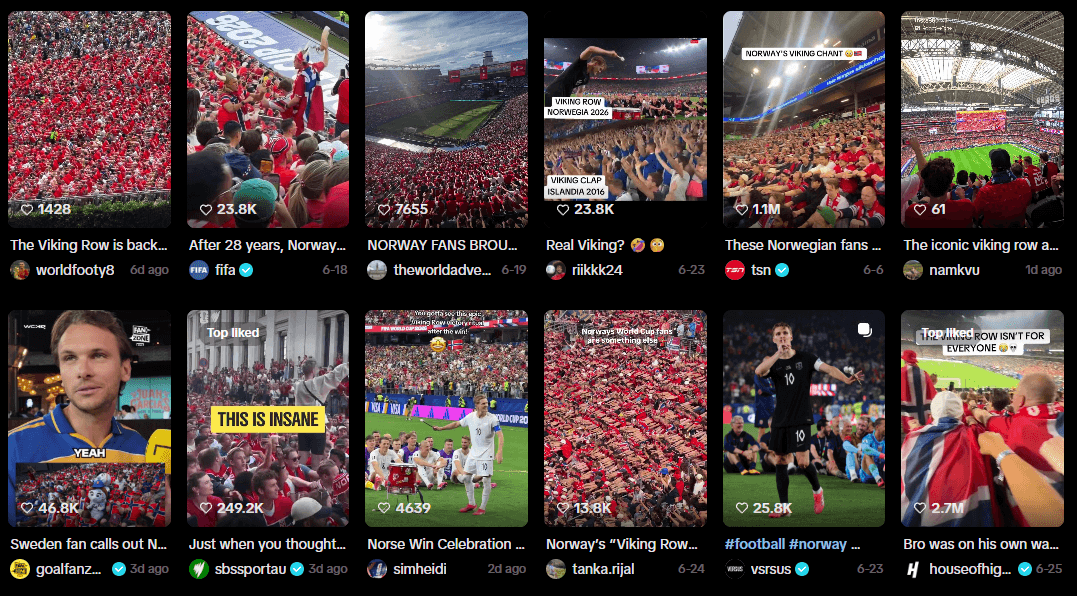
Here are those three characteristics:
It Was Easy To Do
The movements are so simple that anyone can join in right away. Those who want to participate don’t need any special skills, expensive equipment, or even language skills. People can follow along after just one glance, and this low barrier to entry often encourages participation.
It Was Visually Powerful
Synchronized movements often create images that immediately stand out to the public. This is the case with the Viking Row trend, where a large group rowing together looks impressive even when taken out of context. People scrolling through social media can grasp the visual before reading the caption, and this is important because social media platforms value instant recognition.
It Carried Cultural Meaning
This celebration wasn’t created by chance, but is strongly connected to the Viking image, which is a symbol of Norwegian identity, and quickly became part of the team’s historic journey at the World Cup. With this trend, people aren’t just imitating a movement; they’re participating in a story, and stories can spread much further than actions alone.
The Anatomy Of A Format That Spreads By Itself
One reason marketers should pay attention to Viking Row is that it exhibits several characteristics found in highly replicable content formats. This is crucial to note because many successful UGC trends follow this pattern:
Clear Physical Action
With clear visuals, the audience immediately knows what to do. This is crucial to note because confusion slows down participation, while clarity boosts it. The rowing motion in the Viking Row trend is very clear, and that simplicity removes barriers to participation.
Built-In Rhythm
People naturally enjoy synchronized behavior, whether it’s music, singing, dancing, or sports traditions. This rowing motion creates a rhythm that groups can easily follow together, making repetition enjoyable.
A Shared Identity
Perhaps the most important factor in this trend is identity. The Viking Row celebration seems to signify a sense of belonging. Initially, this trend emerged as a sign of support for Norway, but it later came to represent participation in a larger cultural moment, where even non-Norwegian fans joined in. In this trend, people aren’t showcasing marketing messages; instead, they’re expressing a sense of belonging.
What Brands Can Learn From Viking Row
Most branded content demands attention, whereas Viking Row invites participation. That difference accounts for much of its success. People love to join a movement, contribute, and be part of something bigger than themselves. This is a far cry from brands that often focus too much on view counts.
Greater opportunities may lie in designing experiences that encourage participation. The most successful brand communities operate this way by creating rituals, shared behaviors, or community traditions that encourage audiences to naturally share content, turning participation itself into a distribution channel.
If you want to design something like Viking Row, here are three things you can do:
Define a repeatable physical action. Create something that can be learned in less than ten seconds—not something that requires a lengthy explanation to understand. |
Design it to be visually scalable. This is important so that the trend you’re trying to create looks more engaging as the group grows. |
Let someone from within the community start it first. You can encourage or guide someone to do it naturally. This is important because Ole Frøystad introduced the Viking Row at a friendly match, not on the World Cup stage. |
These three points are important for you to keep in mind because a ritual that requires brand promotion to survive isn’t a ritual, but an activation. To illustrate, you can study other brands that follow a similar logic, such as SoulCycle and Liquid Death.
SoulCycle builds its community culture around recurring in-studio rituals that riders then replicate on social media, not because of a UGC campaign, but because that participation creates an identity worth showcasing. Liquid Death builds a community around the brand’s absurd behavior, which fans adopt as their own inside joke without needing direction from the creators.
The prerequisite in both cases is the same one behind Viking Row: an identity specific enough that joining it says something about who you are. Generic brand values do not generate this. A sharply defined one does.
When Participation Becomes Distribution
The Viking Row story demonstrates how modern distribution often works. No advertising campaign instructed people to recreate the celebration. No official creator program coordinated the spread. The format moved because participation itself became rewarding.
For brands, this offers an important perspective. Audiences are often more willing to share experiences they can join than messages they are asked to consume. This is one reason Masterhooks frequently studies community behaviors, creator ecosystems, and highly replicable content formats. The strongest forms of distribution often emerge when audiences stop acting like viewers and start acting like participants.
Stop buying vanity metrics. Start engineering your TikTok conversions.
Stop buying vanity metrics. Start engineering your TikTok conversions.
Viking Row is one of those trends that took an unusual path to going viral because people didn’t just watch, but joined into the trend. What’s interesting is that this trend took off without a media budget, brand sponsors, or a network of paid creators.
This article will explore how the “Viking Row” trend represents an intriguing phenomenon for marketers. While it is not a campaign, its performance demonstrates that this trend has become a massive distribution system for Viking and Norwegian culture.
How Viking Row Was Born
This movement originated in Norway in early 2026 and is credited to a Norwegian fan named Ole Frøystad. Ole first introduced this rowing-style celebration which was inspired by Viking imagery and Norwegian cultural identity during a friendly match between Norway and Switzerland in March 2026.
Tap to play
The movement itself is very simple: participants sit or stand together, then perform synchronized rowing motions while singing. Although simple, this movement immediately conveys a sense of unity among Norwegian fans, so much so that even someone seeing it for the first time will instantly understand what’s happening.
When Norway qualified for the 2026 FIFA World Cup, this celebration took center stage on a much larger scale. This was largely because Norwegian players, including Erling Haaland and Martin Ødegaard, adopted the rowing celebration during key moments of the tournament.
Tap to play
This ritual moved from the fans to the players, and then from the players back to fans in packed stadiums, Times Square, The New York subway, a Mets game, all around the world. This transition transformed everything, from a local celebration into a global one that could be shared and enjoyed by the entire world.
Tap to play
Tap to play
Tap to play
Why Did It Spread So Quickly?
Many viral moments fade away after a few days, but Viking Row continues to grow. This is likely because the Viking Row format has three characteristics that make this celebration very easy to share.
Here are those three characteristics:
It Was Easy To Do
The movements are so simple that anyone can join in right away. Those who want to participate don’t need any special skills, expensive equipment, or even language skills. People can follow along after just one glance, and this low barrier to entry often encourages participation.
It Was Visually Powerful
Synchronized movements often create images that immediately stand out to the public. This is the case with the Viking Row trend, where a large group rowing together looks impressive even when taken out of context. People scrolling through social media can grasp the visual before reading the caption, and this is important because social media platforms value instant recognition.
It Carried Cultural Meaning
This celebration wasn’t created by chance, but is strongly connected to the Viking image, which is a symbol of Norwegian identity, and quickly became part of the team’s historic journey at the World Cup. With this trend, people aren’t just imitating a movement; they’re participating in a story, and stories can spread much further than actions alone.
The Anatomy Of A Format That Spreads By Itself
One reason marketers should pay attention to Viking Row is that it exhibits several characteristics found in highly replicable content formats. This is crucial to note because many successful UGC trends follow this pattern:
Clear Physical Action
With clear visuals, the audience immediately knows what to do. This is crucial to note because confusion slows down participation, while clarity boosts it. The rowing motion in the Viking Row trend is very clear, and that simplicity removes barriers to participation.
Built-In Rhythm
People naturally enjoy synchronized behavior, whether it’s music, singing, dancing, or sports traditions. This rowing motion creates a rhythm that groups can easily follow together, making repetition enjoyable.
A Shared Identity
Perhaps the most important factor in this trend is identity. The Viking Row celebration seems to signify a sense of belonging. Initially, this trend emerged as a sign of support for Norway, but it later came to represent participation in a larger cultural moment, where even non-Norwegian fans joined in. In this trend, people aren’t showcasing marketing messages; instead, they’re expressing a sense of belonging.
What Brands Can Learn From Viking Row
Most branded content demands attention, whereas Viking Row invites participation. That difference accounts for much of its success. People love to join a movement, contribute, and be part of something bigger than themselves. This is a far cry from brands that often focus too much on view counts.
Greater opportunities may lie in designing experiences that encourage participation. The most successful brand communities operate this way by creating rituals, shared behaviors, or community traditions that encourage audiences to naturally share content, turning participation itself into a distribution channel.
If you want to design something like Viking Row, here are three things you can do:
Define a repeatable physical action. Create something that can be learned in less than ten seconds—not something that requires a lengthy explanation to understand. |
Design it to be visually scalable. This is important so that the trend you’re trying to create looks more engaging as the group grows. |
Let someone from within the community start it first. You can encourage or guide someone to do it naturally. This is important because Ole Frøystad introduced the Viking Row at a friendly match, not on the World Cup stage. |
These three points are important for you to keep in mind because a ritual that requires brand promotion to survive isn’t a ritual, but an activation. To illustrate, you can study other brands that follow a similar logic, such as SoulCycle and Liquid Death.
SoulCycle builds its community culture around recurring in-studio rituals that riders then replicate on social media, not because of a UGC campaign, but because that participation creates an identity worth showcasing. Liquid Death builds a community around the brand’s absurd behavior, which fans adopt as their own inside joke without needing direction from the creators.
The prerequisite in both cases is the same one behind Viking Row: an identity specific enough that joining it says something about who you are. Generic brand values do not generate this. A sharply defined one does.
When Participation Becomes Distribution
The Viking Row story demonstrates how modern distribution often works. No advertising campaign instructed people to recreate the celebration. No official creator program coordinated the spread. The format moved because participation itself became rewarding.
For brands, this offers an important perspective. Audiences are often more willing to share experiences they can join than messages they are asked to consume. This is one reason Masterhooks frequently studies community behaviors, creator ecosystems, and highly replicable content formats. The strongest forms of distribution often emerge when audiences stop acting like viewers and start acting like participants.
Stop buying vanity metrics. Start engineering your TikTok conversions.
Related Reading
Related Reading
Why Pretty Little Liars and The Love Hypothesis Are Going Viral in the Same Week
5 min
|
Trends
Why Pretty Little Liars and The Love Hypothesis Are Going Viral in the Same Week
Learn how Pretty Little Liars and The Love Hypothesis turn fans into engines for fan-generated content, and what brands can learn about community-led growth.
5 min
|
Trends

What Is a Content Pillar? (And How to Build One That Actually Works for UGC)
4 min
|
Trends
What Is a Content Pillar? (And How to Build One That Actually Works for UGC)
Learn what a content pillar is, why it matters for UGC, and how to build a practical content pillar strategy with creator briefs and real examples.
4 min
|
Trends
First Day of Fall, First Day of Content: The UGC Formats That Win in October
4 min
|
Trends
First Day of Fall, First Day of Content: The UGC Formats That Win in October
Discover five October UGC formats brands can use this fall, from seasonal transitions and cozy routines to Halloween teasers and reset content.
4 min
|
Trends


Need help scaling?
Book a strategy call with our expert team to audit your current UGC setup.

