Why TikTok Becoming FIFA's Official Platform Changes How Every Brand Should Think About Content
Why TikTok Becoming FIFA's Official Platform Changes How Every Brand Should Think About Content
FIFA's partnership with TikTok signals a major shift in sports media. Here's what brands can learn about creators, content, and distribution.
Published:

Read Time:

4 min

Written by:
Fawwaz
Trend Research and Copywriter
DISTRIBUTION USED TO BE CONTROLLED
For decades, a small group of broadcasters determined how World Cup content reached audiences and when conversations began.
DISTRIBUTION USED TO BE CONTROLLED
For decades, a small group of broadcasters determined how World Cup content reached audiences and when conversations began.
DISTRIBUTION USED TO BE CONTROLLED
For decades, a small group of broadcasters determined how World Cup content reached audiences and when conversations began.
For the first time, the 2026 FIFA World Cup is introducing something different by designating a social media platform as its official platform partner. What’s surprising is that this platform isn’t a television network, but TikTok. This cannot be viewed merely as a form of partnership, but rather as a shift in mindset regarding media distribution.
When an institution as large as FIFA changes its mindset about distribution, marketers need to take notice. This article will explore and help you understand how traditional broadcast distribution will shift based on what happens at the 2026 FIFA World Cup.¡
What Actually Happened?
As part of the FIFA World Cup 2026 partnership, TikTok and FIFA announced the Creator Correspondents Program.
This initiative will appoint 30 creators from 11 countries and 22 cities to cover the tournament from a fan-first perspective. So instead of relying exclusively on journalists and broadcasters, FIFA will actively support creators documenting fan experiences, stadium culture, behind-the-scenes moments, local stories, and match-day reactions.
This is an important distinction since these creators do not replace broadcasters; rather, they fill in the gaps that broadcasters often overlook, such as atmosphere, emotions, conversations, and various other types of content that people naturally share with their friends and communities
Why FIFA Made This Decision
The answer becomes clear when you look at how sports fans behave today.
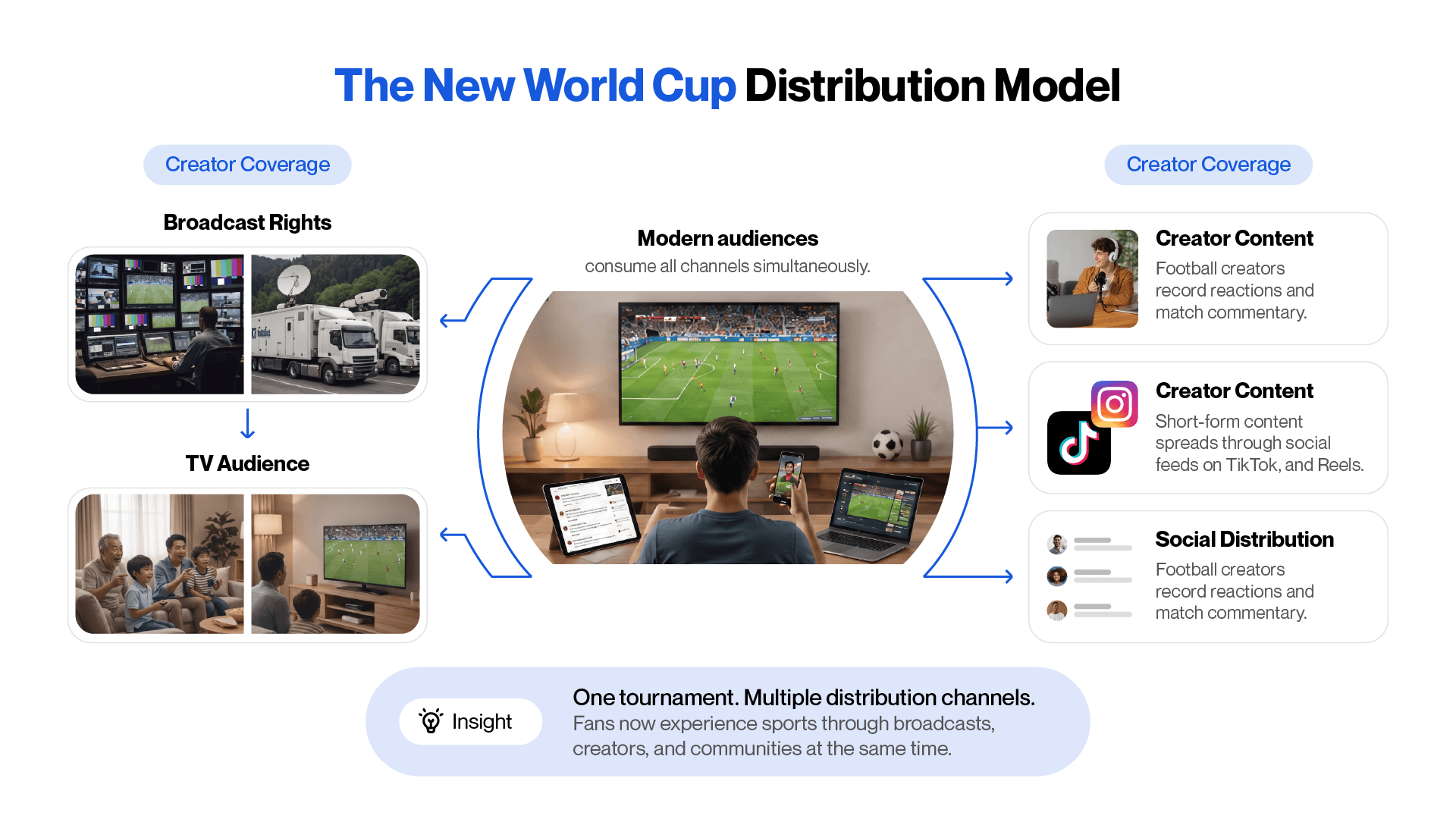
Advances in technology and platforms have made watching a game no longer a single-screen activity, as a fan might watch the game on TV, follow creators’ reactions on TikTok, watch highlights on YouTube, discuss controversial calls on X, and follow soccer creators on Instagram. It is these technological and platform advancements that have expanded the viewing experience far beyond the broadcast itself.
We are now in an era where creators have become an integral part of the event; a study cited by TikTok shows that sports fans who consume sports content on the platform are 42% more likely to watch live games.
This statistic challenges the long-held assumption that social media platforms do not compete with live sports. Today, social media actually supports live sports even more, with a wealth of creator-generated content helping to expand engagement before, during, and after matches. FIFA views creators as a distribution asset, and this appears to be the reason why a partnership with TikTok was formed.
What This Means For Brands
Historically, major sporting events have been more beneficial to brands with large sponsorship budgets, until the rise of the creator economy demanded a shift.
This shift has created opportunities that extend far beyond soccer, as brands can now participate through creators who already have audience trust and cultural relevance. Previous models only provided visibility to official partnerships, while others could only watch from the sidelines.
According to research cited in discussions surrounding World Cup creator activations, brands that engage around major sporting events can achieve significantly stronger results, including a 2.7-fold increase in popularity and up to a 3-fold increase in purchase intent, when their strategies align with audience interests.
One important detail brands need to pay attention to is where all that value comes from. This is because not all brands have access to official rights, but many brands can access creators. Paying attention to this detail and applying it can demonstrate just how important it is to maximize creator strategies during major cultural moments.
The New Distribution Model
See this image to learn the transformation of distribution model from traditional to the new one:
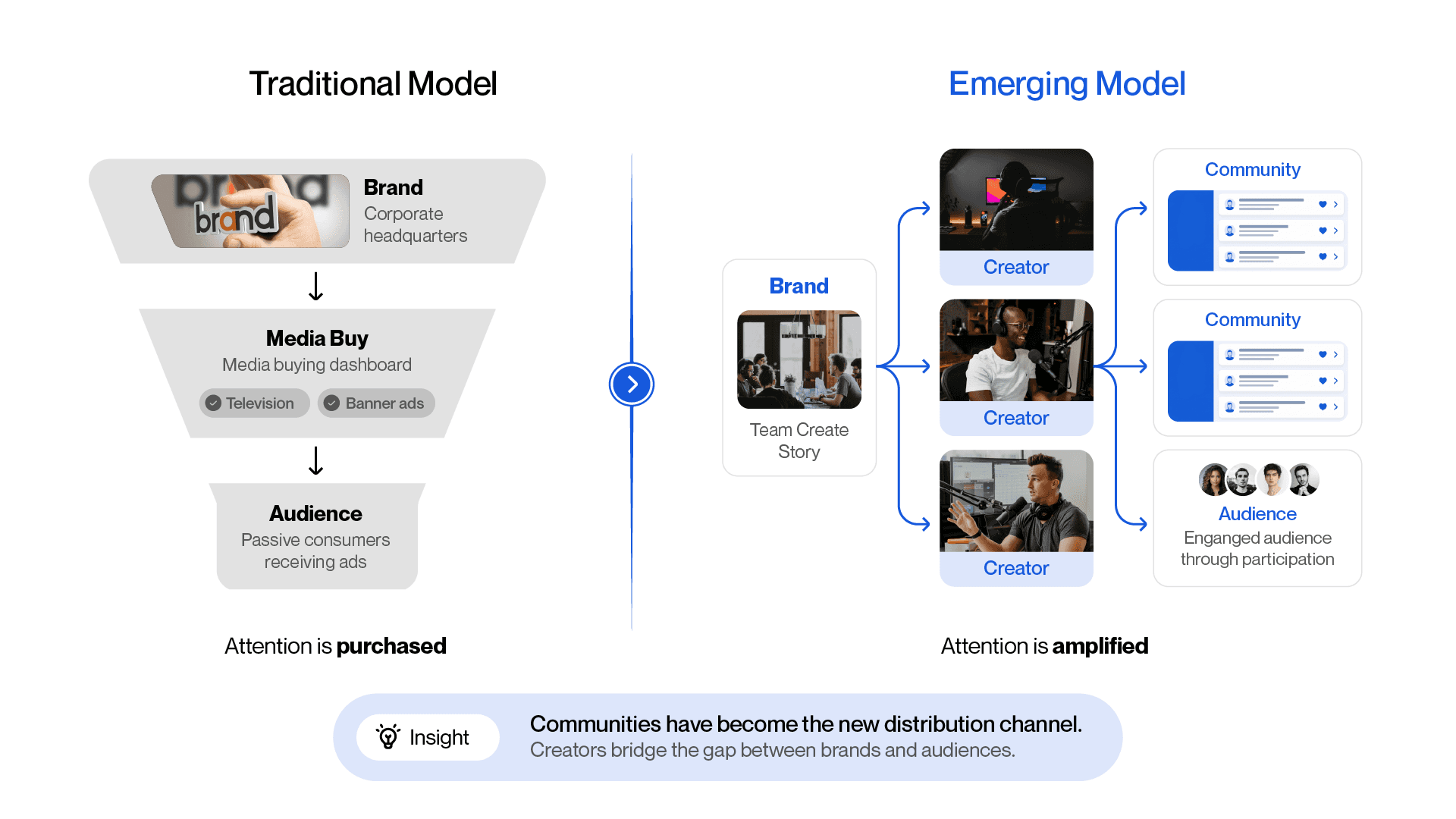
The difference lies not only in reach but also in participation, because people don’t just consume creators’ content but also interact with it by commenting, sharing, or discussing it. These interactions create a distribution that goes beyond what traditional advertising alone can achieve.
The Bigger Shift Isn't About TikTok
The easiest mistake to make is to view this announcement as merely a social media update.
This phenomenon can be understood as something far greater than that. The FIFA World Cup is one of the most established institutions in global sports, and it rarely changes its behavior without strong evidence. By officially integrating creators into its tournament coverage, FIFA is acknowledging something marketers have observed for years: that distribution is increasingly happening through people, not just platforms or media rights.
FIFA has officially recognized that creators have become trusted intermediaries between brands, events, and audiences. This partnership does not create that reality; rather, it validates it.
The Brands That Adapt First Will Have The Advantage
The FIFA World Cup 2026 partnership offers a glimpse into where content distribution is heading. The question is no longer whether creators belong in a brand's marketing strategy. Organizations as large as FIFA have already answered that question.
The more important question is how quickly brands can build systems that take advantage of this shift.
Brands that understand creator ecosystems early gain access to distribution channels that feel more participatory, more community-driven, and more aligned with modern audience behavior. This is one reason Masterhooks continues to study creator networks, UGC systems, and emerging distribution models. Understanding how audiences discover, share, and engage with content is becoming just as important as creating the content itself.
Understand Creator Ecosystems More to Scale!
Understand Creator Ecosystems More to Scale!
For the first time, the 2026 FIFA World Cup is introducing something different by designating a social media platform as its official platform partner. What’s surprising is that this platform isn’t a television network, but TikTok. This cannot be viewed merely as a form of partnership, but rather as a shift in mindset regarding media distribution.
When an institution as large as FIFA changes its mindset about distribution, marketers need to take notice. This article will explore and help you understand how traditional broadcast distribution will shift based on what happens at the 2026 FIFA World Cup.¡
What Actually Happened?
As part of the FIFA World Cup 2026 partnership, TikTok and FIFA announced the Creator Correspondents Program.
This initiative will appoint 30 creators from 11 countries and 22 cities to cover the tournament from a fan-first perspective. So instead of relying exclusively on journalists and broadcasters, FIFA will actively support creators documenting fan experiences, stadium culture, behind-the-scenes moments, local stories, and match-day reactions.
This is an important distinction since these creators do not replace broadcasters; rather, they fill in the gaps that broadcasters often overlook, such as atmosphere, emotions, conversations, and various other types of content that people naturally share with their friends and communities
Why FIFA Made This Decision
The answer becomes clear when you look at how sports fans behave today.
Advances in technology and platforms have made watching a game no longer a single-screen activity, as a fan might watch the game on TV, follow creators’ reactions on TikTok, watch highlights on YouTube, discuss controversial calls on X, and follow soccer creators on Instagram. It is these technological and platform advancements that have expanded the viewing experience far beyond the broadcast itself.
We are now in an era where creators have become an integral part of the event; a study cited by TikTok shows that sports fans who consume sports content on the platform are 42% more likely to watch live games.
This statistic challenges the long-held assumption that social media platforms do not compete with live sports. Today, social media actually supports live sports even more, with a wealth of creator-generated content helping to expand engagement before, during, and after matches. FIFA views creators as a distribution asset, and this appears to be the reason why a partnership with TikTok was formed.
What This Means For Brands
Historically, major sporting events have been more beneficial to brands with large sponsorship budgets, until the rise of the creator economy demanded a shift.
This shift has created opportunities that extend far beyond soccer, as brands can now participate through creators who already have audience trust and cultural relevance. Previous models only provided visibility to official partnerships, while others could only watch from the sidelines.
According to research cited in discussions surrounding World Cup creator activations, brands that engage around major sporting events can achieve significantly stronger results, including a 2.7-fold increase in popularity and up to a 3-fold increase in purchase intent, when their strategies align with audience interests.
One important detail brands need to pay attention to is where all that value comes from. This is because not all brands have access to official rights, but many brands can access creators. Paying attention to this detail and applying it can demonstrate just how important it is to maximize creator strategies during major cultural moments.
The New Distribution Model
See this image to learn the transformation of distribution model from traditional to the new one:
The difference lies not only in reach but also in participation, because people don’t just consume creators’ content but also interact with it by commenting, sharing, or discussing it. These interactions create a distribution that goes beyond what traditional advertising alone can achieve.
The Bigger Shift Isn't About TikTok
The easiest mistake to make is to view this announcement as merely a social media update.
This phenomenon can be understood as something far greater than that. The FIFA World Cup is one of the most established institutions in global sports, and it rarely changes its behavior without strong evidence. By officially integrating creators into its tournament coverage, FIFA is acknowledging something marketers have observed for years: that distribution is increasingly happening through people, not just platforms or media rights.
FIFA has officially recognized that creators have become trusted intermediaries between brands, events, and audiences. This partnership does not create that reality; rather, it validates it.
The Brands That Adapt First Will Have The Advantage
The FIFA World Cup 2026 partnership offers a glimpse into where content distribution is heading. The question is no longer whether creators belong in a brand's marketing strategy. Organizations as large as FIFA have already answered that question.
The more important question is how quickly brands can build systems that take advantage of this shift.
Brands that understand creator ecosystems early gain access to distribution channels that feel more participatory, more community-driven, and more aligned with modern audience behavior. This is one reason Masterhooks continues to study creator networks, UGC systems, and emerging distribution models. Understanding how audiences discover, share, and engage with content is becoming just as important as creating the content itself.
Understand Creator Ecosystems More to Scale!
Related Reading
Related Reading
How to Find the Right Influencer Marketing Agency for Your Brand (Without Wasting Budget)
6 min
|
How to Find the Right Influencer Marketing Agency for Your Brand (Without Wasting Budget)
Learn how to choose an influencer marketing agency using a practical scorecard, performance criteria, red flags, and pre-contract checks.
6 min
|

AI Video Ad Agencies: A Buyer's Guide for DTC Brands (2026)
4 min
|
AI Video Ad Agencies: A Buyer's Guide for DTC Brands (2026)
Compare AI video ad agency types, pricing, performance metrics, ownership rights, and seven questions DTC brands should ask before hiring.
4 min
|
How Taylor Swift Engineered a UGC Wave With 13 Seconds of Video and One Awards Show
4 min
|
How Taylor Swift Engineered a UGC Wave With 13 Seconds of Video and One Awards Show
How Taylor Swift turned a 13-second teaser, Easter eggs, and a live VMA premiere into a UGC engine brands can adapt for organic distribution.
4 min
|


Need help scaling?
Book a strategy call with our expert team to audit your current UGC setup.