



5 Signs It’s Time to Outsource & Scale Your TikTok Content Production
Explore five signs your team may need TikTok production support, from recurring backlogs and delayed creative tests to missed posts and launch capacity gaps.
Published:

Read Time:

4 min

Written by:
Fawwaz
Trend Research and Copywriter
CHECK WHETHER THE CONTENT PLAN EXCEEDS AVAILABLE CAPACITY
Brands may choose to outsource content creation when recurring production gaps prevent the team from delivering an agreed TikTok plan. The strongest signals are unfinished tests, missed posts, and strategic work repeatedly displaced by execution.
Overview
Recurring bottlenecks that prevent the team from delivering its content plan.
Creative tests that remain unfinished despite clear hypotheses.
Publishing gaps and editing workloads that displace strategic work.
A launch example showing how to calculate a production capacity gap.
How to distinguish workflow problems from a need for external support.
These five checks help identify where delivery breaks down and whether the issue requires a workflow change, additional capacity, or temporary launch support.
Sign 1: Production Bottlenecks Keep Coming Back
Recurring delays warrant a closer look at workload and handoffs. Filming may depend on one employee, edits may accumulate, or approvals may stall completed work. Identify the stage causing the backlog before assuming the team needs more production hours.
Asana’s capacity-planning guidance considers availability, skills, and workload. Apply that approach to the people and tasks required by the TikTok plan.
What it looks like
Recurring content backlogs indicate a structural production bottleneck rather than an occasional scheduling issue. For example, a team planning 12 monthly TikTok videos may reach week two with four awaiting edits, three pending approval, and two not yet filmed, while one editor handles every final cut. If this pattern repeats monthly, the team needs to address its production capacity or workflow.

What to check
Track three simple numbers for four weeks:
Planned production hours | How much time did the content plan require? |
|---|---|
Available production hours | How much capacity did the assigned people realistically have after their other responsibilities? |
Delayed deliverables | How many assets missed the planned internal deadline? |
You do not need resource-management software to do this because a simple spreadsheet can reveal the pattern. If required hours repeatedly exceed available hours, the team has a capacity gap.
Sign 2: Planned Creative Tests Stay in the Queue
Declining TikTok performance does not always indicate a production capacity problem. Weak offers, poor landing pages, ineffective targeting, or tracking issues can also affect results. However, when teams know which creative variations to test but lack the resources to produce them, limited production capacity becomes a clear constraint.
TikTok For Business recommends continuous creative testing and regular content refreshes to maintain campaign performance. Its 2026 peak-season guidance further emphasizes planning creative refreshes before performance declines, rather than waiting for signs of creative fatigue.
What it looks like
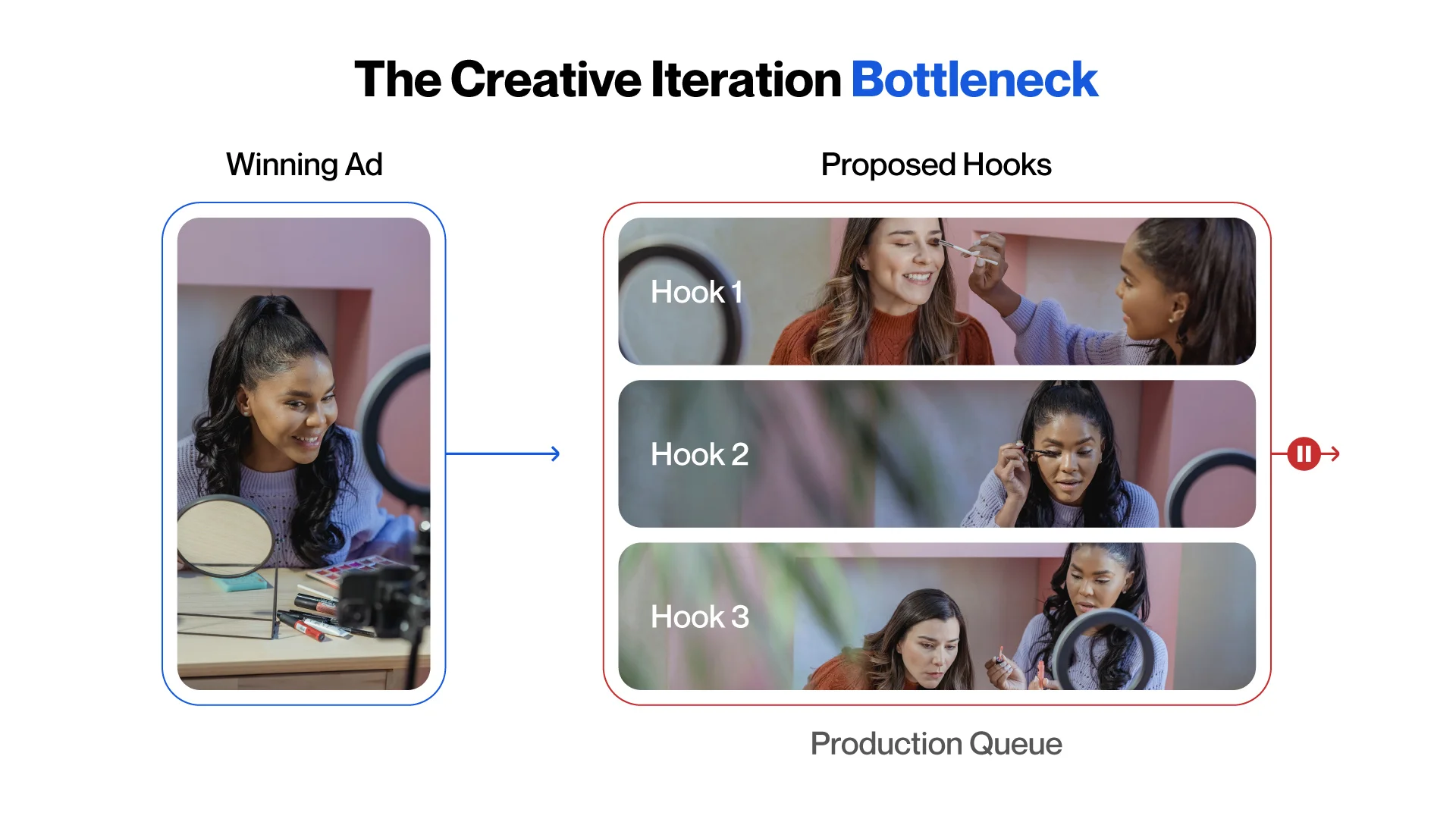
Creative-supply constraints occur when teams have new content ideas but lack the capacity to produce them quickly. For example, a media team may request three new hooks to address declining ad performance, but ongoing editing workloads delay production. As a result, underperforming creative continues running while new variations remain unfinished, potentially worsening campaign results.
What to check
Distinguish strategic problems from production capacity constraints by asking two questions: Do we know what to test next, and can the team produce those tests within the campaign window? If the strategy is clear but execution is consistently delayed, limited production capacity may be the bottleneck. Outsourcing can help teams execute existing creative hypotheses, but it cannot resolve unclear offers, unreliable tracking, or ineffective creative strategies.
Sign 3: Publishing Consistency Starts Slipping
Compare delivery against the publishing cadence the team agreed to maintain. Repeatedly missing that plan warrants investigation, whether the target is two posts a week or daily publishing. A calendar can make scheduling gaps visible. Track the reason for each missed post alongside its production status.
The goal is not necessarily to post on TikTok every day, but to maintain a publishing cadence aligned with the brand's strategy. Consistently missing planned content indicates a potential production capacity issue, regardless of posting frequency.
What it looks like
Timeline | Agreed Monthly Calendar | Actual Delivery |
|---|---|---|
Week 1 | 4 posts | 4 posts |
Week 2 | 4 posts | 3 posts |
Week 3 | 4 posts | 2 posts |
Week 4 | 4 posts | 1 post |
In this hypothetical example, the team planned 16 posts and published 10. If the six-post shortfall resulted from production delays, investigate the affected stages before deciding how much external support is needed.
What to check
Compare planned posts against published posts and track the reasons behind missed deadlines, such as delayed briefs, filming, editing, approvals, or publishing. After a month, recurring patterns can reveal specific production bottlenecks. For example, frequent editing delays may indicate limited capacity, while problems across multiple stages may suggest broader workflow inefficiencies rather than a staffing shortage.
Sign 4: Editing Is Taking Time Away From Strategy
Editing becomes a capacity concern when it repeatedly displaces agreed research, analysis, and planning tasks. Sprout Social’s account of its small social team illustrates the need to preserve time for creative thinking alongside daily delivery.
Check which strategic work remains unfinished and whether reallocating editing would free the person responsible to complete it.
What it looks like
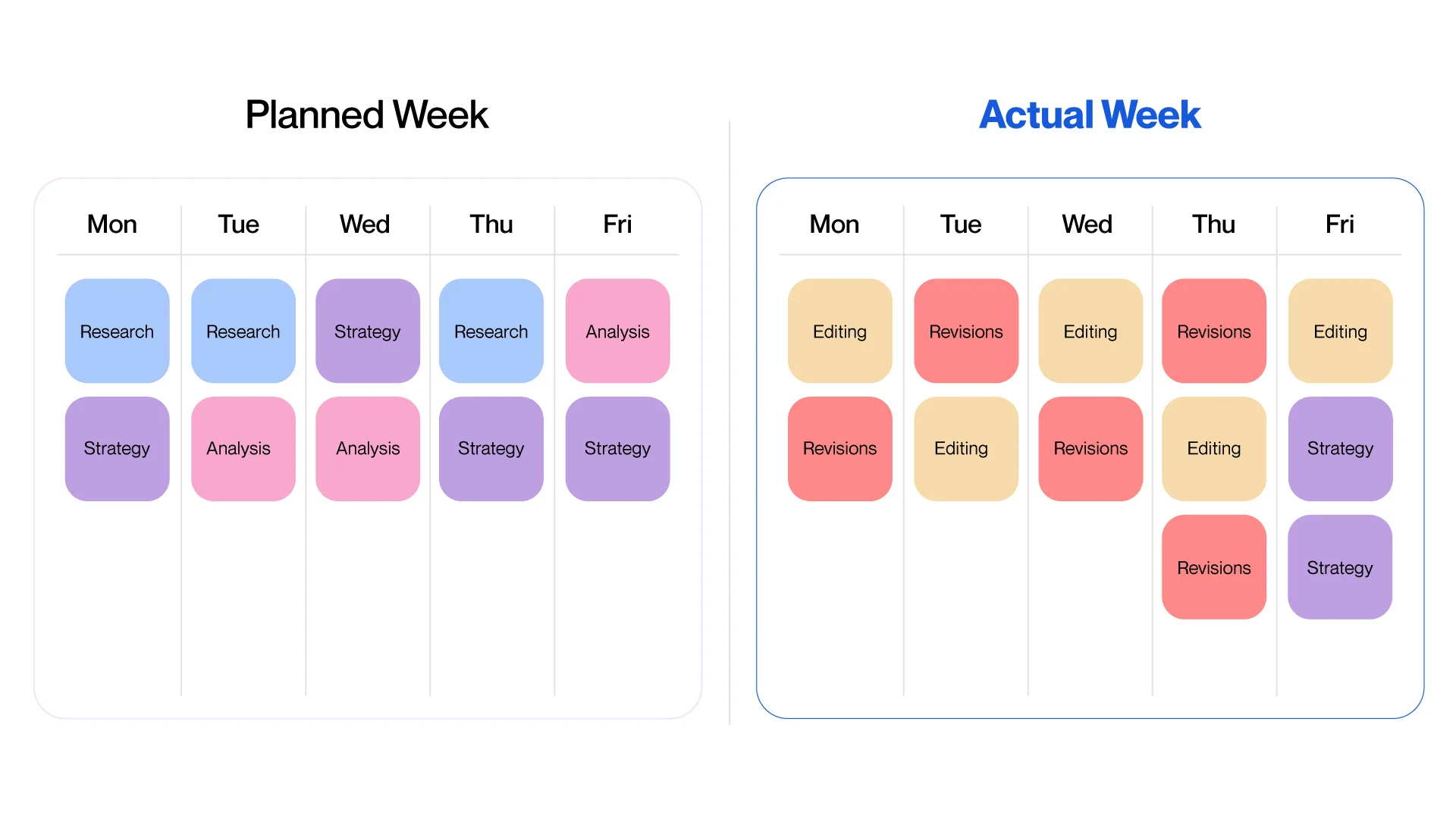
When daily production tasks consistently replace strategic priorities, teams face a significant opportunity cost. A social media lead may plan to analyze performance, research competitors, develop creative hooks, and prepare upcoming campaigns, only to spend the entire week editing videos, managing revisions, and fixing captions. Although content continues to be published, strategic planning and creative development stall, potentially limiting long-term campaign performance.
What to check
Track time for two weeks across four categories:
Work Type | Example |
|---|---|
Strategy | Research, planning, analysis |
Production | Filming, editing, versioning |
Operations | Uploads, approvals, admin |
Community | Comments, engagement, responses |
Evaluate whether production workloads consistently interfere with strategic priorities. There is no universal ideal balance, but if competitor research, content analysis, creative testing, and campaign planning are repeatedly postponed because of execution demands, production may be consuming more internal capacity than the team can sustainably manage.
Sign 5: An Upcoming Launch Exceeds Team Capacity
Product launches create temporary spikes in TikTok content demand, making capacity planning essential. Asana's framework recommends estimating required resources, assessing available team capacity, and identifying potential gaps. Brands can apply this approach by listing upcoming TikTok deliverables, estimating the production hours required, and comparing them against available team resources to determine whether additional support is needed.
Example
Suppose a product launch requires:
8 organic TikToks | 6 paid creative variations | 3 creator videos | 4 hook recuts |
2 product demos | Launch-day posting | Daily comment monitoring |
This hypothetical launch has a three-week production window. Confirm whether creator videos, demos, and hook recuts are separate deliverables or versions of the same assets before estimating the workload. The table below illustrates 80 person-hours of work; daily comment monitoring and ongoing reporting require separate allowances.
Task | Estimated Hours |
|---|---|
Research and concepts | 8 |
Briefing | 6 |
Filming | 12 |
Editing | 30 |
Revisions | 10 |
Versioning and exports | 6 |
Publishing | 4 |
Reporting setup | 4 |
Total | 80 hours |
If the team has 45 available person-hours for the same tasks, the illustrated shortfall is 35 hours. Address it through scope, scheduling, workload allocation, or external support. Then check availability by role: spare filming capacity cannot automatically cover an editing shortage. Total hours also need to fit the task sequence and approval deadlines.
What to check
Calculate the capacity gap using: Required production hours − available production hours = capacity gap. Then determine whether the shortfall is temporary, caused by a specific launch or campaign, or recurring, when production demands consistently exceed team capacity. Both situations may justify external support, but each requires a different operational solution.

When a capacity gap extends beyond a single launch, the challenge may be bigger than completing the current content calendar. Brands that need to produce content consistently across multiple accounts or platforms may need a more scalable production workflow, rather than simply asking the existing team to produce more.
What Scaling Content Production Looks Like in Practice
Masterhooks’ work with OpusClip illustrates what a scaled content operation can look like. Over approximately three months, the campaign produced 3,903 videos across 69 accounts, generating 31.4 million organic views and more than 902,000 interactions without paid ad spend. The strategy distributed content across Instagram, Facebook, TikTok, and YouTube, using multiple creator and themed accounts rather than relying on a single brand profile.
For brands facing similar capacity constraints, the takeaway is that scaling content requires more than producing additional videos. It also requires a repeatable production workflow, varied creative approaches, and a distribution plan aligned with campaign goals. See the Masterhooks’s case study for OpusClip for the full breakdown.
Diagnose the Gap Before Adding More Capacity
Content creation outsourcing is worth considering when the team has an agreed plan but lacks the capacity or specialist skills to deliver it. Define the gap by task, owner, and deadline. For social media outsourcing, assign internal ownership of briefs, approvals, and deployment so external production can move forward.
Masterhooks helps brands develop creator and TikTok content systems through research, creative briefs, production, and performance analysis. Its free brand audit can identify where external production support could improve execution while keeping essential strategic decisions within the brand.
Want to know whether your TikTok bottleneck comes from strategy, production capacity, or both?

Want to know whether your TikTok bottleneck comes from strategy, production capacity, or both?
These five checks help identify where delivery breaks down and whether the issue requires a workflow change, additional capacity, or temporary launch support.
Sign 1: Production Bottlenecks Keep Coming Back
Recurring delays warrant a closer look at workload and handoffs. Filming may depend on one employee, edits may accumulate, or approvals may stall completed work. Identify the stage causing the backlog before assuming the team needs more production hours.
Asana’s capacity-planning guidance considers availability, skills, and workload. Apply that approach to the people and tasks required by the TikTok plan.
What it looks like
Recurring content backlogs indicate a structural production bottleneck rather than an occasional scheduling issue. For example, a team planning 12 monthly TikTok videos may reach week two with four awaiting edits, three pending approval, and two not yet filmed, while one editor handles every final cut. If this pattern repeats monthly, the team needs to address its production capacity or workflow.
What to check
Track three simple numbers for four weeks:
Planned production hours | How much time did the content plan require? |
|---|---|
Available production hours | How much capacity did the assigned people realistically have after their other responsibilities? |
Delayed deliverables | How many assets missed the planned internal deadline? |
You do not need resource-management software to do this because a simple spreadsheet can reveal the pattern. If required hours repeatedly exceed available hours, the team has a capacity gap.
Sign 2: Planned Creative Tests Stay in the Queue
Declining TikTok performance does not always indicate a production capacity problem. Weak offers, poor landing pages, ineffective targeting, or tracking issues can also affect results. However, when teams know which creative variations to test but lack the resources to produce them, limited production capacity becomes a clear constraint.
TikTok For Business recommends continuous creative testing and regular content refreshes to maintain campaign performance. Its 2026 peak-season guidance further emphasizes planning creative refreshes before performance declines, rather than waiting for signs of creative fatigue.
What it looks like
Creative-supply constraints occur when teams have new content ideas but lack the capacity to produce them quickly. For example, a media team may request three new hooks to address declining ad performance, but ongoing editing workloads delay production. As a result, underperforming creative continues running while new variations remain unfinished, potentially worsening campaign results.
What to check
Distinguish strategic problems from production capacity constraints by asking two questions: Do we know what to test next, and can the team produce those tests within the campaign window? If the strategy is clear but execution is consistently delayed, limited production capacity may be the bottleneck. Outsourcing can help teams execute existing creative hypotheses, but it cannot resolve unclear offers, unreliable tracking, or ineffective creative strategies.
Sign 3: Publishing Consistency Starts Slipping
Compare delivery against the publishing cadence the team agreed to maintain. Repeatedly missing that plan warrants investigation, whether the target is two posts a week or daily publishing. A calendar can make scheduling gaps visible. Track the reason for each missed post alongside its production status.
The goal is not necessarily to post on TikTok every day, but to maintain a publishing cadence aligned with the brand's strategy. Consistently missing planned content indicates a potential production capacity issue, regardless of posting frequency.
What it looks like
Timeline | Agreed Monthly Calendar | Actual Delivery |
|---|---|---|
Week 1 | 4 posts | 4 posts |
Week 2 | 4 posts | 3 posts |
Week 3 | 4 posts | 2 posts |
Week 4 | 4 posts | 1 post |
In this hypothetical example, the team planned 16 posts and published 10. If the six-post shortfall resulted from production delays, investigate the affected stages before deciding how much external support is needed.
What to check
Compare planned posts against published posts and track the reasons behind missed deadlines, such as delayed briefs, filming, editing, approvals, or publishing. After a month, recurring patterns can reveal specific production bottlenecks. For example, frequent editing delays may indicate limited capacity, while problems across multiple stages may suggest broader workflow inefficiencies rather than a staffing shortage.
Sign 4: Editing Is Taking Time Away From Strategy
Editing becomes a capacity concern when it repeatedly displaces agreed research, analysis, and planning tasks. Sprout Social’s account of its small social team illustrates the need to preserve time for creative thinking alongside daily delivery.
Check which strategic work remains unfinished and whether reallocating editing would free the person responsible to complete it.
What it looks like
When daily production tasks consistently replace strategic priorities, teams face a significant opportunity cost. A social media lead may plan to analyze performance, research competitors, develop creative hooks, and prepare upcoming campaigns, only to spend the entire week editing videos, managing revisions, and fixing captions. Although content continues to be published, strategic planning and creative development stall, potentially limiting long-term campaign performance.
What to check
Track time for two weeks across four categories:
Work Type | Example |
|---|---|
Strategy | Research, planning, analysis |
Production | Filming, editing, versioning |
Operations | Uploads, approvals, admin |
Community | Comments, engagement, responses |
Evaluate whether production workloads consistently interfere with strategic priorities. There is no universal ideal balance, but if competitor research, content analysis, creative testing, and campaign planning are repeatedly postponed because of execution demands, production may be consuming more internal capacity than the team can sustainably manage.
Sign 5: An Upcoming Launch Exceeds Team Capacity
Product launches create temporary spikes in TikTok content demand, making capacity planning essential. Asana's framework recommends estimating required resources, assessing available team capacity, and identifying potential gaps. Brands can apply this approach by listing upcoming TikTok deliverables, estimating the production hours required, and comparing them against available team resources to determine whether additional support is needed.
Example
Suppose a product launch requires:
8 organic TikToks | 6 paid creative variations | 3 creator videos | 4 hook recuts |
2 product demos | Launch-day posting | Daily comment monitoring |
This hypothetical launch has a three-week production window. Confirm whether creator videos, demos, and hook recuts are separate deliverables or versions of the same assets before estimating the workload. The table below illustrates 80 person-hours of work; daily comment monitoring and ongoing reporting require separate allowances.
Task | Estimated Hours |
|---|---|
Research and concepts | 8 |
Briefing | 6 |
Filming | 12 |
Editing | 30 |
Revisions | 10 |
Versioning and exports | 6 |
Publishing | 4 |
Reporting setup | 4 |
Total | 80 hours |
If the team has 45 available person-hours for the same tasks, the illustrated shortfall is 35 hours. Address it through scope, scheduling, workload allocation, or external support. Then check availability by role: spare filming capacity cannot automatically cover an editing shortage. Total hours also need to fit the task sequence and approval deadlines.
What to check
Calculate the capacity gap using: Required production hours − available production hours = capacity gap. Then determine whether the shortfall is temporary, caused by a specific launch or campaign, or recurring, when production demands consistently exceed team capacity. Both situations may justify external support, but each requires a different operational solution.
When a capacity gap extends beyond a single launch, the challenge may be bigger than completing the current content calendar. Brands that need to produce content consistently across multiple accounts or platforms may need a more scalable production workflow, rather than simply asking the existing team to produce more.
What Scaling Content Production Looks Like in Practice
Masterhooks’ work with OpusClip illustrates what a scaled content operation can look like. Over approximately three months, the campaign produced 3,903 videos across 69 accounts, generating 31.4 million organic views and more than 902,000 interactions without paid ad spend. The strategy distributed content across Instagram, Facebook, TikTok, and YouTube, using multiple creator and themed accounts rather than relying on a single brand profile.
For brands facing similar capacity constraints, the takeaway is that scaling content requires more than producing additional videos. It also requires a repeatable production workflow, varied creative approaches, and a distribution plan aligned with campaign goals. See the Masterhooks’s case study for OpusClip for the full breakdown.
Diagnose the Gap Before Adding More Capacity
Content creation outsourcing is worth considering when the team has an agreed plan but lacks the capacity or specialist skills to deliver it. Define the gap by task, owner, and deadline. For social media outsourcing, assign internal ownership of briefs, approvals, and deployment so external production can move forward.
Masterhooks helps brands develop creator and TikTok content systems through research, creative briefs, production, and performance analysis. Its free brand audit can identify where external production support could improve execution while keeping essential strategic decisions within the brand.
Want to know whether your TikTok bottleneck comes from strategy, production capacity, or both?
Related Reading
Related Reading

Is UGC Worth It for Small Brands? A Practical Decision Guide
3 min
|
Is UGC Worth It for Small Brands? A Practical Decision Guide
Decide whether paid UGC fits your small brand using readiness checks, sample budgets, contribution margin, break-even math, and a focused test plan.
3 min
|

How to Brief Influencers for Sale Campaigns Beyond Discount Codes
4 min
|
How to Brief Influencers for Sale Campaigns Beyond Discount Codes
Build an influencer campaign brief for sales with shopper needs, product evidence, confirmed offers, publishing deadlines, tracking, and fallback plans.
4 min
|

The UGC Creator Brief Template for TikTok That Actually Gets Results
4 min
|
The UGC Creator Brief Template for TikTok That Actually Gets Results
Copy this TikTok UGC brief template with hook variations, filming specs, deliverables, rights, and payment terms. Start briefing creators today!
4 min
|


Need help scaling?
Book a strategy call with our expert team to audit your current UGC setup.