



Creator Economy
The Silent Ads Demo: How Product Ads Work Without Voiceover
Learn how product ads can communicate without voiceover using visual action, text, editing, sound design, and clear product demonstrations. Read more!
Published:

Read Time:

4 min

Written by:
Fawwaz
Trend Research and Copywriter
LET THE PRODUCT ACTION CARRY THE MESSAGE
A product demonstration video can explain a benefit without voiceover when viewers can see what the product does and why it matters. Camera framing, editing, on-screen text, and sound design help make that action understandable.
LET THE PRODUCT ACTION CARRY THE MESSAGE
A product demonstration video can explain a benefit without voiceover when viewers can see what the product does and why it matters. Camera framing, editing, on-screen text, and sound design help make that action understandable.
LET THE PRODUCT ACTION CARRY THE MESSAGE
A product demonstration video can explain a benefit without voiceover when viewers can see what the product does and why it matters. Camera framing, editing, on-screen text, and sound design help make that action understandable.
Overview
How no-voiceover product demos differ from ASMR and sound-off-friendly videos.
What IKEA’s Tidy TV shows about communicating product benefits through visual action.
How to structure and script a product demonstration without spoken narration.
When to use voiceover and how to check whether a demo remains clear with sound muted.
In this article, “silent demo” means a demonstration without spoken narration. It may still include audio. IKEA’s Tidy TV provides a useful example of this approach, followed by a practical framework for scripting your own.

Silent Demo, ASMR, and Sound-Off Video Are Different Formats
These formats overlap, but they solve different creative problems.
No-Voiceover Product Demo
Silent product demonstrations communicate value through visible actions rather than spoken explanations. They can still incorporate music, product sounds, ambient audio, or on-screen text, but narration is unnecessary when the product's function is visually clear.
For example, showing a storage system transforming a cluttered space into an organized one can communicate its benefits without additional explanation.
ASMR-Led Product Content
ASMR advertising uses sound as a central creative element, incorporating whispers, tapping, fabric movement, packaging noises, and close-up product sounds to create a sensory experience.
ASMR can include whispered speech, so it is not necessarily a no-voiceover format. Muting the audio also removes the sounds central to the sensory experience.
Sound-Off-Friendly Video
Sound-off-friendly advertising focuses on keeping the message understandable even when audio is muted, using captions, visual demonstrations, graphics, and clear product framing.
An ad without voiceover may still rely on sound, while a voiceover-led ad can remain effective without audio if captions communicate the essential information. These formats can overlap, but they serve different creative purposes.
Case Study: IKEA Tidy TV
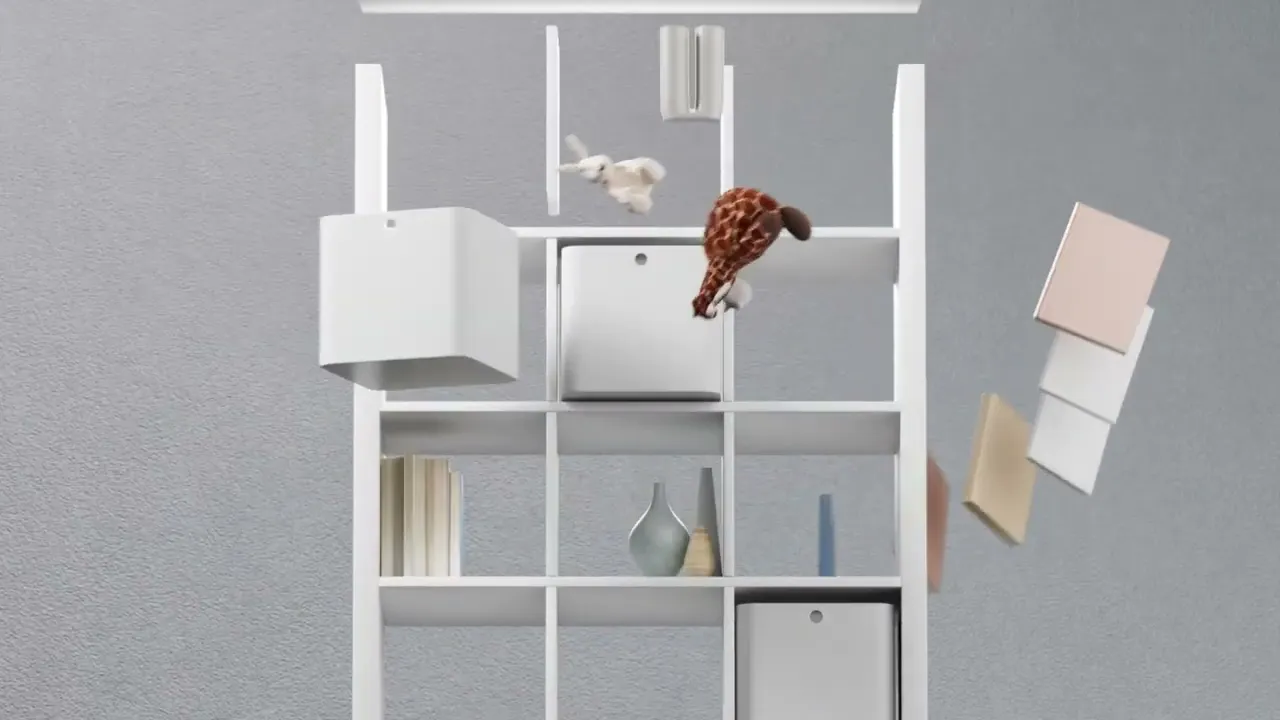
IKEA Australia’s Tidy TV is a series of slow, meditative organization videos featuring storage products such as KALLAX shelving. IKEA presents the series as extended relaxation content, making it a useful creative reference for visual demonstrations.
What the KALLAX Example Shows
Objects move into boxes and shelving compartments, making the storage function visible. The viewer can follow the organizing process without needing a spoken explanation.
Three choices make the demonstration easy to read:
Visible product use: Objects are placed inside the storage system, showing how the available space can be used.
A clear sequence: Each placement contributes to an increasingly organized arrangement.
Consistent framing: The shelving remains visible so viewers can connect the action with the result.
For a shorter product ad, apply the same principle to one customer question, such as “Where will these items fit?” Show the relevant action, reveal the result, and finish with product identification and a clear next step.
IKEA’s ASMR Work Shows the Difference
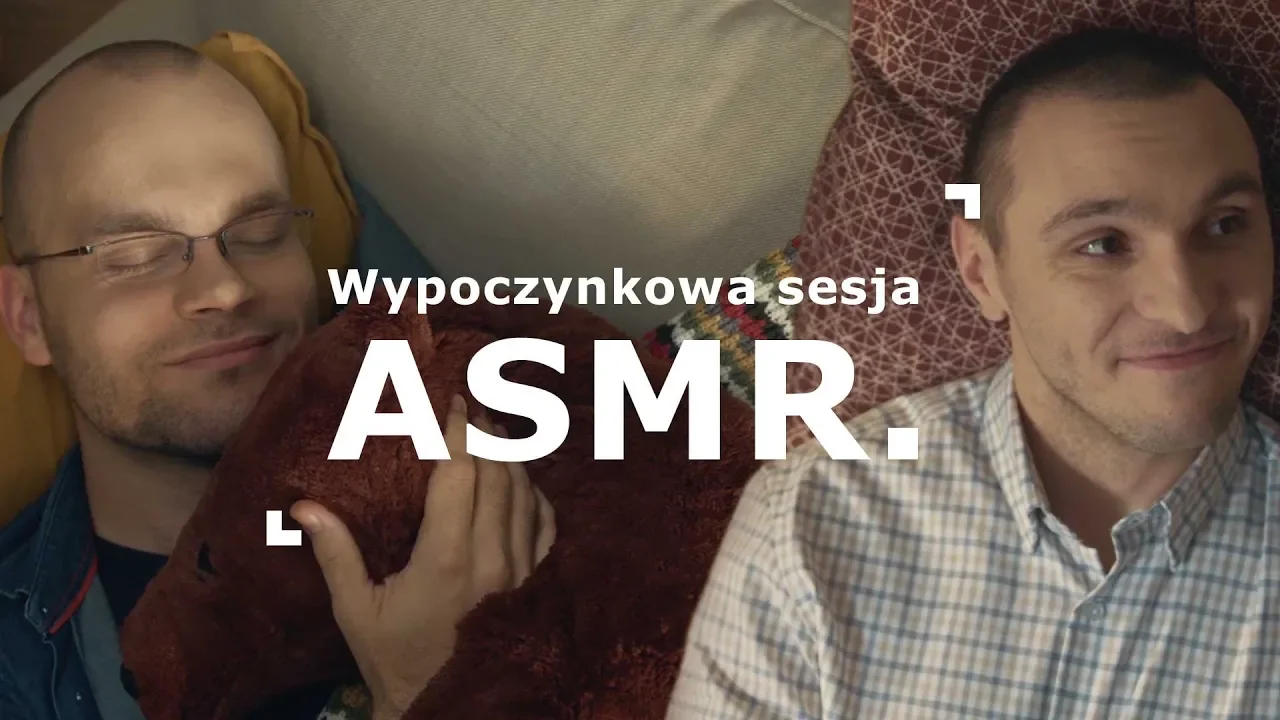
IKEA’s 2018 Polish campaign used whispers and sounds produced by furniture materials to create a relaxing experience. Audio was central to the creative concept.
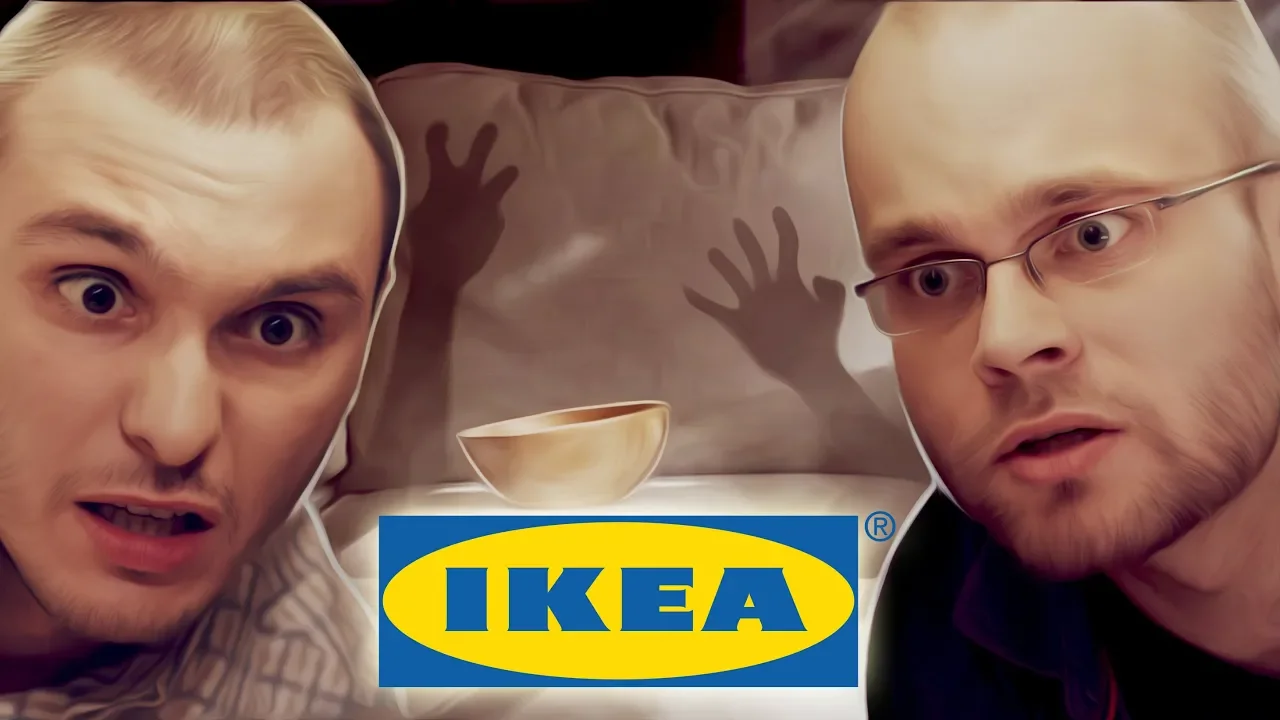
This provides a useful comparison with Tidy TV where viewers can understand the organizing action visually, while the ASMR campaign’s sensory experience depends on hearing the sounds. Choose the format according to what the audience needs to see or hear.
The Anatomy of a Silent Product Demo
A useful silent demonstration usually needs five beats.
1. Opening Action
Start silent product demonstrations with immediate visual action rather than static product shots or lengthy introductions. Simple movements, such as opening a drawer, revealing a stain, tearing packaging, or clicking a lid into place, can capture attention without a spoken hook.
This aligns with TikTok's Creative Codes and Google's ABCD framework, which emphasize movement, engaging visuals, and effective pacing to draw viewers into the content quickly.
2. Clear Demonstration
Show the product doing its main job, for example:
Storage product | The object goes inside. |
Cleaning product | The approved surface is cleaned. |
Beauty product | Texture is visibly applied. |
Kitchen tool | Ingredients are processed. |
Bag | Objects are packed inside. |
Give each shot one clear job. Keep the product and the relevant action visible so viewers can follow the demonstration immediately.
3. Visible Result
Show a recognizable outcome, such as:
Before and after |
Open and closed |
Empty and filled |
Loose and organized |
This is important because progression gives the video momentum.
4. Brand or Product Identification
Visual branding becomes especially important in silent product demonstrations, where there is no voiceover to reinforce brand recognition. Elements such as product packaging, logos, brand colors, product names, and recognizable design features help viewers identify the brand throughout the video.
Google's ABCD framework recommends introducing the brand or product early and maintaining its presence throughout the story. Even a visually engaging demonstration can lose its advertising value if viewers cannot identify the product or brand being promoted.
5. Relevant Next Step
End silent product demonstrations with a clear, visually presented call to action that guides viewers toward the next step. Depending on the product, this could be “Shop the Organizer,” “See All Sizes,” “Choose Your Finish,” or “Explore the Collection.”
Both Google's ABCD framework and TikTok's creative guidance emphasize the importance of a clear closing direction. The CTA does not require narration as long as the intended action is easy to understand.
Use Text and Sound to Support the Action
Add Facts the Camera Cannot EstablishUse short overlays for details such as dimensions, compatibility, care instructions, or price. Keep them readable while the relevant product detail is on screen. Any written claim should match the product’s verified specifications. |
Use Sound to Emphasize Physical DetailsA zipper closing or a lid snapping into place can draw attention to an action. Record or select sounds that match what viewers see. If the ad must work with sound muted, keep essential instructions and benefits visible. |
A Silent Demo Still Needs a Script
Write the script as a sequence of actions, text cues, and sounds. This hypothetical 15-second demo assumes a desk organizer with adjustable compartments.
Time | Visual Action | On-Screen Text | Sound | Intended Message |
0–2 sec | Loose cables and small items slide across desk | “Desk always looks like this?” | Objects hitting desk | Establish the problem |
2–5 sec | Organizer enters frame and compartments open | “[Brand] Modular Desk Organizer” | Clicks and sliding sounds | Introduce product |
5–9 sec | Charger, cables, pens, and earbuds are placed inside | “Everything gets a place” | Product and object sounds | Demonstrate capacity |
9–12 sec | Close-up of modular section being repositioned | “Adjust the layout” | Natural sound of the compartment moving | Demonstrate feature |
12–15 sec | Clean desk and product hero shot | “Shop the Organizer” | Short music resolve | Show result and CTA |
There is no spoken sentence, but there is still a script where every shot has a communication job.
How to Script Your Own No-Voiceover Demonstration
Start by defining the key message viewers should understand, then translate each product claim into visible evidence. For example, if an organizer promises to keep desk items together and offer adjustable compartments, show objects being placed inside and the compartments being rearranged.
Follow a simple framework: Claim → Visible Evidence → Shot. If a claim cannot be demonstrated visually, consider supporting it with concise on-screen text. If neither approach communicates the benefit clearly, the concept may require narration.
When Silent Product Ads Work Best
Choose this format when the camera can show the information customers need to evaluate the product.
What customers need to understand | What to demonstrate |
How it works | A kitchen tool processing ingredients or a bag being packed |
What its surface or consistency looks like | A close-up of fabric, material finish, or cream being spread |
How it comes together | An assembly sequence with the relevant steps visible |
What changes after use | A genuine before-and-after result under comparable conditions |
How options differ | Sizes, finishes, attachments, or settings shown side by side |
Keep the demonstration faithful to normal product behavior. Texture footage can show appearance and movement, but it cannot establish claims such as comfort, durability, or long-term effectiveness on its own.
When Voiceover Is Probably Better
Consider narration when customers need an explanation of invisible processes, technical differences, safety instructions, or additional context that would require too much on-screen text.
For example, a software recording can show a customer segment appearing on screen without explaining how the system selected those customers. A short voiceover can connect the visible result to the underlying benefit.
Review the sequence without its written brief. If a viewer cannot explain what happened and why it matters, revise the demonstration or add narration.
What About Sound-Off Viewing?
Test no-voiceover ads with the sound muted to ensure viewers can identify the product, understand the demonstration, recognize its benefits, and follow the CTA. If the message becomes unclear without audio, the creative may rely too heavily on sound.
Then review the ad with audio enabled to assess whether product sounds, music, or ambient details enhance the experience. The ideal balance is a demonstration that communicates clearly without sound while using audio to make the content more engaging.
Do Silent Ads Get More Replays?
No-voiceover product ads may encourage repeated viewing when they feature satisfying actions or seamless loops, but there is insufficient evidence to claim they consistently outperform narrated ads in replay behavior.
For example, IKEA's Tidy TV uses slow, soothing, looped videos, demonstrating how replayability can be incorporated into creative design. However, brands should treat increased replay behavior as a hypothesis to test rather than a guaranteed performance benefit.
Silent Product Demo FAQ
What is a silent product demo?A silent product demo is a video where spoken narration is unnecessary for understanding the product demonstration. The video can still use music, product sounds, sound effects, ambient audio, and on-screen text. The defining requirement is that visible action carries the core explanation. |
Can a product ad work without voiceover?Yes, especially when the product benefit can be demonstrated clearly. Products involving assembly, texture, physical use, organization, comparison, or visible transformation are particularly suitable. The ad still needs structure, branding, and a clear next step. |
Are ASMR ads the same as sound-off ads?No, since ASMR advertising deliberately uses sensory audio such as whispers, tapping, product noises, or material sounds. Sound-off-friendly advertising is designed to remain understandable without hearing the audio. An ASMR ad can therefore perform poorly when muted if sound is essential to the experience. |
Do silent video ads need text?Sometimes, if the demonstration communicates everything clearly, text can remain minimal. Use overlays when the viewer needs factual information that the visual cannot establish by itself, such as dimensions, compatibility, pricing, or a CTA. |
Make the Product Do the Explaining
Start with one customer question and show the product answering it. Keep the action readable, identify the brand, and give viewers a clear next step. While narration remains useful in many ads, products with clear visual demonstrations can communicate their value through action alone.

Masterhooks helps brands develop UGC strategies, creator briefs, and product-led creative concepts. Its free brand audit can help identify product moments with the strongest potential for standalone video ads.
Want to turn product demonstrations into creator content that communicates without heavy narration?

Want to turn product demonstrations into creator content that communicates without heavy narration?
In this article, “silent demo” means a demonstration without spoken narration. It may still include audio. IKEA’s Tidy TV provides a useful example of this approach, followed by a practical framework for scripting your own.
Silent Demo, ASMR, and Sound-Off Video Are Different Formats
These formats overlap, but they solve different creative problems.
No-Voiceover Product Demo
Silent product demonstrations communicate value through visible actions rather than spoken explanations. They can still incorporate music, product sounds, ambient audio, or on-screen text, but narration is unnecessary when the product's function is visually clear.
For example, showing a storage system transforming a cluttered space into an organized one can communicate its benefits without additional explanation.
ASMR-Led Product Content
ASMR advertising uses sound as a central creative element, incorporating whispers, tapping, fabric movement, packaging noises, and close-up product sounds to create a sensory experience.
ASMR can include whispered speech, so it is not necessarily a no-voiceover format. Muting the audio also removes the sounds central to the sensory experience.
Sound-Off-Friendly Video
Sound-off-friendly advertising focuses on keeping the message understandable even when audio is muted, using captions, visual demonstrations, graphics, and clear product framing.
An ad without voiceover may still rely on sound, while a voiceover-led ad can remain effective without audio if captions communicate the essential information. These formats can overlap, but they serve different creative purposes.
Case Study: IKEA Tidy TV
IKEA Australia’s Tidy TV is a series of slow, meditative organization videos featuring storage products such as KALLAX shelving. IKEA presents the series as extended relaxation content, making it a useful creative reference for visual demonstrations.
What the KALLAX Example Shows
Objects move into boxes and shelving compartments, making the storage function visible. The viewer can follow the organizing process without needing a spoken explanation.
Three choices make the demonstration easy to read:
Visible product use: Objects are placed inside the storage system, showing how the available space can be used.
A clear sequence: Each placement contributes to an increasingly organized arrangement.
Consistent framing: The shelving remains visible so viewers can connect the action with the result.
For a shorter product ad, apply the same principle to one customer question, such as “Where will these items fit?” Show the relevant action, reveal the result, and finish with product identification and a clear next step.
IKEA’s ASMR Work Shows the Difference
IKEA’s 2018 Polish campaign used whispers and sounds produced by furniture materials to create a relaxing experience. Audio was central to the creative concept.
This provides a useful comparison with Tidy TV where viewers can understand the organizing action visually, while the ASMR campaign’s sensory experience depends on hearing the sounds. Choose the format according to what the audience needs to see or hear.
The Anatomy of a Silent Product Demo
A useful silent demonstration usually needs five beats.
1. Opening Action
Start silent product demonstrations with immediate visual action rather than static product shots or lengthy introductions. Simple movements, such as opening a drawer, revealing a stain, tearing packaging, or clicking a lid into place, can capture attention without a spoken hook.
This aligns with TikTok's Creative Codes and Google's ABCD framework, which emphasize movement, engaging visuals, and effective pacing to draw viewers into the content quickly.
2. Clear Demonstration
Show the product doing its main job, for example:
Storage product | The object goes inside. |
Cleaning product | The approved surface is cleaned. |
Beauty product | Texture is visibly applied. |
Kitchen tool | Ingredients are processed. |
Bag | Objects are packed inside. |
Give each shot one clear job. Keep the product and the relevant action visible so viewers can follow the demonstration immediately.
3. Visible Result
Show a recognizable outcome, such as:
Before and after |
Open and closed |
Empty and filled |
Loose and organized |
This is important because progression gives the video momentum.
4. Brand or Product Identification
Visual branding becomes especially important in silent product demonstrations, where there is no voiceover to reinforce brand recognition. Elements such as product packaging, logos, brand colors, product names, and recognizable design features help viewers identify the brand throughout the video.
Google's ABCD framework recommends introducing the brand or product early and maintaining its presence throughout the story. Even a visually engaging demonstration can lose its advertising value if viewers cannot identify the product or brand being promoted.
5. Relevant Next Step
End silent product demonstrations with a clear, visually presented call to action that guides viewers toward the next step. Depending on the product, this could be “Shop the Organizer,” “See All Sizes,” “Choose Your Finish,” or “Explore the Collection.”
Both Google's ABCD framework and TikTok's creative guidance emphasize the importance of a clear closing direction. The CTA does not require narration as long as the intended action is easy to understand.
Use Text and Sound to Support the Action
Add Facts the Camera Cannot EstablishUse short overlays for details such as dimensions, compatibility, care instructions, or price. Keep them readable while the relevant product detail is on screen. Any written claim should match the product’s verified specifications. |
Use Sound to Emphasize Physical DetailsA zipper closing or a lid snapping into place can draw attention to an action. Record or select sounds that match what viewers see. If the ad must work with sound muted, keep essential instructions and benefits visible. |
A Silent Demo Still Needs a Script
Write the script as a sequence of actions, text cues, and sounds. This hypothetical 15-second demo assumes a desk organizer with adjustable compartments.
Time | Visual Action | On-Screen Text | Sound | Intended Message |
0–2 sec | Loose cables and small items slide across desk | “Desk always looks like this?” | Objects hitting desk | Establish the problem |
2–5 sec | Organizer enters frame and compartments open | “[Brand] Modular Desk Organizer” | Clicks and sliding sounds | Introduce product |
5–9 sec | Charger, cables, pens, and earbuds are placed inside | “Everything gets a place” | Product and object sounds | Demonstrate capacity |
9–12 sec | Close-up of modular section being repositioned | “Adjust the layout” | Natural sound of the compartment moving | Demonstrate feature |
12–15 sec | Clean desk and product hero shot | “Shop the Organizer” | Short music resolve | Show result and CTA |
There is no spoken sentence, but there is still a script where every shot has a communication job.
How to Script Your Own No-Voiceover Demonstration
Start by defining the key message viewers should understand, then translate each product claim into visible evidence. For example, if an organizer promises to keep desk items together and offer adjustable compartments, show objects being placed inside and the compartments being rearranged.
Follow a simple framework: Claim → Visible Evidence → Shot. If a claim cannot be demonstrated visually, consider supporting it with concise on-screen text. If neither approach communicates the benefit clearly, the concept may require narration.
When Silent Product Ads Work Best
Choose this format when the camera can show the information customers need to evaluate the product.
What customers need to understand | What to demonstrate |
How it works | A kitchen tool processing ingredients or a bag being packed |
What its surface or consistency looks like | A close-up of fabric, material finish, or cream being spread |
How it comes together | An assembly sequence with the relevant steps visible |
What changes after use | A genuine before-and-after result under comparable conditions |
How options differ | Sizes, finishes, attachments, or settings shown side by side |
Keep the demonstration faithful to normal product behavior. Texture footage can show appearance and movement, but it cannot establish claims such as comfort, durability, or long-term effectiveness on its own.
When Voiceover Is Probably Better
Consider narration when customers need an explanation of invisible processes, technical differences, safety instructions, or additional context that would require too much on-screen text.
For example, a software recording can show a customer segment appearing on screen without explaining how the system selected those customers. A short voiceover can connect the visible result to the underlying benefit.
Review the sequence without its written brief. If a viewer cannot explain what happened and why it matters, revise the demonstration or add narration.
What About Sound-Off Viewing?
Test no-voiceover ads with the sound muted to ensure viewers can identify the product, understand the demonstration, recognize its benefits, and follow the CTA. If the message becomes unclear without audio, the creative may rely too heavily on sound.
Then review the ad with audio enabled to assess whether product sounds, music, or ambient details enhance the experience. The ideal balance is a demonstration that communicates clearly without sound while using audio to make the content more engaging.
Do Silent Ads Get More Replays?
No-voiceover product ads may encourage repeated viewing when they feature satisfying actions or seamless loops, but there is insufficient evidence to claim they consistently outperform narrated ads in replay behavior.
For example, IKEA's Tidy TV uses slow, soothing, looped videos, demonstrating how replayability can be incorporated into creative design. However, brands should treat increased replay behavior as a hypothesis to test rather than a guaranteed performance benefit.
Silent Product Demo FAQ
What is a silent product demo?A silent product demo is a video where spoken narration is unnecessary for understanding the product demonstration. The video can still use music, product sounds, sound effects, ambient audio, and on-screen text. The defining requirement is that visible action carries the core explanation. |
Can a product ad work without voiceover?Yes, especially when the product benefit can be demonstrated clearly. Products involving assembly, texture, physical use, organization, comparison, or visible transformation are particularly suitable. The ad still needs structure, branding, and a clear next step. |
Are ASMR ads the same as sound-off ads?No, since ASMR advertising deliberately uses sensory audio such as whispers, tapping, product noises, or material sounds. Sound-off-friendly advertising is designed to remain understandable without hearing the audio. An ASMR ad can therefore perform poorly when muted if sound is essential to the experience. |
Do silent video ads need text?Sometimes, if the demonstration communicates everything clearly, text can remain minimal. Use overlays when the viewer needs factual information that the visual cannot establish by itself, such as dimensions, compatibility, pricing, or a CTA. |
Make the Product Do the Explaining
Start with one customer question and show the product answering it. Keep the action readable, identify the brand, and give viewers a clear next step. While narration remains useful in many ads, products with clear visual demonstrations can communicate their value through action alone.
Masterhooks helps brands develop UGC strategies, creator briefs, and product-led creative concepts. Its free brand audit can help identify product moments with the strongest potential for standalone video ads.
Want to turn product demonstrations into creator content that communicates without heavy narration?
Related Reading
Related Reading

Anatomy of a Breakout: How Video Hooks Help Videos Earn More Views
4 min
|
Creator Economy
Anatomy of a Breakout: How Video Hooks Help Videos Earn More Views
See how breakout creator videos connect hooks to audience tension, product demos, and action, then turn those insights into a production batch.
4 min
|
Creator Economy

Product Demo Ideas: Different Creator Styles Brands Can Learn From
4 min
|
Creator Economy
Product Demo Ideas: Different Creator Styles Brands Can Learn From
Explore four product demo creators using trend-led videos, tutorials, software walkthroughs, and sensory details to inspire your next creative brief.
4 min
|
Creator Economy

How to Apply for UGC Creator Jobs With Relevant Work Samples
4 min
|
Creator Economy
How to Apply for UGC Creator Jobs With Relevant Work Samples
Learn how to apply for UGC creator jobs by matching requirements with relevant work samples, clear contributions, and a concise application.
4 min
|
Creator Economy


Need help scaling?
Book a strategy call with our expert team to audit your current UGC setup.