


How to Manufacture a TikTok Trend for Under $3000: The Next Level Market Testing
How to Manufacture a TikTok Trend for Under $3000: The Next Level Market Testing
How brands seed trends in Southeast Asia for $30/creator — then scale the winning format to the US for under $3000 total. Here's the full playbook.
Published:

Read Time:

5 min

Written by:
Fawwaz
Trend Research and Copywriter
ONE VIRAL VIDEO DOESN'T MAKE A TREND.
What makes a trend is many creators posting the same format at the same time, and you can engineer that for under $3,000 if you know the sequence.
ONE VIRAL VIDEO DOESN'T MAKE A TREND.
What makes a trend is many creators posting the same format at the same time, and you can engineer that for under $3,000 if you know the sequence.
ONE VIRAL VIDEO DOESN'T MAKE A TREND.
What makes a trend is many creators posting the same format at the same time, and you can engineer that for under $3,000 if you know the sequence.
This is the playbook used by app and DTC brands that generated millions of views from Southeast Asian markets before scaling those same formats in the United States.
Why Most Brands Burn Their Budget at Step One
The most common mistake: going straight to expensive US-based creators for a first campaign, without knowing which format actually resonates with the audience.
A US creator with decent reach typically charges $300 to $1,000+ per post. If you don't yet know which format will work, you're doing market research at a very high price.
There's a more efficient sequence, and the results are far more predictable.
Phase 1: Test Your Format in International Markets First
Before entering the US market, test your content in highly online markets where creator costs are significantly lower: Japan, the Philippines, Indonesia, or Taiwan.
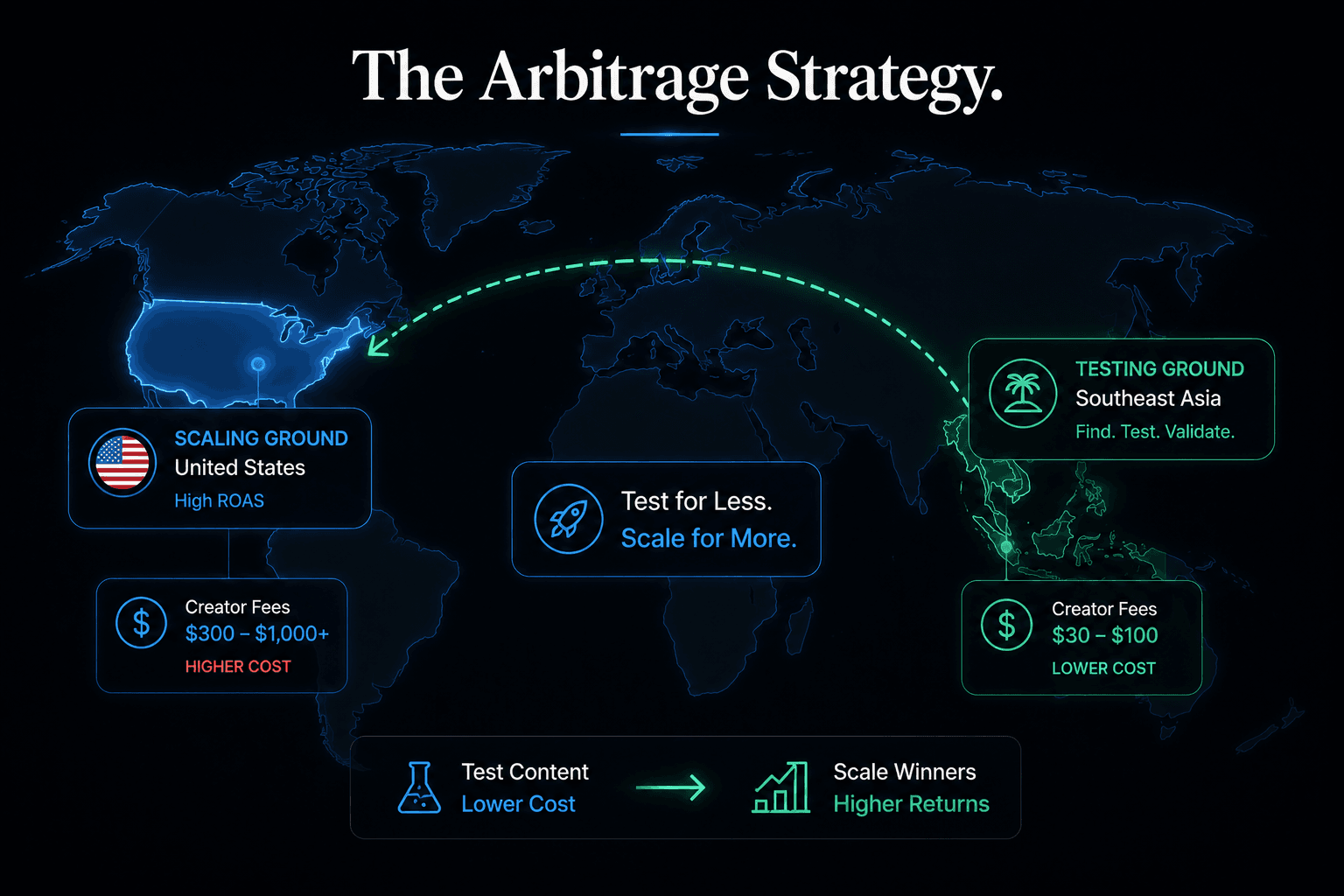
Why these markets? Engagement rates across Southeast Asia consistently run above global averages, and creators with solid reach can still be brought on at $30 to $100 per post, roughly one-tenth the cost of a US creator.
What to do in this phase:
Recruit 5–10 local micro-creators with a niche relevant to your product
Give them one specific format to execute, not a fully open brief
Measure what matters: watch-through rate, comment patterns, and engagement quality rather than just likes
Iterate on the format based on data before moving to the next phase
The goal here is not to go viral. The goal is to find a format that performs semi-virally on its own, which you can then replicate at scale.
Phase 2: Adapt the Proven Format for the US Market
Once you have a format that demonstrably resonates in an international market, the next step is bringing it to the US, not starting over from scratch.
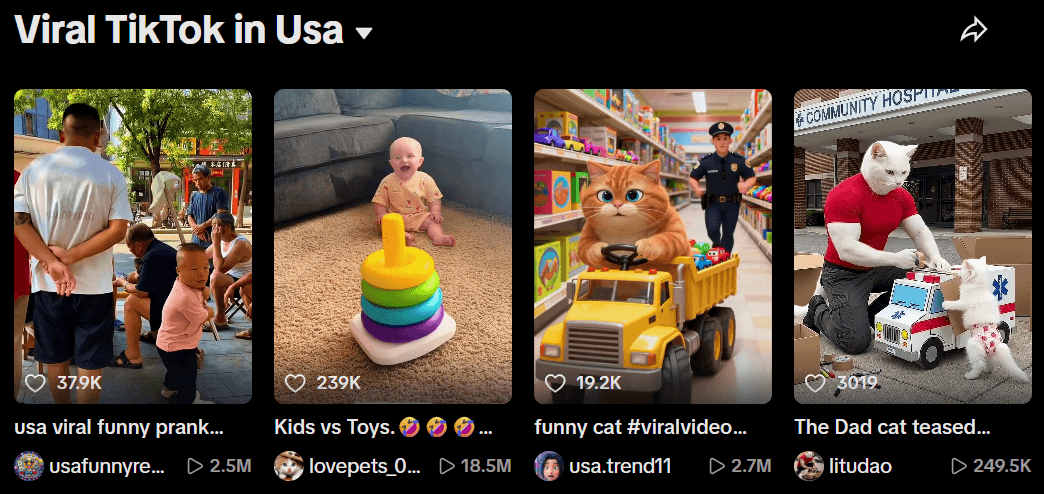
There's a community of niche TikTok creators in the US who haven't been heavily approached by brands and are still reachable at rates well below mainstream influencer pricing. They don't have millions of followers, but they have engaged niche audiences and their content feels organic rather than promotional.
How to execute:
Take the core format you validated internationally
Turn it into a template that different editors can adapt with your product or custom audio
Brief US creators with high specificity: angle, pacing, text overlay placement, and CTA
Resist giving full creative freedom at this stage, as format consistency matters more than individual expression here
Budget for this phase: $500 to $1,500 for 10–20 micro-creators, depending on niche.
Phase 3: Trend Bombing — Synchronized Replication at Scale
This is the phase that turns a format into a trend.
On TikTok, trends are not built by a single viral video. They are built through repetition and replication. When many different accounts post the same format in a short window, the algorithm begins recognizing it as a relevant pattern and distributes it more broadly.
How to execute Trend Bombing correctly:
Commit to ONE specific format that you've already tested, not three different formats running simultaneously
Recruit 20–50 micro-creators to post their own adapted versions of that format within a 48 to 72 hour window
Each post must still feel native and organic, not copy-pasted identical content that looks coordinated
Monitor engagement in the first 6 hours of each post; if one breaks out, amplify it with boosting
Trend Bombing done carelessly, paying influencers to post whatever they want, does not produce the same effect. The power comes from format consistency, not posting volume.
Budget Breakdown for the Full Playbook
Phase | Activity | Estimated Cost |
|---|---|---|
Phase 1: International Testing | 5–10 Southeast Asian creators | $300–$600 |
Phase 2: US Edge | 10–20 US micro-creators | $800–$1,500 |
Phase 3: Trend Bombing | 20–50 creators, coordination & briefs | $800–$1,500 |
Total | ~$2,000–$3,000 |
These numbers will vary by niche and product, but the logic holds regardless: validate cheaply first, scale only after you have proof.
The Real Bottleneck
Finding the right international creators, managing time zones, and coordinating dozens of creators simultaneously is an infrastructure problem, not a creativity problem. Most brands don't have the capacity to run this themselves, which is why Phase 1 gets skipped and they go straight into the US market with an untested format.
That's exactly why this playbook works better in the hands of operators who already have a global creator network than brands trying to build the process from scratch.
Want to run this playbook without building the infrastructure yourself?
Want to run this playbook without building the infrastructure yourself?
This is the playbook used by app and DTC brands that generated millions of views from Southeast Asian markets before scaling those same formats in the United States.
Why Most Brands Burn Their Budget at Step One
The most common mistake: going straight to expensive US-based creators for a first campaign, without knowing which format actually resonates with the audience.
A US creator with decent reach typically charges $300 to $1,000+ per post. If you don't yet know which format will work, you're doing market research at a very high price.
There's a more efficient sequence, and the results are far more predictable.
Phase 1: Test Your Format in International Markets First
Before entering the US market, test your content in highly online markets where creator costs are significantly lower: Japan, the Philippines, Indonesia, or Taiwan.
Why these markets? Engagement rates across Southeast Asia consistently run above global averages, and creators with solid reach can still be brought on at $30 to $100 per post, roughly one-tenth the cost of a US creator.
What to do in this phase:
Recruit 5–10 local micro-creators with a niche relevant to your product
Give them one specific format to execute, not a fully open brief
Measure what matters: watch-through rate, comment patterns, and engagement quality rather than just likes
Iterate on the format based on data before moving to the next phase
The goal here is not to go viral. The goal is to find a format that performs semi-virally on its own, which you can then replicate at scale.
Phase 2: Adapt the Proven Format for the US Market
Once you have a format that demonstrably resonates in an international market, the next step is bringing it to the US, not starting over from scratch.
There's a community of niche TikTok creators in the US who haven't been heavily approached by brands and are still reachable at rates well below mainstream influencer pricing. They don't have millions of followers, but they have engaged niche audiences and their content feels organic rather than promotional.
How to execute:
Take the core format you validated internationally
Turn it into a template that different editors can adapt with your product or custom audio
Brief US creators with high specificity: angle, pacing, text overlay placement, and CTA
Resist giving full creative freedom at this stage, as format consistency matters more than individual expression here
Budget for this phase: $500 to $1,500 for 10–20 micro-creators, depending on niche.
Phase 3: Trend Bombing — Synchronized Replication at Scale
This is the phase that turns a format into a trend.
On TikTok, trends are not built by a single viral video. They are built through repetition and replication. When many different accounts post the same format in a short window, the algorithm begins recognizing it as a relevant pattern and distributes it more broadly.
How to execute Trend Bombing correctly:
Commit to ONE specific format that you've already tested, not three different formats running simultaneously
Recruit 20–50 micro-creators to post their own adapted versions of that format within a 48 to 72 hour window
Each post must still feel native and organic, not copy-pasted identical content that looks coordinated
Monitor engagement in the first 6 hours of each post; if one breaks out, amplify it with boosting
Trend Bombing done carelessly, paying influencers to post whatever they want, does not produce the same effect. The power comes from format consistency, not posting volume.
Budget Breakdown for the Full Playbook
Phase | Activity | Estimated Cost |
|---|---|---|
Phase 1: International Testing | 5–10 Southeast Asian creators | $300–$600 |
Phase 2: US Edge | 10–20 US micro-creators | $800–$1,500 |
Phase 3: Trend Bombing | 20–50 creators, coordination & briefs | $800–$1,500 |
Total | ~$2,000–$3,000 |
These numbers will vary by niche and product, but the logic holds regardless: validate cheaply first, scale only after you have proof.
The Real Bottleneck
Finding the right international creators, managing time zones, and coordinating dozens of creators simultaneously is an infrastructure problem, not a creativity problem. Most brands don't have the capacity to run this themselves, which is why Phase 1 gets skipped and they go straight into the US market with an untested format.
That's exactly why this playbook works better in the hands of operators who already have a global creator network than brands trying to build the process from scratch.
Want to run this playbook without building the infrastructure yourself?
Related Reading


Need help scaling?
Book a strategy call with our expert team to audit your current UGC setup.
Related Reading
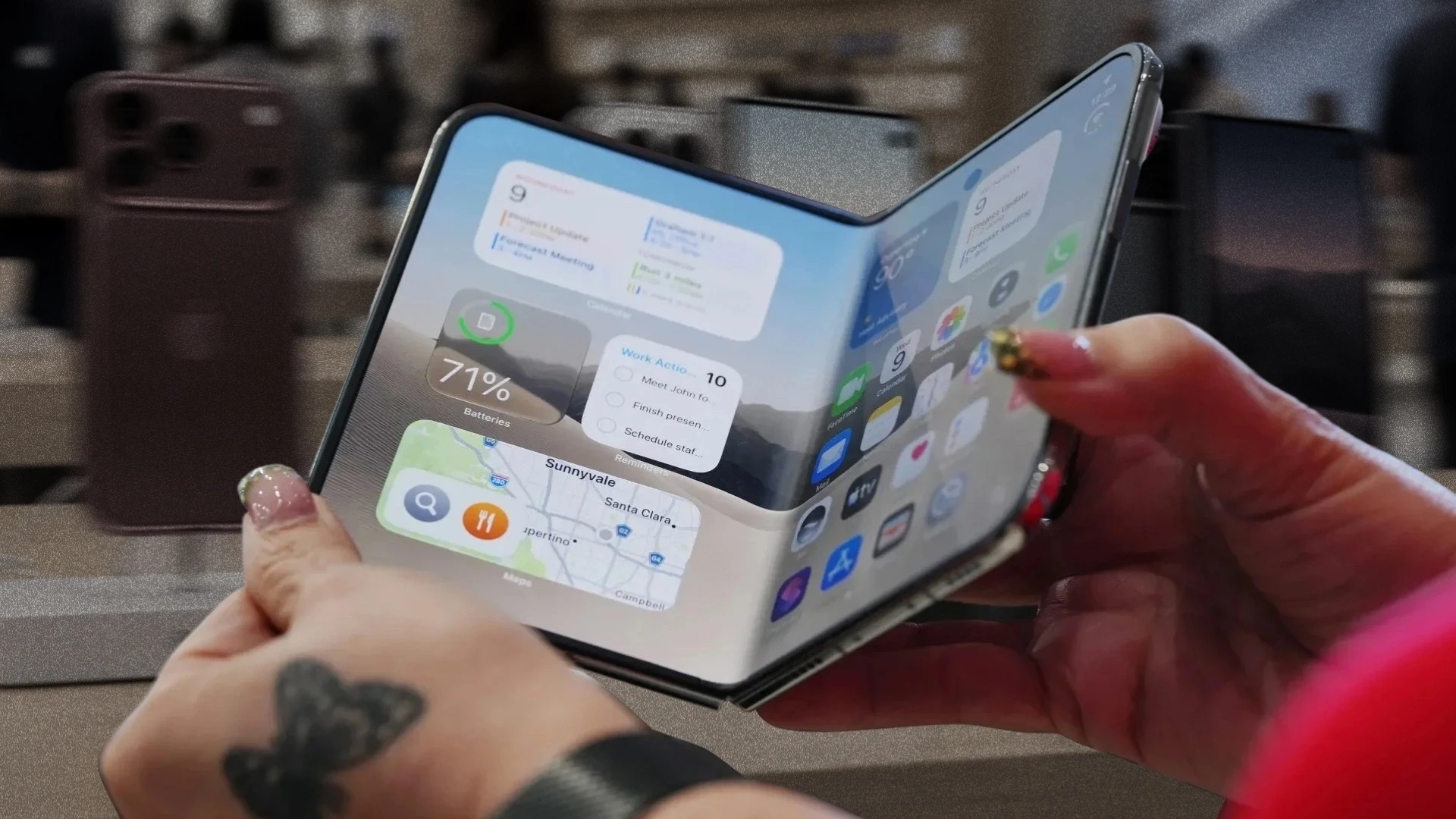
How Apple Turns a Product Launch Into a Yearly UGC Event That Runs Itself
How Apple's September launch cycle turns anticipation, information scarcity, creators, and product novelty into a recurring UGC engine.
4 min
|
How Apple Turns a Product Launch Into a Yearly UGC Event That Runs Itself
How Apple's September launch cycle turns anticipation, information scarcity, creators, and product novelty into a recurring UGC engine.
4 min
|
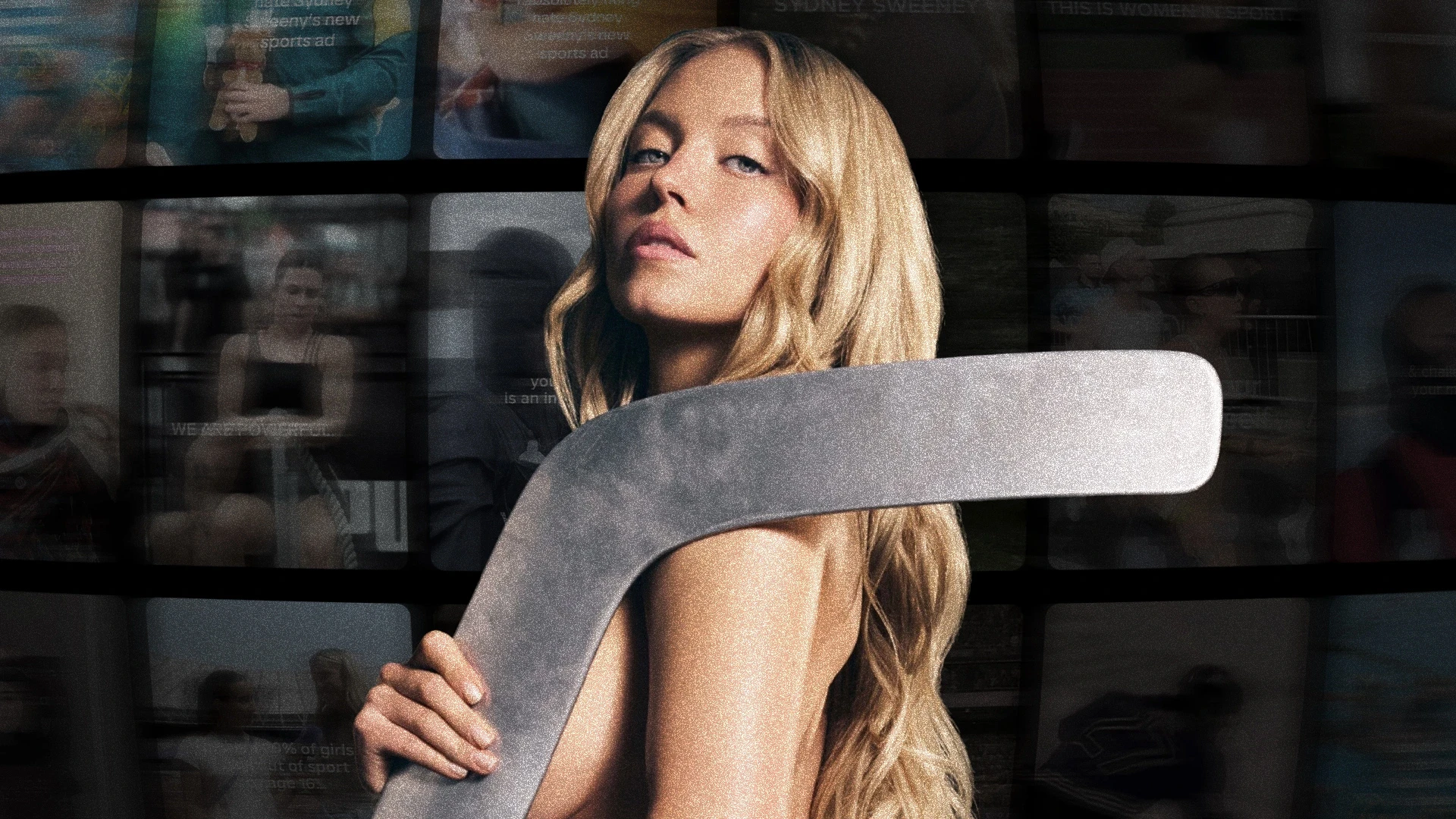
The Sydney Sweeney Novig Playbook: Why the Most Talked-About Ad of NFL Week 1 Was Also the Smartest
How Sydney Sweeney and Novig built a smarter celebrity partnership through equity, creative control, brand fit, and strategic timing.
4 min
|
The Sydney Sweeney Novig Playbook: Why the Most Talked-About Ad of NFL Week 1 Was Also the Smartest
How Sydney Sweeney and Novig built a smarter celebrity partnership through equity, creative control, brand fit, and strategic timing.
4 min
|
Why “September” by Earth, Wind & Fire Is the Most Viral Song on TikTok Every Year
Discover why Earth, Wind & Fire’s September goes viral on TikTok each year, and how brands can plan for predictable seasonal virality.
4 min
|
Why “September” by Earth, Wind & Fire Is the Most Viral Song on TikTok Every Year
Discover why Earth, Wind & Fire’s September goes viral on TikTok each year, and how brands can plan for predictable seasonal virality.
4 min
|