


Trends
Why “September” by Earth, Wind & Fire Is the Most Viral Song on TikTok Every Year
Why “September” by Earth, Wind & Fire Is the Most Viral Song on TikTok Every Year
Discover why Earth, Wind & Fire’s September goes viral on TikTok each year, and how brands can plan for predictable seasonal virality.
Published:

Read Time:

4 min

Written by:
Fawwaz
Trend Research and Copywriter
VIRAL BECAUSE OF SCHEDULED MOMENT
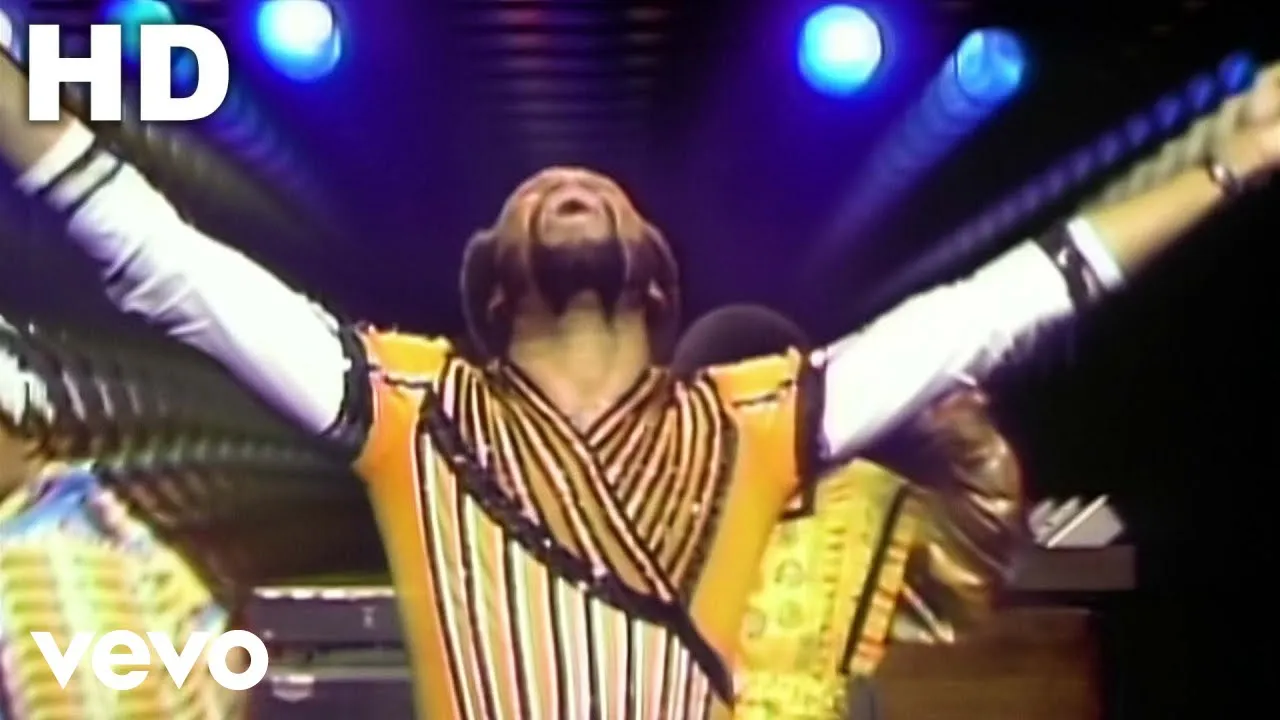
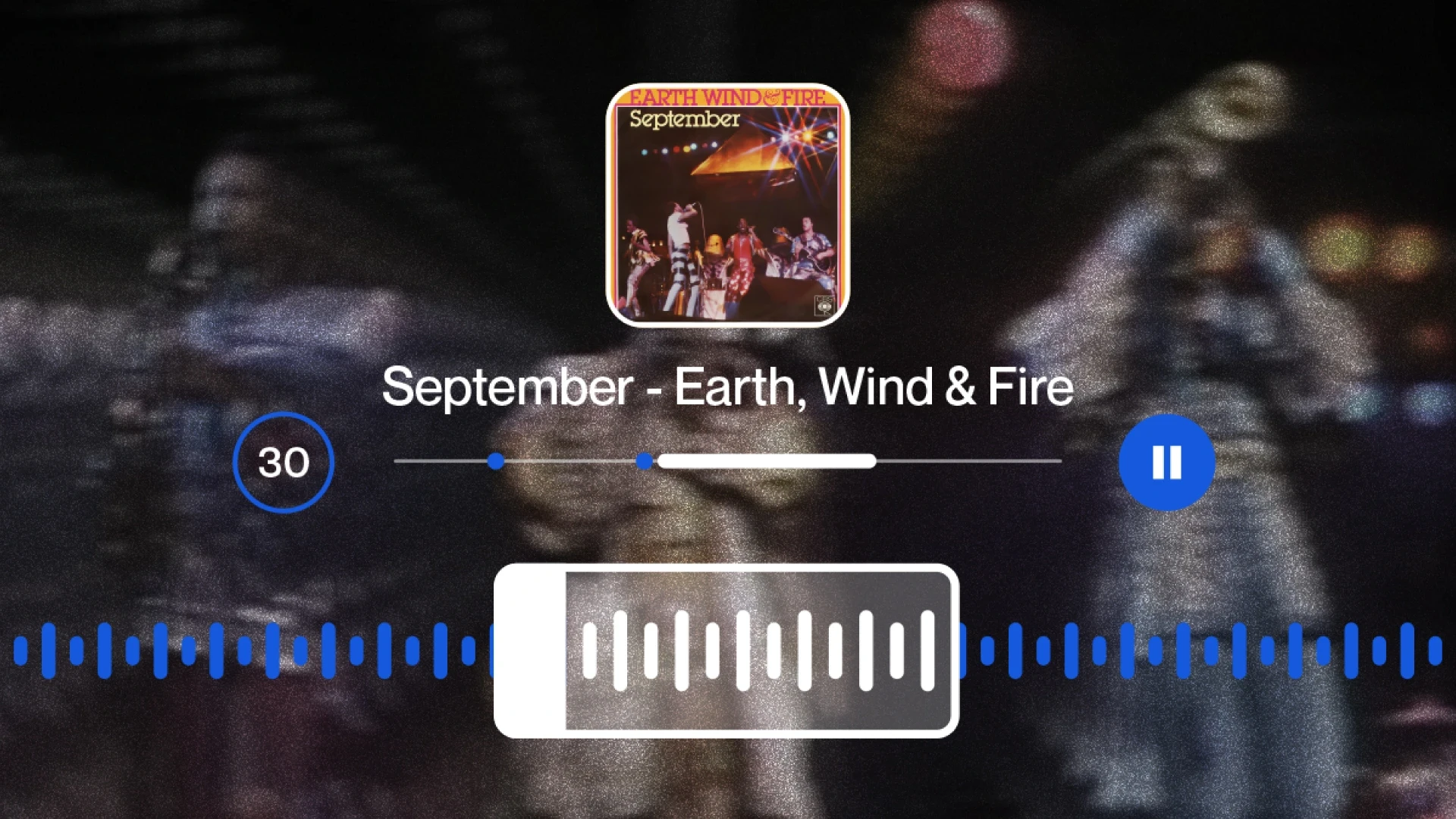
Every year, September by Earth, Wind & Fire returns to TikTok because the song is attached to a date people collectively recognize and celebrate.
VIRAL BECAUSE OF SCHEDULED MOMENT
Every year, September by Earth, Wind & Fire returns to TikTok because the song is attached to a date people collectively recognize and celebrate.
VIRAL BECAUSE OF SCHEDULED MOMENT
Every year, September by Earth, Wind & Fire returns to TikTok because the song is attached to a date people collectively recognize and celebrate.
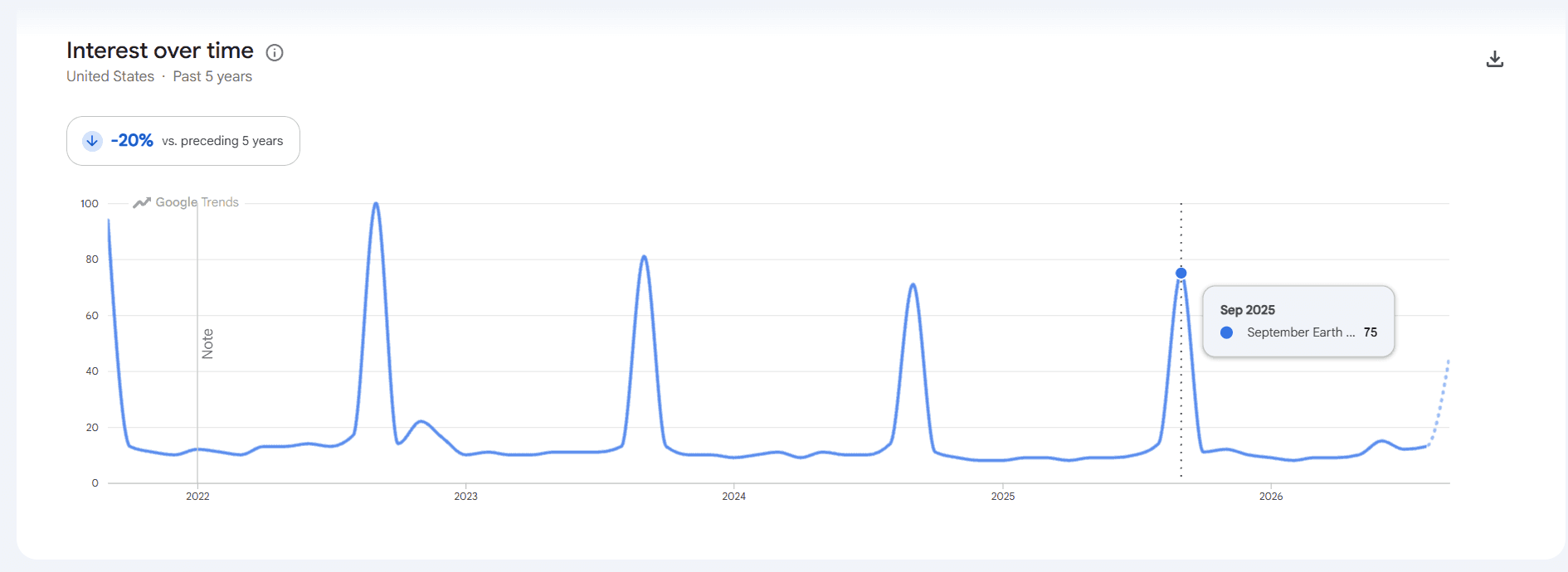
The song’s yearly spike is less a surprise trend and more a predictable attention window, making it a useful case study for brands planning calendar-native content. While the title’s “most viral” claim is more cultural shorthand than a verified all-years ranking, the data is still striking.
How Viral Is “September”?
In 2022, music-marketing publication Habit Music reported that the official “September” audio had been used in about 7,400 TikToks from September 20 onward. It also reported a 12.5 million-stream Spotify increase during that month, including 555,450 streams between September 20 and 22. Habit Music says its figures were sourced from Chartmetric and are approximate.
The following year saw another significant surge. Pentos ranked Earth, Wind & Fire’s “September” as the fastest-growing song on TikTok in its weekly chart dated September 25, 2023. At that time, the audio had been used in approximately 406,600 videos, with 281,800 of those added that week.
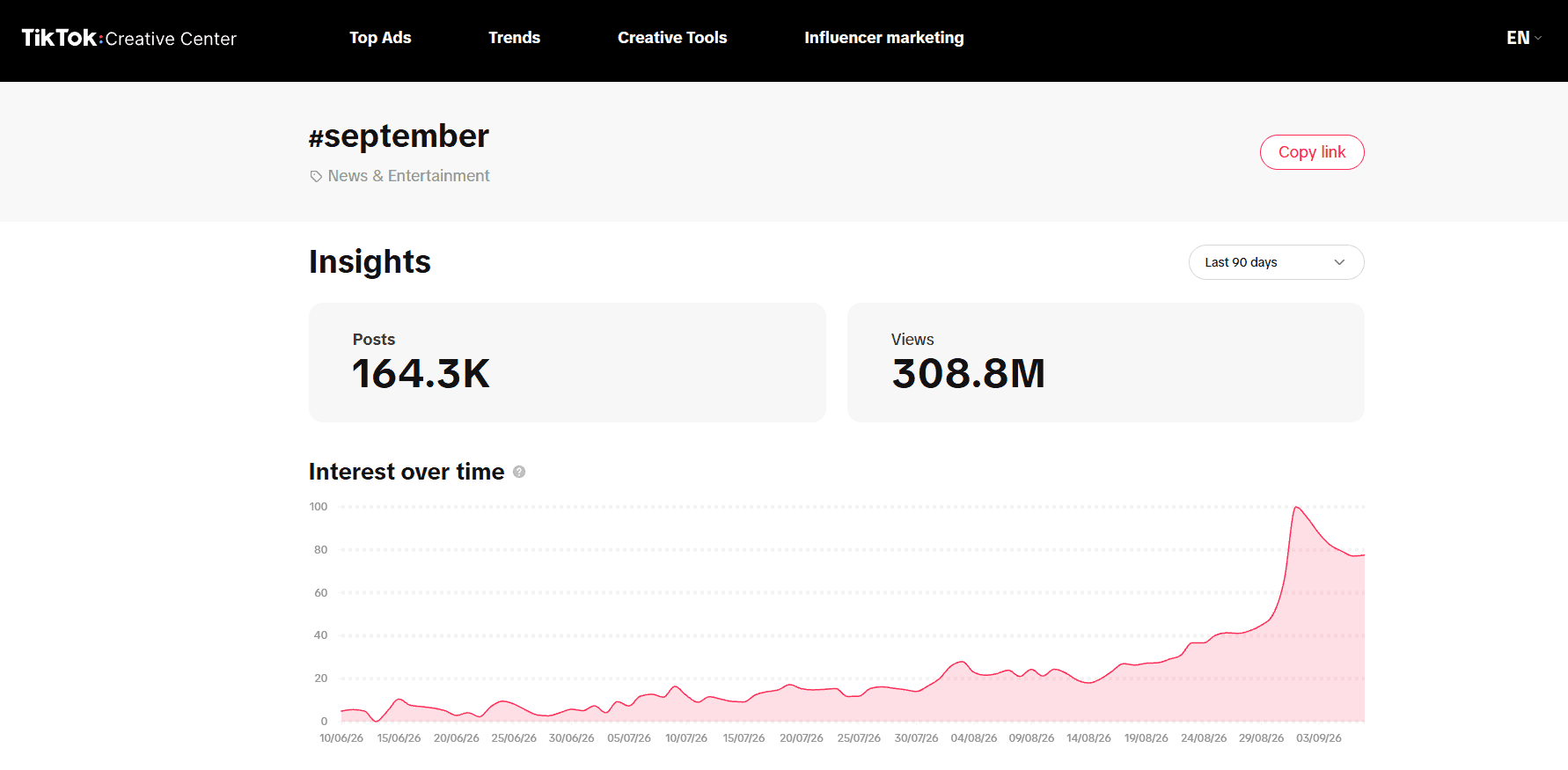
These figures do not prove a direct causal relationship between TikTok uploads and streaming on Spotify. However, the data shows that the annual cultural phenomenon of “September” is visible across various platforms. The song’s ability to regain relevance every year is more significant than its peak numbers alone.
Why “September” Works So Well in Short-Form Video
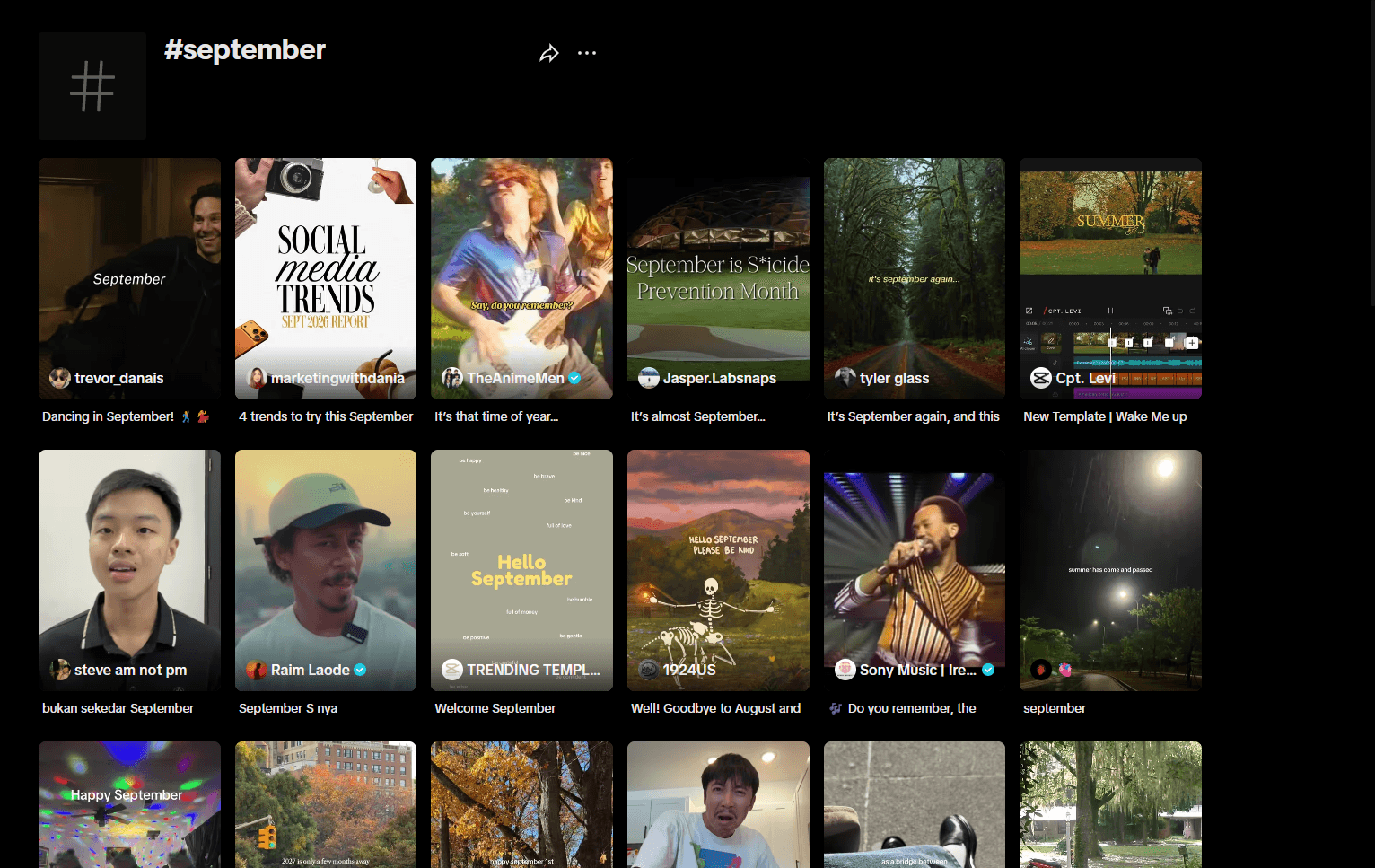
“September” has several strengths that make it a great fit for TikTok. Its opening is instantly recognizable, while its upbeat rhythm lends itself to a wide range of content, from dances, photo dumps, birthdays, and flashbacks to product launches.
https://www.tiktok.com/tag/september
Tap to play
Tap to play
Tap to play
The biggest factor is the date September 21, which is mentioned directly in the song. That's also why “Do you remember September?’ isn't just a lyric. It's a genuine yearly prompt that millions of people answer through content, transforming a question from a 1978 song into a recurring cultural ritual. This gives creators a clear reason to produce content in the form of memories, jokes, transformations, or celebrations every year. Therefore, “September” isn’t just an old song that’s regained popularity but has become a shared cultural reference that can be used in various content formats.
The Format Range Is the Real Advantage
An audio clip becomes more valuable when people can use it in different ways, making it easier for brands across different categories to adapt it to their own content. Beauty brands can share their September routines, travel brands can create end-of-summer montages, while productivity apps can tie it in with preparations for Q4. Look at the following table for some references:
Content route | Audience motivation | Brand-friendly example |
Dancing on September | Participation and joy | Fashion, fitness, events |
Photo dump | Nostalgia and identity | Travel, food, lifestyle |
Before-and-after | Reflection and change | Beauty, apps, home |
Birthday or friendship post | Celebration and belonging | Gifting, hospitality, food |
Team or product moment | Timeliness and personality | DTC, SaaS, retail |
However, the use of audio must still feel natural. Forcing seasonal audio into a regular ad can actually make a brand seem like it’s late to the trend. A better approach is to create content that aligns with the creator’s story and feels relevant to the moment.
Introducing Perennial Audio
The correct term for this pattern is Perennial Audio. It refers to a song or sound that resurfaces at specific times of the year because it’s associated with a season, holiday, date, annual event, or cultural ritual. Its resurgence can be triggered by lyrics, a title, mood, a meme, or a combination of all of these. “September” is a clear example because of its connection to September 21. Other sounds can work the same way:
Holiday music in December | Summer nostalgia tracks in August |
New Year sounds in late December and early January | Sports anthems around a recurring tournament or finals series |
Graduation songs in May and June |
Unlike typical viral audio that can surge in popularity and then fade away within a few weeks, Perennial Audio has a clear reason to resurface. This gives brands and creators the opportunity to prepare content before the conversation picks up again.
This term isn’t a standard industry classification, but rather a way to understand recurring patterns like those seen in “September.” Its strategic value lies in its ability to help teams identify cultural moments that resurface every year before the content landscape becomes too crowded.A typical viral sound may rise and fade within weeks. Perennial Audio has a known reason to return, giving brands and creators time to prepare creative before the conversation starts.
The Perennial Audio Planning Playbook
1. Find the calendar triggerStart with the audience’s real-world rhythm by looking for dates, rituals, holidays, seasons, and moments that already matter to them. The more specific the moment, the easier it is to recognize and own. |
2. Check whether participation already existsSearch TikTok, YouTube Shorts, Instagram Reels, Reddit, and Google Trends for the sound and date. Look for signs that people return to it year after year, using search volume as a clue rather than proof of a trend. |
3. Build several creator routesAvoid giving every creator the same script. Instead, provide a flexible brief with a shared calendar cue and a few storytelling options, allowing creators to choose the approach that best fits their voice and audience. |
4. Produce before the rushFor date-specific sounds, prepare concepts and creator outreach two to four weeks ahead. The goal is to have content ready as interest builds, such as testing in late August, publishing in early September, and saving the strongest posts for September 20 and 21. |
5. Leave room for the audienceThe annual ritual works because people can add their own memories and experiences. Give audiences a recognizable starting point, then leave room for comments, remixes, duets, and creator variations to carry the conversation forward. |
How Brands Can Use the September Moment
The seasonal cue should be an invitation, not a substitute for an idea. A simple test is: would the video still feel like something the creator would post if the product were removed?
The strongest executions connect the moment to an existing behavior, such as a coffee brand joining a September reset, a travel brand celebrating one last summer memory, or a clothing brand showing a creator’s transition into fall. The brand also doesn't need to explain why the song is famous because the audience already knows.
However, popularity doesn't mean commercial clearance. TikTok recommends that businesses use its Commercial Music Library for promotional content unless they have the necessary licenses for another sound. Brands should confirm usage rights across each platform, territory, placement, and creator agreement before publishing.
This means brands can still use the idea behind “September” even when the original recording isn't cleared for commercial use. They can choose a licensed sound with a similar energy, commission an original sound, or build a date-led format that works without relying on the song itself.
Plan for the Moment Before the Feed Does
The lasting lesson from “September” is that virality can sometimes be forecast. A date-linked song, a shared ritual, and an adaptable format can create an attention window that returns before anyone opens a trend dashboard.
Brands that map these moments can arrive with better creator concepts, enough production time, and a reason to participate that feels timely. Masterhooks can support that process by helping brands turn recurring cultural signals into creator-ready content systems, while leaving the creative interpretation with the people and communities who make the moment meaningful.
Want to map your brand's recurring cultural moments before your competitors do?
Want to map your brand's recurring cultural moments before your competitors do?
The song’s yearly spike is less a surprise trend and more a predictable attention window, making it a useful case study for brands planning calendar-native content. While the title’s “most viral” claim is more cultural shorthand than a verified all-years ranking, the data is still striking.
How Viral Is “September”?
In 2022, music-marketing publication Habit Music reported that the official “September” audio had been used in about 7,400 TikToks from September 20 onward. It also reported a 12.5 million-stream Spotify increase during that month, including 555,450 streams between September 20 and 22. Habit Music says its figures were sourced from Chartmetric and are approximate.
The following year saw another significant surge. Pentos ranked Earth, Wind & Fire’s “September” as the fastest-growing song on TikTok in its weekly chart dated September 25, 2023. At that time, the audio had been used in approximately 406,600 videos, with 281,800 of those added that week.
These figures do not prove a direct causal relationship between TikTok uploads and streaming on Spotify. However, the data shows that the annual cultural phenomenon of “September” is visible across various platforms. The song’s ability to regain relevance every year is more significant than its peak numbers alone.
Why “September” Works So Well in Short-Form Video
“September” has several strengths that make it a great fit for TikTok. Its opening is instantly recognizable, while its upbeat rhythm lends itself to a wide range of content, from dances, photo dumps, birthdays, and flashbacks to product launches.
https://www.tiktok.com/tag/september
Tap to play
Tap to play
Tap to play
The biggest factor is the date September 21, which is mentioned directly in the song. That's also why “Do you remember September?’ isn't just a lyric. It's a genuine yearly prompt that millions of people answer through content, transforming a question from a 1978 song into a recurring cultural ritual. This gives creators a clear reason to produce content in the form of memories, jokes, transformations, or celebrations every year. Therefore, “September” isn’t just an old song that’s regained popularity but has become a shared cultural reference that can be used in various content formats.
The Format Range Is the Real Advantage
An audio clip becomes more valuable when people can use it in different ways, making it easier for brands across different categories to adapt it to their own content. Beauty brands can share their September routines, travel brands can create end-of-summer montages, while productivity apps can tie it in with preparations for Q4. Look at the following table for some references:
Content route | Audience motivation | Brand-friendly example |
Dancing on September | Participation and joy | Fashion, fitness, events |
Photo dump | Nostalgia and identity | Travel, food, lifestyle |
Before-and-after | Reflection and change | Beauty, apps, home |
Birthday or friendship post | Celebration and belonging | Gifting, hospitality, food |
Team or product moment | Timeliness and personality | DTC, SaaS, retail |
However, the use of audio must still feel natural. Forcing seasonal audio into a regular ad can actually make a brand seem like it’s late to the trend. A better approach is to create content that aligns with the creator’s story and feels relevant to the moment.
Introducing Perennial Audio
The correct term for this pattern is Perennial Audio. It refers to a song or sound that resurfaces at specific times of the year because it’s associated with a season, holiday, date, annual event, or cultural ritual. Its resurgence can be triggered by lyrics, a title, mood, a meme, or a combination of all of these. “September” is a clear example because of its connection to September 21. Other sounds can work the same way:
Holiday music in December | Summer nostalgia tracks in August |
New Year sounds in late December and early January | Sports anthems around a recurring tournament or finals series |
Graduation songs in May and June |
Unlike typical viral audio that can surge in popularity and then fade away within a few weeks, Perennial Audio has a clear reason to resurface. This gives brands and creators the opportunity to prepare content before the conversation picks up again.
This term isn’t a standard industry classification, but rather a way to understand recurring patterns like those seen in “September.” Its strategic value lies in its ability to help teams identify cultural moments that resurface every year before the content landscape becomes too crowded.A typical viral sound may rise and fade within weeks. Perennial Audio has a known reason to return, giving brands and creators time to prepare creative before the conversation starts.
The Perennial Audio Planning Playbook
1. Find the calendar triggerStart with the audience’s real-world rhythm by looking for dates, rituals, holidays, seasons, and moments that already matter to them. The more specific the moment, the easier it is to recognize and own. |
2. Check whether participation already existsSearch TikTok, YouTube Shorts, Instagram Reels, Reddit, and Google Trends for the sound and date. Look for signs that people return to it year after year, using search volume as a clue rather than proof of a trend. |
3. Build several creator routesAvoid giving every creator the same script. Instead, provide a flexible brief with a shared calendar cue and a few storytelling options, allowing creators to choose the approach that best fits their voice and audience. |
4. Produce before the rushFor date-specific sounds, prepare concepts and creator outreach two to four weeks ahead. The goal is to have content ready as interest builds, such as testing in late August, publishing in early September, and saving the strongest posts for September 20 and 21. |
5. Leave room for the audienceThe annual ritual works because people can add their own memories and experiences. Give audiences a recognizable starting point, then leave room for comments, remixes, duets, and creator variations to carry the conversation forward. |
How Brands Can Use the September Moment
The seasonal cue should be an invitation, not a substitute for an idea. A simple test is: would the video still feel like something the creator would post if the product were removed?
The strongest executions connect the moment to an existing behavior, such as a coffee brand joining a September reset, a travel brand celebrating one last summer memory, or a clothing brand showing a creator’s transition into fall. The brand also doesn't need to explain why the song is famous because the audience already knows.
However, popularity doesn't mean commercial clearance. TikTok recommends that businesses use its Commercial Music Library for promotional content unless they have the necessary licenses for another sound. Brands should confirm usage rights across each platform, territory, placement, and creator agreement before publishing.
This means brands can still use the idea behind “September” even when the original recording isn't cleared for commercial use. They can choose a licensed sound with a similar energy, commission an original sound, or build a date-led format that works without relying on the song itself.
Plan for the Moment Before the Feed Does
The lasting lesson from “September” is that virality can sometimes be forecast. A date-linked song, a shared ritual, and an adaptable format can create an attention window that returns before anyone opens a trend dashboard.
Brands that map these moments can arrive with better creator concepts, enough production time, and a reason to participate that feels timely. Masterhooks can support that process by helping brands turn recurring cultural signals into creator-ready content systems, while leaving the creative interpretation with the people and communities who make the moment meaningful.
Want to map your brand's recurring cultural moments before your competitors do?
Related Reading
The iPhone Duo Effect: How One Product Announcement Created a UGC Wave No One Paid For
5 min
|
Trends

How Reacher Built a TikTok Clip Machine, And How Any Brand Can Use the Same Blueprint
6 min
|
Trends

Why the D23 X-Men Ensemble Reveal Generated More UGC in 24 Hours Than Most Film Trailers Generate in a Week
5 min
|
Trends


Need help scaling?
Book a strategy call with our expert team to audit your current UGC setup.
Related Reading
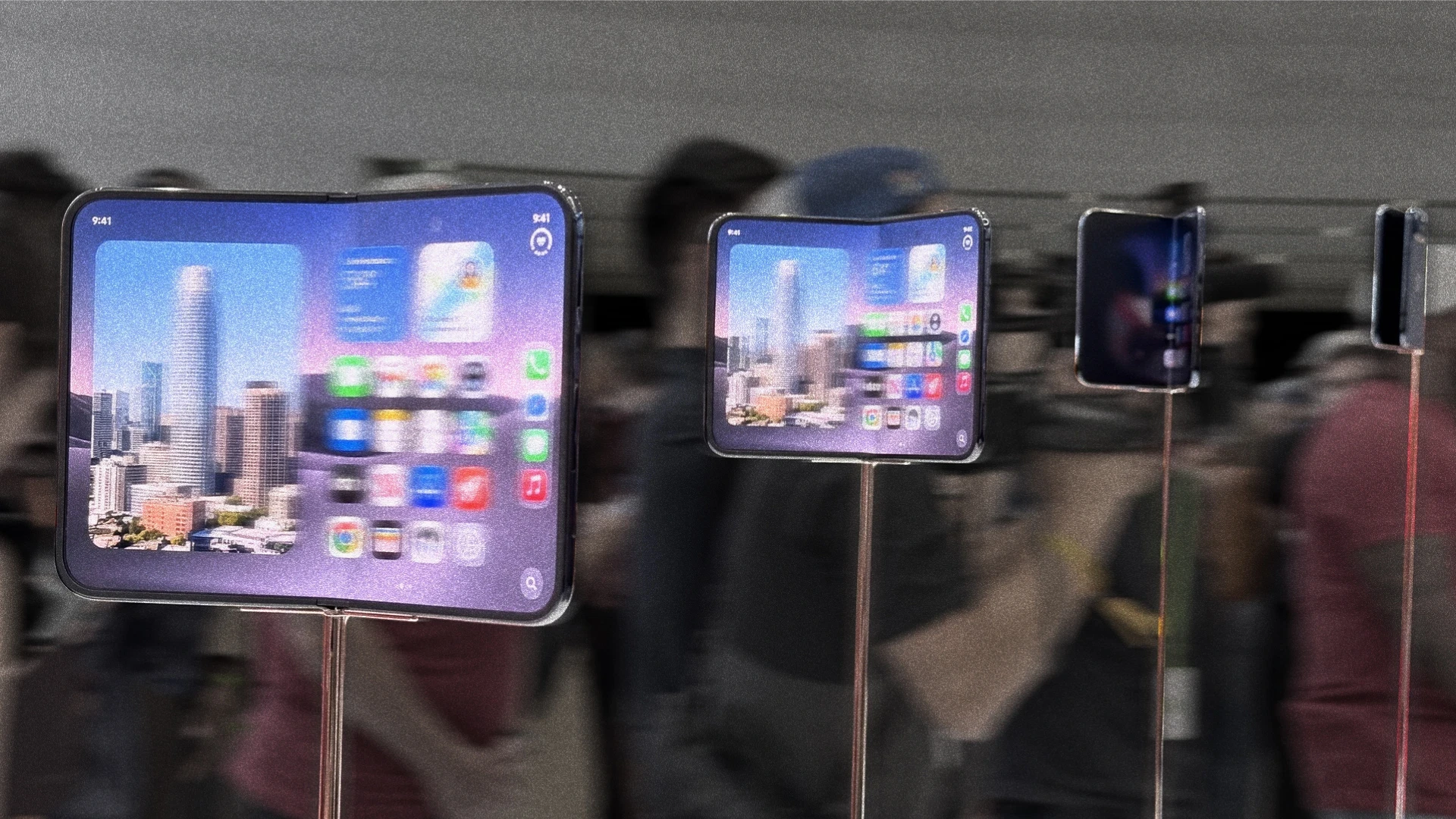
The iPhone Duo Effect: How One Product Announcement Created a UGC Wave No One Paid For
How Apple's iPhone Duo launch triggered an organic UGC wave and how Samsung and Duolingo turned that attention into free brand distribution.
5 min
|
Trends
The iPhone Duo Effect: How One Product Announcement Created a UGC Wave No One Paid For
How Apple's iPhone Duo launch triggered an organic UGC wave and how Samsung and Duolingo turned that attention into free brand distribution.
5 min
|
Trends
How Reacher Built a TikTok Clip Machine, And How Any Brand Can Use the Same Blueprint
Reacher shows how highly clippable moments can keep generating UGC long after release. Learn the same content blueprint for your brand.
6 min
|
Trends
How Reacher Built a TikTok Clip Machine, And How Any Brand Can Use the Same Blueprint
Reacher shows how highly clippable moments can keep generating UGC long after release. Learn the same content blueprint for your brand.
6 min
|
Trends
Why the D23 X-Men Ensemble Reveal Generated More UGC in 24 Hours Than Most Film Trailers Generate in a Week
The X-Men cast reveal activated multiple fan communities at once. Here is how brands can use the same structure to generate more UGC.
5 min
|
Trends
Why the D23 X-Men Ensemble Reveal Generated More UGC in 24 Hours Than Most Film Trailers Generate in a Week
The X-Men cast reveal activated multiple fan communities at once. Here is how brands can use the same structure to generate more UGC.
5 min
|
Trends