


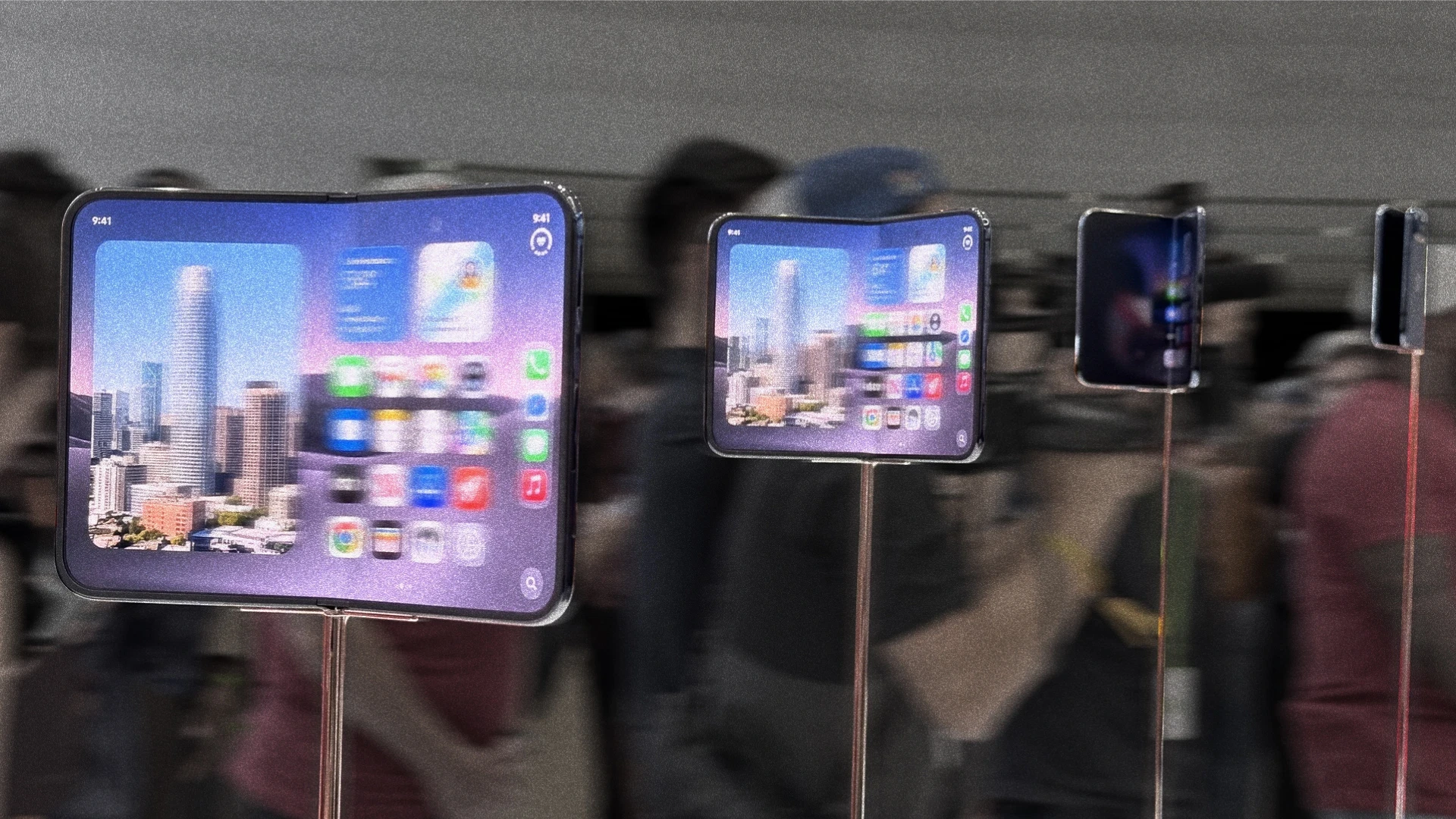
The iPhone Duo Effect: How One Product Announcement Created a UGC Wave No One Paid For
The iPhone Duo Effect: How One Product Announcement Created a UGC Wave No One Paid For
How Apple's iPhone Duo launch triggered an organic UGC wave and how Samsung and Duolingo turned that attention into free brand distribution.
Published:

Read Time:

5 min

Written by:
Fawwaz
Trend Research and Copywriter
AN UNEXPECTED PRODUCT LAUNCH SPARKED A WAVE OF CONTENT
Apple spent years and billions of dollars building the iPhone ecosystem, yet the biggest opportunity for social engagement surrounding the iPhone Duo launch came from something that didn’t cost Apple a single penny.
AN UNEXPECTED PRODUCT LAUNCH SPARKED A WAVE OF CONTENT
Apple spent years and billions of dollars building the iPhone ecosystem, yet the biggest opportunity for social engagement surrounding the iPhone Duo launch came from something that didn’t cost Apple a single penny.
AN UNEXPECTED PRODUCT LAUNCH SPARKED A WAVE OF CONTENT
Apple spent years and billions of dollars building the iPhone ecosystem, yet the biggest opportunity for social engagement surrounding the iPhone Duo launch came from something that didn’t cost Apple a single penny.
That was the true impact of the iPhone Duo. Apple created the event, but the internet fueled its spread. Within hours of the September 9 announcement, “iPhone Duo” became a trending search term on Google and sparked massive conversations involving audiences, creators, Samsung, Duolingo, and various other brands. They didn’t need to pay for access to reach an audience that was already paying attention to the event. They simply needed to ride the wave, capitalize on the momentum that had already built up, and find a way to become part of the story everyone was talking about.
Why the Wave Was So Large
Apple's launch strategy has an advantage that most brands cannot easily create: information scarcity. By sharing limited official details before a major reveal, Apple builds curiosity over time. When the information finally arrives, millions of people have a reason to pay attention and form an opinion at the same time.
That is why an Apple keynote feels more like an event than a normal product announcement. Journalists publish, creators react, people search, and social platforms fill with content around the same topic, all at once. For a short time, the launch becomes a cultural moment that gives people plenty of reasons to create and share content.
Apple Didn't Create One Wave. It Created a Sequence
Understanding how brands go viral on social media starts with seeing that a major product launch may look like a single announcement, but it can create a chain reaction. The iPhone Duo launch created several overlapping moments of attention, each giving people a new reason to post, react, and join the conversation.
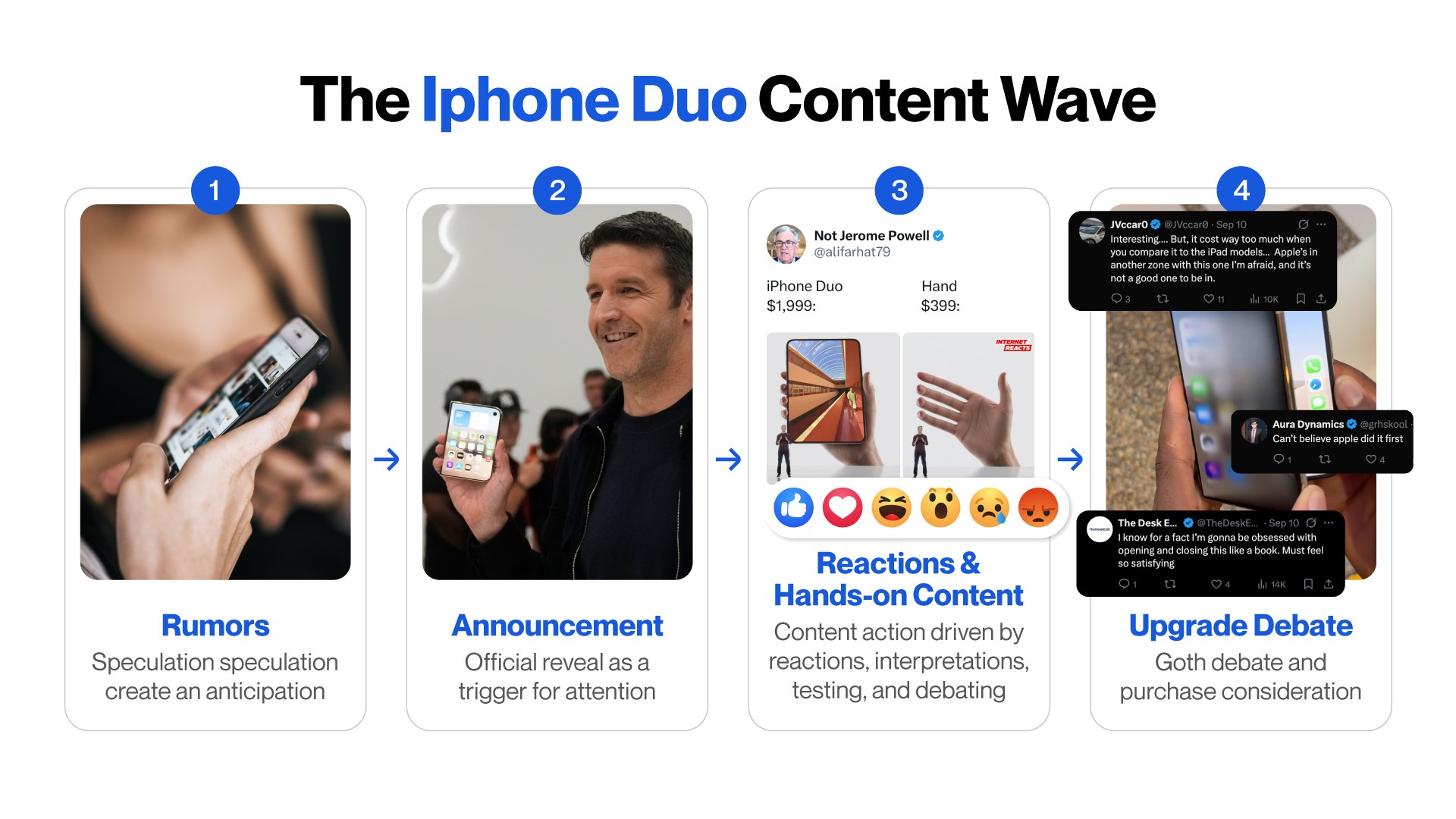
Wave 1: Speculation
Months of rumors had already built anticipation for Apple's first foldable. People were searching for leaks, comparing designs, debating features, and making prediction videos. By the time Apple announced the product, a large audience was already waiting for something to react to and talk about.
Wave 2: The announcement
Once Apple officially revealed the iPhone Duo as its first foldable iPhone, with a 7.6-inch internal display and a starting price of $1,999, the information gap closed, but new questions appeared. Is it worth the price? Does the design justify it? How does it compare with Samsung? Is Apple’s foldable ready for the mainstream? And most importantly, what does everyone else think? That is where the iPhone Duo reaction wave began.
Wave 3: Creator interpretation
The announcement gave creators a new topic to talk about. Tech YouTubers could review the hardware, TikTok creators could react to the design, phone enthusiasts could compare it with Samsung, and lifestyle creators could discuss how it might change the way they use their phones. Each perspective created another way for people to join the same conversation.
Wave 4: The upgrade debate
This is where the launch can continue long after the keynote ends. People can debate whether to buy the Duo, wait for the next model, choose the iPhone 18 Pro instead, or decide whether the foldable is worth the price. Each question creates another opportunity for content, keeping the conversation going for days or even weeks. The announcement therefore creates a useful loop:
Information → Reaction → Interpretation → Debate → More Information
Apple only needs to provide the first piece, then the audience can supply the rest.
Search Creates the First Distribution Layer
The Google Trends data shows just how quickly this can happen. On September 9 and 10, “iPhone Duo” appeared among Google's major trending searches, reaching 1M+ searches in some markets and showing a 1,000% increase over the relevant baseline.
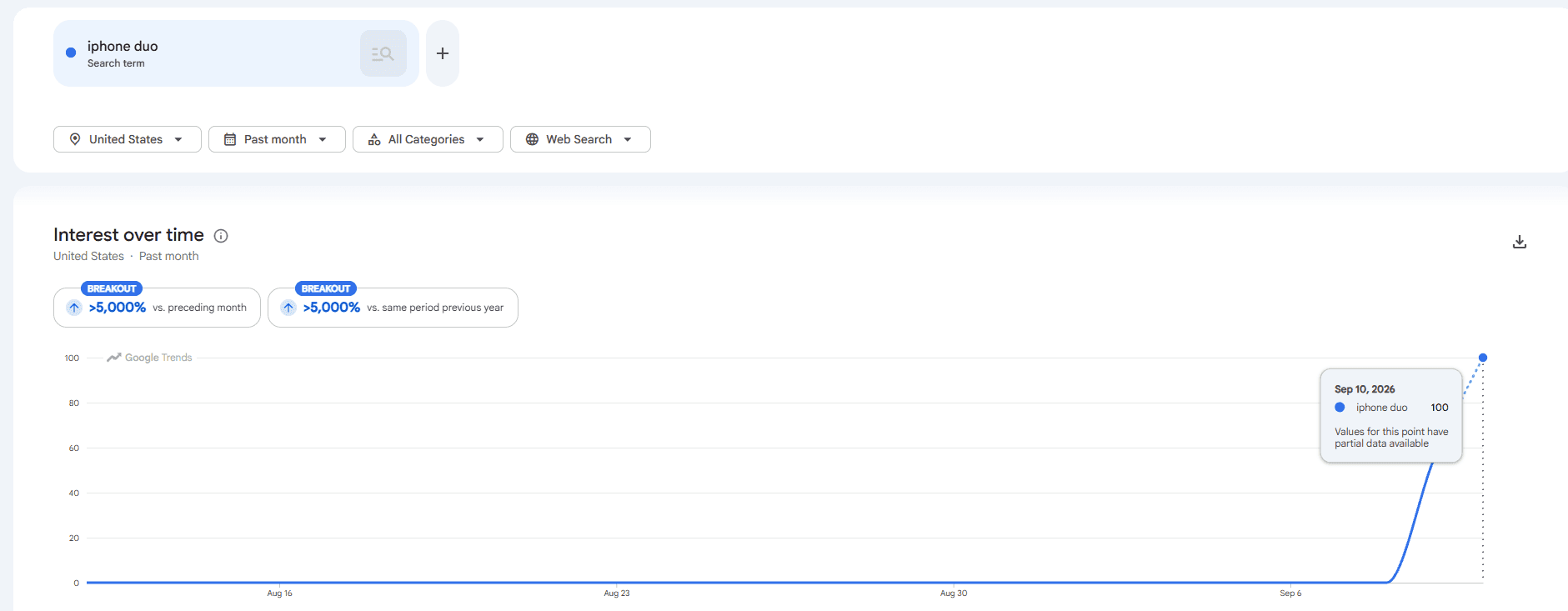
That search activity matters because attention starts to focus on the same words. People search the product name, creators use it in captions, news outlets put it in headlines, and brands mention it in posts. This connects a huge amount of content around one topic and creates the foundation for an effective Apple iPhone launch UGC marketing strategy. The brand does not need to control every piece of content. It needs to create an event that gives everyone else a reason to talk.
Then Samsung Walked Into the Conversation
Samsung had a strong reason to join the conversation. Apple’s first foldable iPhone entered a category Samsung had been building for years, starting with the Galaxy Fold in 2019. This gave Samsung a natural place in the discussion and allowed its social team to respond to Apple’s announcement in real time.
Samsung did not need to create a reason to talk about Apple because the product announcement created one for them. The brand could compare the products, highlight its experience with foldables, and react to the presentation as it happened. That is what makes effective newsjacking different from simply chasing a random trend.
Then Duolingo Joined for a Completely Different Reason
Duolingo had no smartphone product to defend, but it did have something connected to the announcement: its mascot, Duo.
When Apple named its foldable iPhone Duo, Duolingo had an easy and natural way to join the conversation. It used its usual social voice to turn the name into a joke and became part of the wider Samsung and Apple discussion.
The Samsung, Duolingo, and Apple iPhone Duo exchange became one of the most shared moments of the week. Each brand had a different reason to participate. Apple created the event, Samsung leaned on its competitive connection, and Duolingo tapped its cultural connection through its mascot and personality
The Real Advantage Was Conversation Adjacency
This is an example of conversation adjacency, where brands and people can join a trending conversation based on how closely the topic connects to what they already do or represent. The closer the connection, the more natural the participation feels. This creates different levels of relevance, giving brands multiple ways to enter a conversation without forcing a connection.
Direct relevanceYour product competes with the subject. Samsung had this. |
Cultural relevanceYour brand has a recognizable connection to the subject. Duolingo had this. |
Forced relevanceMost brand newsjacking fails when brands mention a trend just for impressions. Genuine participation feels natural, while forced participation feels like advertising. |
What Makes Reactive Marketing Work
Duolingo's response worked because it matched a personality the audience already knew. The brand had spent years building a recognizable social voice, so its joke felt natural rather than forced. Timing mattered too. Samsung reacted during Apple's event, while Duolingo joined the conversation while attention was still high. The closer a post is to the peak of attention, the less context it needs. The audience already knows what is happening, so the brand only needs to add something worth seeing.
The Reactive Brand Playbook
The iPhone Duo launch suggests a practical framework for brands watching major cultural moments. The key here is to be selective. Before reacting to a trend, ask:
Why are we genuinely connected? | Ask whether you can explain the connection in one sentence. If it takes several paragraphs to explain, the connection is probably too weak. Samsung can say, “We compete in foldables,” while Duolingo can say, “Our mascot is Duo.” That is enough. |
Does our audience know this personality? | A reactive post works best when it matches the brand voice people already know. If a serious brand suddenly acts like a meme account, it can feel confusing or forced. Build a recognizable voice before the moment arrives. |
Can we move quickly? | Reactive marketing depends on speed. If a post needs too many approvals or reviews, the opportunity may disappear before it goes live. Brands do not need to remove governance, but they do need a clear process for approving low-risk, real-time content quickly. |
The connection could come from your category, product, audience, or brand personality. If there is no clear reason to participate, let the trend pass. Strong newsjacking feels like a natural contribution to a conversation, not a brand trying to capture impressions.
What Brands Can Learn From Apple's UGC Wave
The biggest lesson is that brands should focus on creating the conditions for UGC, not just producing it.
Apple launched a highly anticipated product with a memorable name, a major shift, a high price, clear competitors, and plenty of unanswered questions. This gave people something to discuss, react to, and create content around, while other brands could then join the conversation. This creates a larger loop:
Brand announcement → Audience attention → Creator reactions → Search growth → Brand participation → More audience attention → More content
The bigger lesson behind the iPhone Duo story is where the original announcement becomes the part of the distribution system. Apple created something people wanted to talk about, and other brands brought their own audiences into the conversation. Their participation created even more content and extended the reach of the original event without Apple paying them for distribution.
This is what makes the case useful for understanding brand newsjacking strategy UGC: sometimes the goal is not to produce more content, but to create a moment that gives other people a reason to create it for you.
Build the Conditions, Then Let Others Participate
The iPhone Duo launch shows two sides of UGC: creation and participation. Give people something worth reacting to, comparing, questioning, or debating. Once the conversation gains momentum, brands with a genuine reason to join can tap into that attention instead of trying to create it from scratch.
Masterhooks takes a similar distribution-first approach, focusing on what makes people want to participate rather than treating UGC as separate brand assets. For marketers, the lesson is simple: create something worth talking about, build a recognizable voice, and be ready to join the conversation when the moment arrives.
Want to know if your brand is ready to jump into the next big cultural moment without forcing it?

Want to know if your brand is ready to jump into the next big cultural moment without forcing it?
__________________________________________________________________________________________________________________
That was the true impact of the iPhone Duo. Apple created the event, but the internet fueled its spread. Within hours of the September 9 announcement, “iPhone Duo” became a trending search term on Google and sparked massive conversations involving audiences, creators, Samsung, Duolingo, and various other brands. They didn’t need to pay for access to reach an audience that was already paying attention to the event. They simply needed to ride the wave, capitalize on the momentum that had already built up, and find a way to become part of the story everyone was talking about.
Why the Wave Was So Large
Apple's launch strategy has an advantage that most brands cannot easily create: information scarcity. By sharing limited official details before a major reveal, Apple builds curiosity over time. When the information finally arrives, millions of people have a reason to pay attention and form an opinion at the same time.
That is why an Apple keynote feels more like an event than a normal product announcement. Journalists publish, creators react, people search, and social platforms fill with content around the same topic, all at once. For a short time, the launch becomes a cultural moment that gives people plenty of reasons to create and share content.
Apple Didn't Create One Wave. It Created a Sequence
Understanding how brands go viral on social media starts with seeing that a major product launch may look like a single announcement, but it can create a chain reaction. The iPhone Duo launch created several overlapping moments of attention, each giving people a new reason to post, react, and join the conversation.
Wave 1: Speculation
Months of rumors had already built anticipation for Apple's first foldable. People were searching for leaks, comparing designs, debating features, and making prediction videos. By the time Apple announced the product, a large audience was already waiting for something to react to and talk about.
Wave 2: The announcement
Once Apple officially revealed the iPhone Duo as its first foldable iPhone, with a 7.6-inch internal display and a starting price of $1,999, the information gap closed, but new questions appeared. Is it worth the price? Does the design justify it? How does it compare with Samsung? Is Apple’s foldable ready for the mainstream? And most importantly, what does everyone else think? That is where the iPhone Duo reaction wave began.
Wave 3: Creator interpretation
The announcement gave creators a new topic to talk about. Tech YouTubers could review the hardware, TikTok creators could react to the design, phone enthusiasts could compare it with Samsung, and lifestyle creators could discuss how it might change the way they use their phones. Each perspective created another way for people to join the same conversation.
Wave 4: The upgrade debate
This is where the launch can continue long after the keynote ends. People can debate whether to buy the Duo, wait for the next model, choose the iPhone 18 Pro instead, or decide whether the foldable is worth the price. Each question creates another opportunity for content, keeping the conversation going for days or even weeks. The announcement therefore creates a useful loop:
Information → Reaction → Interpretation → Debate → More Information
Apple only needs to provide the first piece, then the audience can supply the rest.
Search Creates the First Distribution Layer
The Google Trends data shows just how quickly this can happen. On September 9 and 10, “iPhone Duo” appeared among Google's major trending searches, reaching 1M+ searches in some markets and showing a 1,000% increase over the relevant baseline.
That search activity matters because attention starts to focus on the same words. People search the product name, creators use it in captions, news outlets put it in headlines, and brands mention it in posts. This connects a huge amount of content around one topic and creates the foundation for an effective Apple iPhone launch UGC marketing strategy. The brand does not need to control every piece of content. It needs to create an event that gives everyone else a reason to talk.
Then Samsung Walked Into the Conversation
Samsung had a strong reason to join the conversation. Apple’s first foldable iPhone entered a category Samsung had been building for years, starting with the Galaxy Fold in 2019. This gave Samsung a natural place in the discussion and allowed its social team to respond to Apple’s announcement in real time.
Samsung did not need to create a reason to talk about Apple because the product announcement created one for them. The brand could compare the products, highlight its experience with foldables, and react to the presentation as it happened. That is what makes effective newsjacking different from simply chasing a random trend.
Then Duolingo Joined for a Completely Different Reason
Duolingo had no smartphone product to defend, but it did have something connected to the announcement: its mascot, Duo.
When Apple named its foldable iPhone Duo, Duolingo had an easy and natural way to join the conversation. It used its usual social voice to turn the name into a joke and became part of the wider Samsung and Apple discussion.
The Samsung, Duolingo, and Apple iPhone Duo exchange became one of the most shared moments of the week. Each brand had a different reason to participate. Apple created the event, Samsung leaned on its competitive connection, and Duolingo tapped its cultural connection through its mascot and personality
The Real Advantage Was Conversation Adjacency
This is an example of conversation adjacency, where brands and people can join a trending conversation based on how closely the topic connects to what they already do or represent. The closer the connection, the more natural the participation feels. This creates different levels of relevance, giving brands multiple ways to enter a conversation without forcing a connection.
Direct relevanceYour product competes with the subject. Samsung had this. |
Cultural relevanceYour brand has a recognizable connection to the subject. Duolingo had this. |
Forced relevanceMost brand newsjacking fails when brands mention a trend just for impressions. Genuine participation feels natural, while forced participation feels like advertising. |
What Makes Reactive Marketing Work
Duolingo's response worked because it matched a personality the audience already knew. The brand had spent years building a recognizable social voice, so its joke felt natural rather than forced. Timing mattered too. Samsung reacted during Apple's event, while Duolingo joined the conversation while attention was still high. The closer a post is to the peak of attention, the less context it needs. The audience already knows what is happening, so the brand only needs to add something worth seeing.
The Reactive Brand Playbook
The iPhone Duo launch suggests a practical framework for brands watching major cultural moments. The key here is to be selective. Before reacting to a trend, ask:
Why are we genuinely connected? | Ask whether you can explain the connection in one sentence. If it takes several paragraphs to explain, the connection is probably too weak. Samsung can say, “We compete in foldables,” while Duolingo can say, “Our mascot is Duo.” That is enough. |
Does our audience know this personality? | A reactive post works best when it matches the brand voice people already know. If a serious brand suddenly acts like a meme account, it can feel confusing or forced. Build a recognizable voice before the moment arrives. |
Can we move quickly? | Reactive marketing depends on speed. If a post needs too many approvals or reviews, the opportunity may disappear before it goes live. Brands do not need to remove governance, but they do need a clear process for approving low-risk, real-time content quickly. |
The connection could come from your category, product, audience, or brand personality. If there is no clear reason to participate, let the trend pass. Strong newsjacking feels like a natural contribution to a conversation, not a brand trying to capture impressions.
What Brands Can Learn From Apple's UGC Wave
The biggest lesson is that brands should focus on creating the conditions for UGC, not just producing it.
Apple launched a highly anticipated product with a memorable name, a major shift, a high price, clear competitors, and plenty of unanswered questions. This gave people something to discuss, react to, and create content around, while other brands could then join the conversation. This creates a larger loop:
Brand announcement → Audience attention → Creator reactions → Search growth → Brand participation → More audience attention → More content
The bigger lesson behind the iPhone Duo story is where the original announcement becomes the part of the distribution system. Apple created something people wanted to talk about, and other brands brought their own audiences into the conversation. Their participation created even more content and extended the reach of the original event without Apple paying them for distribution.
This is what makes the case useful for understanding brand newsjacking strategy UGC: sometimes the goal is not to produce more content, but to create a moment that gives other people a reason to create it for you.
Build the Conditions, Then Let Others Participate
The iPhone Duo launch shows two sides of UGC: creation and participation. Give people something worth reacting to, comparing, questioning, or debating. Once the conversation gains momentum, brands with a genuine reason to join can tap into that attention instead of trying to create it from scratch.
Masterhooks takes a similar distribution-first approach, focusing on what makes people want to participate rather than treating UGC as separate brand assets. For marketers, the lesson is simple: create something worth talking about, build a recognizable voice, and be ready to join the conversation when the moment arrives.
Want to know if your brand is ready to jump into the next big cultural moment without forcing it?
__________________________________________________________________________________________________________________
Related Reading
Why “September” by Earth, Wind & Fire Is the Most Viral Song on TikTok Every Year
4 min
|

How Reacher Built a TikTok Clip Machine, And How Any Brand Can Use the Same Blueprint
6 min
|

Why the D23 X-Men Ensemble Reveal Generated More UGC in 24 Hours Than Most Film Trailers Generate in a Week
5 min
|


Need help scaling?
Book a strategy call with our expert team to audit your current UGC setup.
Related Reading
Why “September” by Earth, Wind & Fire Is the Most Viral Song on TikTok Every Year
Discover why Earth, Wind & Fire’s September goes viral on TikTok each year, and how brands can plan for predictable seasonal virality.
4 min
|
Why “September” by Earth, Wind & Fire Is the Most Viral Song on TikTok Every Year
Discover why Earth, Wind & Fire’s September goes viral on TikTok each year, and how brands can plan for predictable seasonal virality.
4 min
|
How Reacher Built a TikTok Clip Machine, And How Any Brand Can Use the Same Blueprint
Reacher shows how highly clippable moments can keep generating UGC long after release. Learn the same content blueprint for your brand.
6 min
|
How Reacher Built a TikTok Clip Machine, And How Any Brand Can Use the Same Blueprint
Reacher shows how highly clippable moments can keep generating UGC long after release. Learn the same content blueprint for your brand.
6 min
|
Why the D23 X-Men Ensemble Reveal Generated More UGC in 24 Hours Than Most Film Trailers Generate in a Week
The X-Men cast reveal activated multiple fan communities at once. Here is how brands can use the same structure to generate more UGC.
5 min
|
Why the D23 X-Men Ensemble Reveal Generated More UGC in 24 Hours Than Most Film Trailers Generate in a Week
The X-Men cast reveal activated multiple fan communities at once. Here is how brands can use the same structure to generate more UGC.
5 min
|