



How a Brazil Viral Tiktok Dance from a São Paulo Favela Became the World Cup's Most Replicated UGC Format
How a Brazil Viral Tiktok Dance from a São Paulo Favela Became the World Cup's Most Replicated UGC Format
Passinho do Jamal spread from Brazil to the World Cup and Fortnite without paid media. Here's the UGC blueprint brands can learn from.
Published:

Read Time:

4 min

Written by:
Fawwaz
Trend Research and Copywriter
FROM BRAZIL TO THE WORLD
Just before Morocco’s match against Brazil at the 2026 FIFA World Cup, defender Chadi Riad performed a Brazilian dance that was going viral on social media. Within hours, the clip was circulating on TikTok, Instagram Reels, sports pages, and soccer fan accounts around the world.
FROM BRAZIL TO THE WORLD
Just before Morocco’s match against Brazil at the 2026 FIFA World Cup, defender Chadi Riad performed a Brazilian dance that was going viral on social media. Within hours, the clip was circulating on TikTok, Instagram Reels, sports pages, and soccer fan accounts around the world.
FROM BRAZIL TO THE WORLD
Just before Morocco’s match against Brazil at the 2026 FIFA World Cup, defender Chadi Riad performed a Brazilian dance that was going viral on social media. Within hours, the clip was circulating on TikTok, Instagram Reels, sports pages, and soccer fan accounts around the world.
The dance is called Passinho do Jamal, a dance originating from Brazil’s funk community that spread widely via TikTok, crossing national borders and reaching professional soccer players. It didn’t stop there, Passinho do Jamal also spread among fans and the gaming community, eventually appearing as an emote in Fortnite.
A key aspect of “Passinho do Jamal’s” virality lies in how it spread so widely without any paid distribution strategy. Those who shared the dance didn’t use sponsored campaigns, didn’t buy media placements, and didn’t rely on influencer outreach. “Passinho do Jamal” followed the exact distribution path every brand aspires to create, and this article will explore that so marketers can more easily learn from it.
Where Passinho do Jamal Came From
Like many internet phenomena, the global version of this story began far from where the movement originated.
This dance is associated with Romero Júnior, known online as Jamal da Capital, whose choreography draws from Brazilian street dance and funk culture. With TikTok serving as a bridge, this dance that is an expression of local culture, has become increasingly visible to people around the world. This is because, as an online short-form video platform, TikTok breaks down geographical barriers so viewers don’t need to travel to Brazil to experience its culture and learn the dance in a matter of minutes.
TikTok creators are enjoying this dance, recreating it, and each of their recreations serves as another point of distribution. The internet is doing its job exceptionally well, and that’s why a cultural moment that was initially local in scale can expand into a global phenomenon.
Why This Format Traveled So Easily
Many dance trends emerge every year, but very few achieve global adoption. Passinho do Jamal succeeded because it incorporates several characteristics found in UGC formats that that meet the following criteria:
Easy Move to ReplicateThe core move is simple, so people can understand the dance just by watching it a few times. This is important because the more complex a move is, the less interest people have in participating due to the difficulty of performing it. Simple moves are easier to learn, so more creators are willing to participate and recreate the dance video. |
Strong Visual RecognitionSome formats require context, whereas Passinho do Jamal does not. The moves are visually distinctive enough that viewers can recognize them immediately. This recognition creates familiarity, and familiarity drives participation. |
Catchy Culture MusicNot only is it entertaining to watch, but the Brazilian dance trend “Passinho da Jamal” is also widely popular because of its fun and catchy music. By blending funk-pop music with local Brazilian culture and a beat that’s fun to follow, people around the world are inspired to recreate this dance because they love it. |
Humor Through ContextOne of the strongest drivers of growth is contrast, and the dance becomes funnier when it appears in unexpected places. Examples include a soccer player before a major international match, a classroom, a wedding, or even a video game broadcast. The humor evolves every time the context changes, giving creators unlimited opportunities to reinterpret the same format. |
From TikTok To The World Cup To Fortnite
Passinho do Jamal followed what might be the perfect UGC distribution lifecycle.
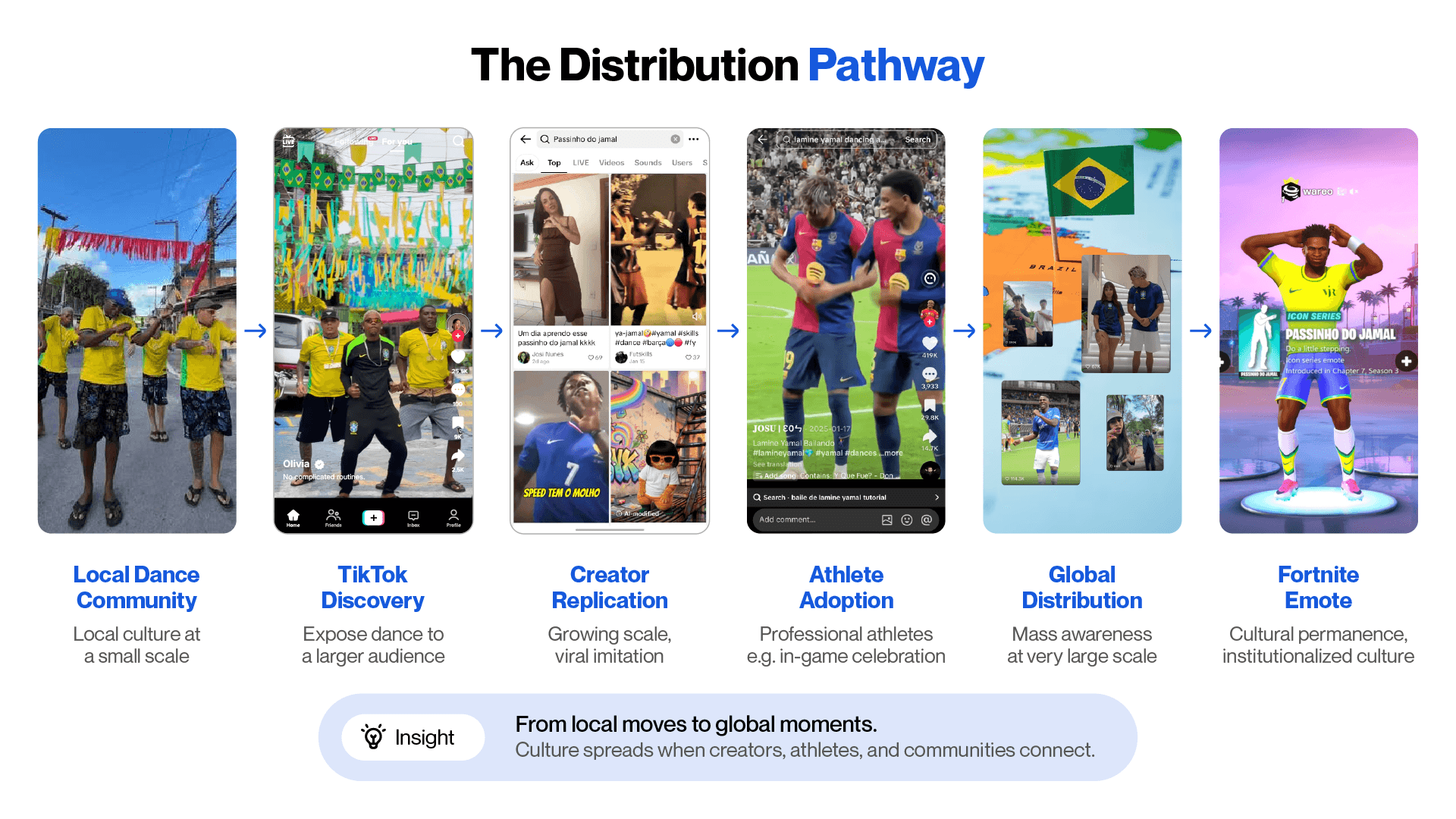
Stage 1: Local Community AdoptionCreators within the native culture establish the format, the community defines the behavior, and the audience learns the language. |
Stage 2: Platform ExpansionTikTok enables discovery beyond the original audience, opening opportunities for new creators to begin replicating the format, making it easily recognizable. |
Stage 3: Celebrity ParticipationAthletes and public figures introduce the format to a wider audience, and this is where Chadi Riad becomes significant. He didn’t create the dance, but he expanded its reach. Tap to play Tap to play |
Stage 4: Fan RecreationFans began recording themselves and becoming creators, causing distribution to skyrocket. Tap to play Tap to play |
Stage 5: Platform InstitutionalizationWhen a format reaches products like Fortnite emotes, it enters a new stage. The trend is no longer just internet content but becomes part of popular culture Tap to play Tap to play |
What Brands Can Learn
Brands cannot engineer virality, but they can increase the likelihood of replication. Passinho do Jamal offers a useful framework to learn from:
Make Participation EasyAvoid creating overly complicated formats, as simple actions spread faster. | Create A Visual SignatureIt must have a distinctive visual identity so people can recognize it immediately, which helps increase the scale of participation |
Leave Room For ReinventionDon’t make your format too rigid. Ensure people can adapt it to their own creativity and self-expression | Use Context As The PunchlineMany successful trends are entertaining because of their unexpected settings, which give people new reasons to share |
Designing Content That Wants To Be Recreated
The success of Passinho do Jamal demonstrates an important reality about modern distribution. People rarely share content simply because they enjoyed watching it. They share content when they can imagine themselves participating in it.
That distinction matters for brands. The strongest UGC campaigns often resemble cultural formats more than advertisements. They provide a simple action, a recognizable visual identity, and enough flexibility for audiences to make the format their own.

This is one reason Masterhooks frequently studies creator ecosystems, fan communities, and viral participation loops. While virality itself remains unpredictable, the structures behind replicable content are surprisingly consistent. Understanding those structures gives brands a better chance of creating content that audiences choose to spread themselves.
Interested in learning more about how to create trends that can go global?

Interested in learning more about how to create trends that can go global?
The dance is called Passinho do Jamal, a dance originating from Brazil’s funk community that spread widely via TikTok, crossing national borders and reaching professional soccer players. It didn’t stop there, Passinho do Jamal also spread among fans and the gaming community, eventually appearing as an emote in Fortnite.
A key aspect of “Passinho do Jamal’s” virality lies in how it spread so widely without any paid distribution strategy. Those who shared the dance didn’t use sponsored campaigns, didn’t buy media placements, and didn’t rely on influencer outreach. “Passinho do Jamal” followed the exact distribution path every brand aspires to create, and this article will explore that so marketers can more easily learn from it.
Where Passinho do Jamal Came From
Like many internet phenomena, the global version of this story began far from where the movement originated.
This dance is associated with Romero Júnior, known online as Jamal da Capital, whose choreography draws from Brazilian street dance and funk culture. With TikTok serving as a bridge, this dance that is an expression of local culture, has become increasingly visible to people around the world. This is because, as an online short-form video platform, TikTok breaks down geographical barriers so viewers don’t need to travel to Brazil to experience its culture and learn the dance in a matter of minutes.
TikTok creators are enjoying this dance, recreating it, and each of their recreations serves as another point of distribution. The internet is doing its job exceptionally well, and that’s why a cultural moment that was initially local in scale can expand into a global phenomenon.
Why This Format Traveled So Easily
Many dance trends emerge every year, but very few achieve global adoption. Passinho do Jamal succeeded because it incorporates several characteristics found in UGC formats that that meet the following criteria:
Easy Move to ReplicateThe core move is simple, so people can understand the dance just by watching it a few times. This is important because the more complex a move is, the less interest people have in participating due to the difficulty of performing it. Simple moves are easier to learn, so more creators are willing to participate and recreate the dance video. |
Strong Visual RecognitionSome formats require context, whereas Passinho do Jamal does not. The moves are visually distinctive enough that viewers can recognize them immediately. This recognition creates familiarity, and familiarity drives participation. |
Catchy Culture MusicNot only is it entertaining to watch, but the Brazilian dance trend “Passinho da Jamal” is also widely popular because of its fun and catchy music. By blending funk-pop music with local Brazilian culture and a beat that’s fun to follow, people around the world are inspired to recreate this dance because they love it. |
Humor Through ContextOne of the strongest drivers of growth is contrast, and the dance becomes funnier when it appears in unexpected places. Examples include a soccer player before a major international match, a classroom, a wedding, or even a video game broadcast. The humor evolves every time the context changes, giving creators unlimited opportunities to reinterpret the same format. |
From TikTok To The World Cup To Fortnite
Passinho do Jamal followed what might be the perfect UGC distribution lifecycle.
Stage 1: Local Community AdoptionCreators within the native culture establish the format, the community defines the behavior, and the audience learns the language. |
Stage 2: Platform ExpansionTikTok enables discovery beyond the original audience, opening opportunities for new creators to begin replicating the format, making it easily recognizable. |
Stage 3: Celebrity ParticipationAthletes and public figures introduce the format to a wider audience, and this is where Chadi Riad becomes significant. He didn’t create the dance, but he expanded its reach. Tap to play Tap to play |
Stage 4: Fan RecreationFans began recording themselves and becoming creators, causing distribution to skyrocket. Tap to play Tap to play |
Stage 5: Platform InstitutionalizationWhen a format reaches products like Fortnite emotes, it enters a new stage. The trend is no longer just internet content but becomes part of popular culture Tap to play Tap to play |
What Brands Can Learn
Brands cannot engineer virality, but they can increase the likelihood of replication. Passinho do Jamal offers a useful framework to learn from:
Make Participation EasyAvoid creating overly complicated formats, as simple actions spread faster. | Create A Visual SignatureIt must have a distinctive visual identity so people can recognize it immediately, which helps increase the scale of participation |
Leave Room For ReinventionDon’t make your format too rigid. Ensure people can adapt it to their own creativity and self-expression | Use Context As The PunchlineMany successful trends are entertaining because of their unexpected settings, which give people new reasons to share |
Designing Content That Wants To Be Recreated
The success of Passinho do Jamal demonstrates an important reality about modern distribution. People rarely share content simply because they enjoyed watching it. They share content when they can imagine themselves participating in it.
That distinction matters for brands. The strongest UGC campaigns often resemble cultural formats more than advertisements. They provide a simple action, a recognizable visual identity, and enough flexibility for audiences to make the format their own.
This is one reason Masterhooks frequently studies creator ecosystems, fan communities, and viral participation loops. While virality itself remains unpredictable, the structures behind replicable content are surprisingly consistent. Understanding those structures gives brands a better chance of creating content that audiences choose to spread themselves.
Interested in learning more about how to create trends that can go global?
Related Reading


Need help scaling?
Book a strategy call with our expert team to audit your current UGC setup.
Related Reading
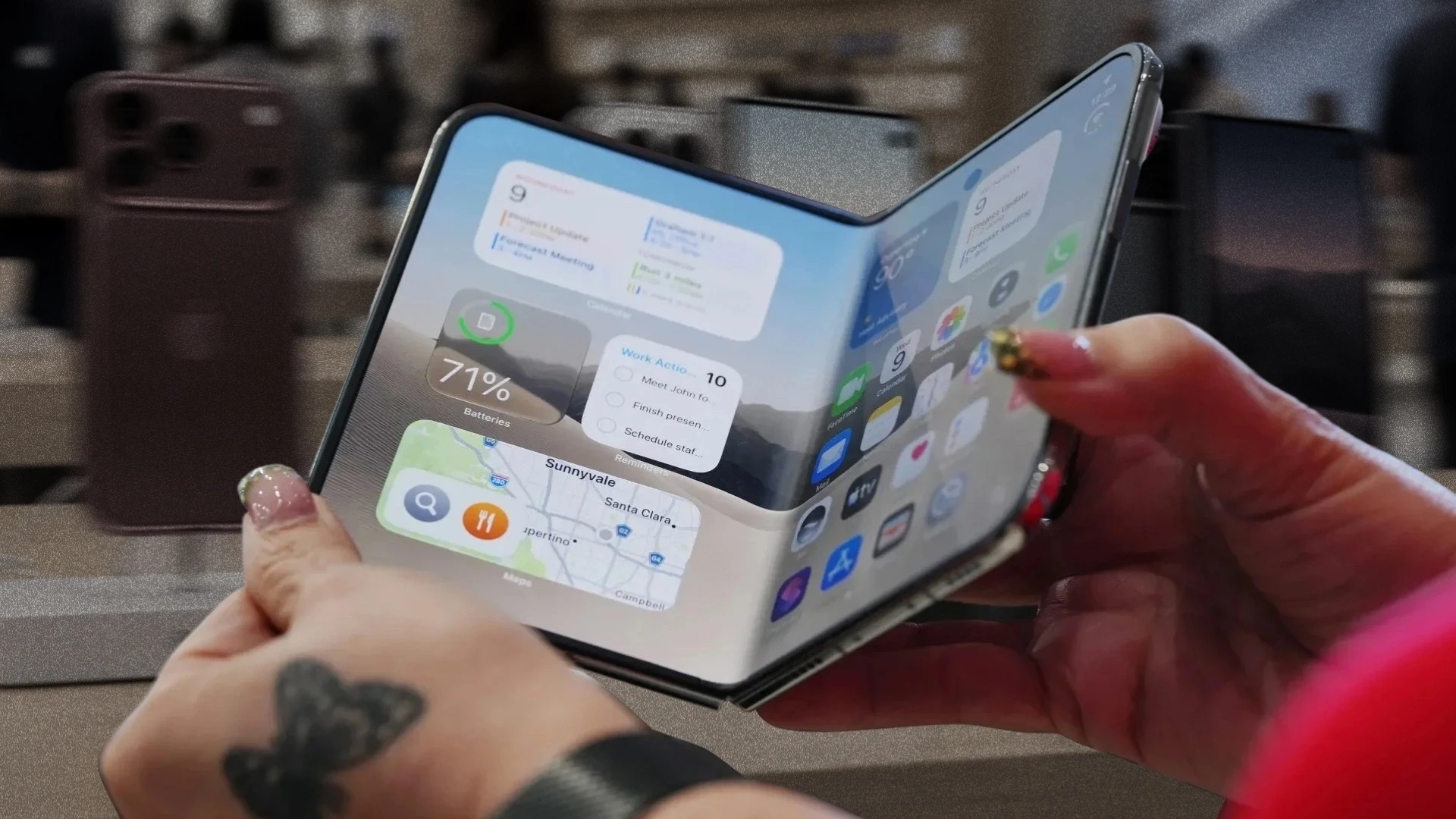
How Apple Turns a Product Launch Into a Yearly UGC Event That Runs Itself
How Apple's September launch cycle turns anticipation, information scarcity, creators, and product novelty into a recurring UGC engine.
4 min
|
How Apple Turns a Product Launch Into a Yearly UGC Event That Runs Itself
How Apple's September launch cycle turns anticipation, information scarcity, creators, and product novelty into a recurring UGC engine.
4 min
|

The Sydney Sweeney Novig Playbook: Why the Most Talked-About Ad of NFL Week 1 Was Also the Smartest
How Sydney Sweeney and Novig built a smarter celebrity partnership through equity, creative control, brand fit, and strategic timing.
4 min
|
The Sydney Sweeney Novig Playbook: Why the Most Talked-About Ad of NFL Week 1 Was Also the Smartest
How Sydney Sweeney and Novig built a smarter celebrity partnership through equity, creative control, brand fit, and strategic timing.
4 min
|
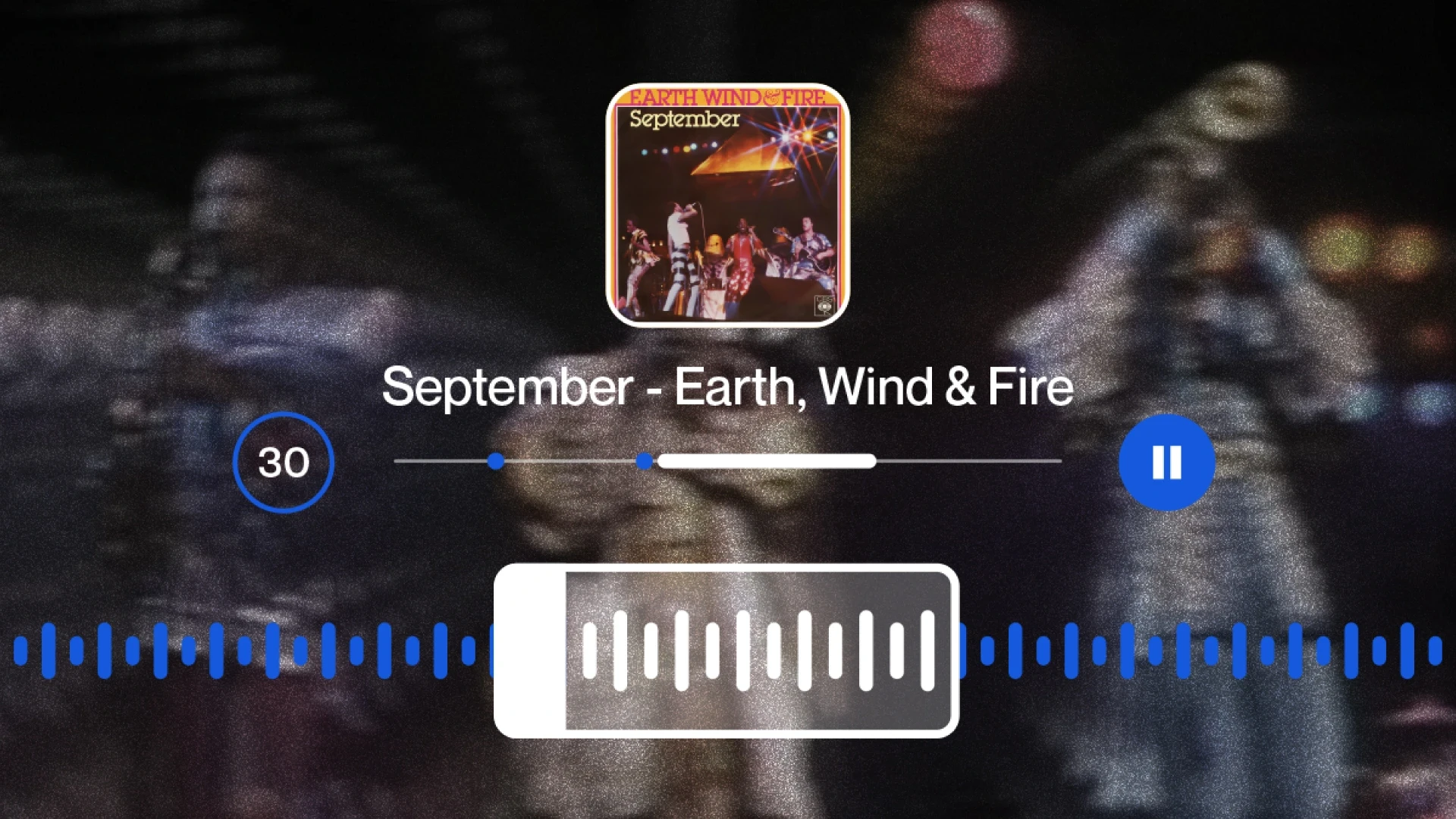
Why “September” by Earth, Wind & Fire Is the Most Viral Song on TikTok Every Year
Discover why Earth, Wind & Fire’s September goes viral on TikTok each year, and how brands can plan for predictable seasonal virality.
4 min
|
Why “September” by Earth, Wind & Fire Is the Most Viral Song on TikTok Every Year
Discover why Earth, Wind & Fire’s September goes viral on TikTok each year, and how brands can plan for predictable seasonal virality.
4 min
|