


Case Study
How KitKat Turned a Real Chocolate Heist Into One of 2026's Most Shareable Brand Moments
How KitKat Turned a Real Chocolate Heist Into One of 2026's Most Shareable Brand Moments
How KitKat turned a real chocolate theft into a viral campaign through transparency, participation, humor, and earned media.
Published:

Read Time:

6 min

Written by:
Fawwaz
Trend Research and Copywriter
FROM A SHIPMENT PROBLEM TO BRILLIANT MARKETING DECISION
A real supply chain theft became one of 2026's most shareable brand moments because KitKat reacted quickly. It turned into one of the most talked-about KitKat advertising campaigns of the year, built entirely from an honest, funny response instead of a planned ad buy. Instead of keeping it as a logistics problem, the brand went public and turned the incident into a story people could follow, discuss, and participate in. The unusual timing also helped, with Easter approaching and April Fools' Day just days away.
FROM A SHIPMENT PROBLEM TO BRILLIANT MARKETING DECISION
A real supply chain theft became one of 2026's most shareable brand moments because KitKat reacted quickly. It turned into one of the most talked-about KitKat advertising campaigns of the year, built entirely from an honest, funny response instead of a planned ad buy. Instead of keeping it as a logistics problem, the brand went public and turned the incident into a story people could follow, discuss, and participate in. The unusual timing also helped, with Easter approaching and April Fools' Day just days away.
FROM A SHIPMENT PROBLEM TO BRILLIANT MARKETING DECISION
A real supply chain theft became one of 2026's most shareable brand moments because KitKat reacted quickly. It turned into one of the most talked-about KitKat advertising campaigns of the year, built entirely from an honest, funny response instead of a planned ad buy. Instead of keeping it as a logistics problem, the brand went public and turned the incident into a story people could follow, discuss, and participate in. The unusual timing also helped, with Easter approaching and April Fools' Day just days away.
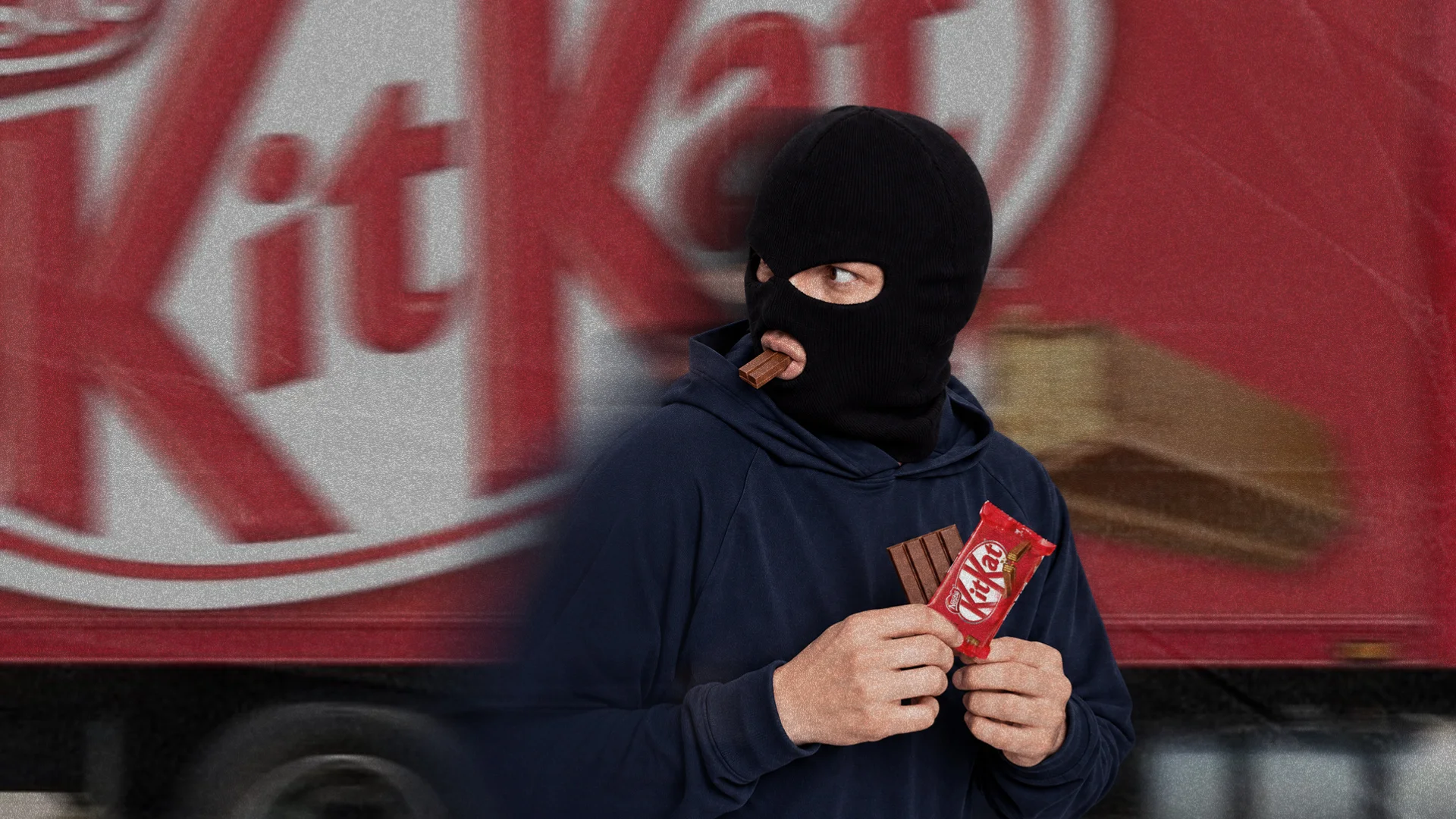
On March 26, 413,793 KitKat bars weighing around 12 tonnes disappeared while being transported from Italy to Poland. The shipment included special Formula 1-themed products, and Nestlé warned they could enter unofficial sales channels. Each bar also had a unique batch code, giving KitKat a simple way to turn the theft into a real-world mystery.
The Timeline That Changed the Story
March 26: The Shipment Disappears
The theft occurred during transit from Italy toward Poland, with more than 400,000 bars suddenly missing. At this point, there was no campaign, just a genuine supply chain problem.
March 28: KitKat Goes Public
KitKat publicly confirmed the theft, but the timing made the situation even trickier with April Fools' Day approaching. The brand needed to make it clear that the story was real, while still keeping its usual sense of humor.
Its statement joked that the thieves had taken KitKat's “Have a Break” message too literally. This became an important marketing decision because KitKat did not hide the problem. Instead, it made the situation memorable, relatable, and unmistakably on-brand.
April 1: The Stolen KitKat Tracker
The next move changed the audience's role. KitKat launched the Stolen KitKat Tracker, allowing people to enter the eight-digit batch code on their chocolate bars and check whether their product came from the stolen shipment.
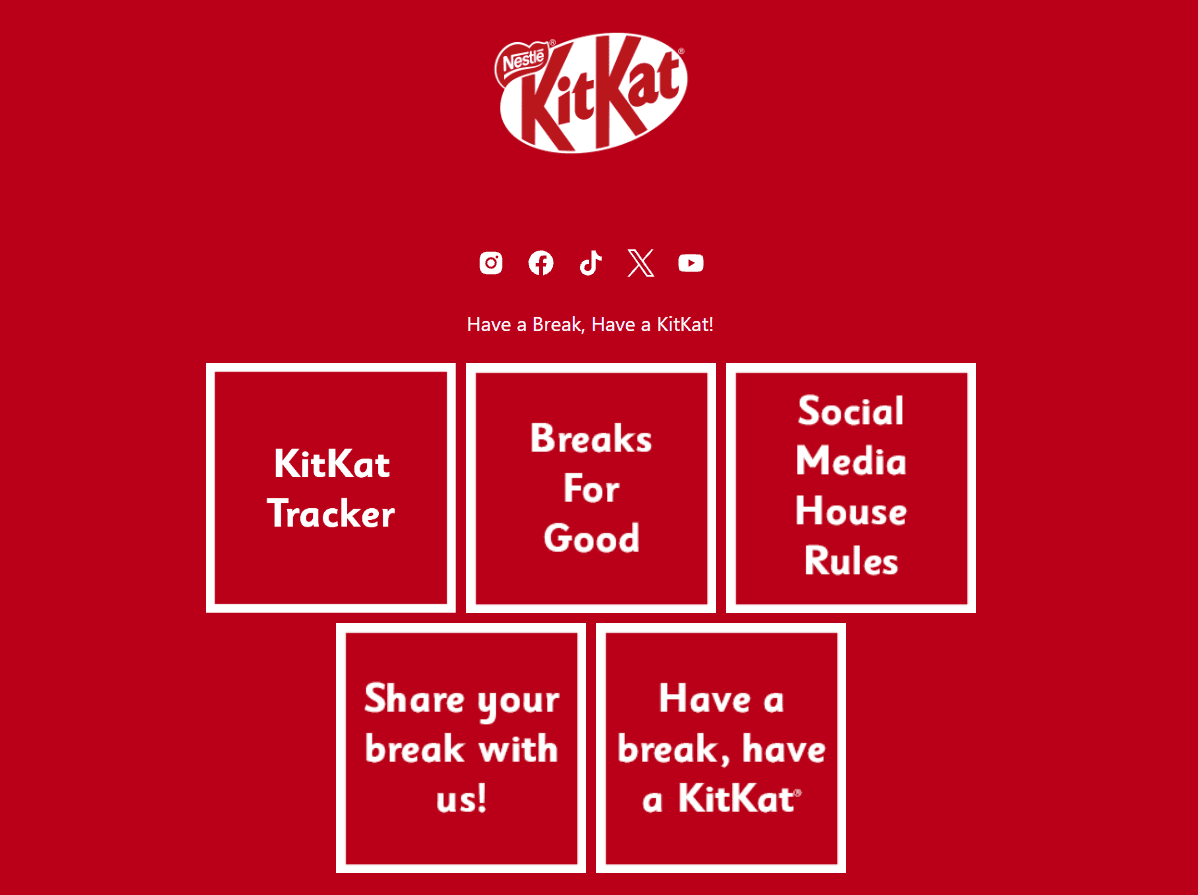
Source: https://nes.tl/HaveABreak
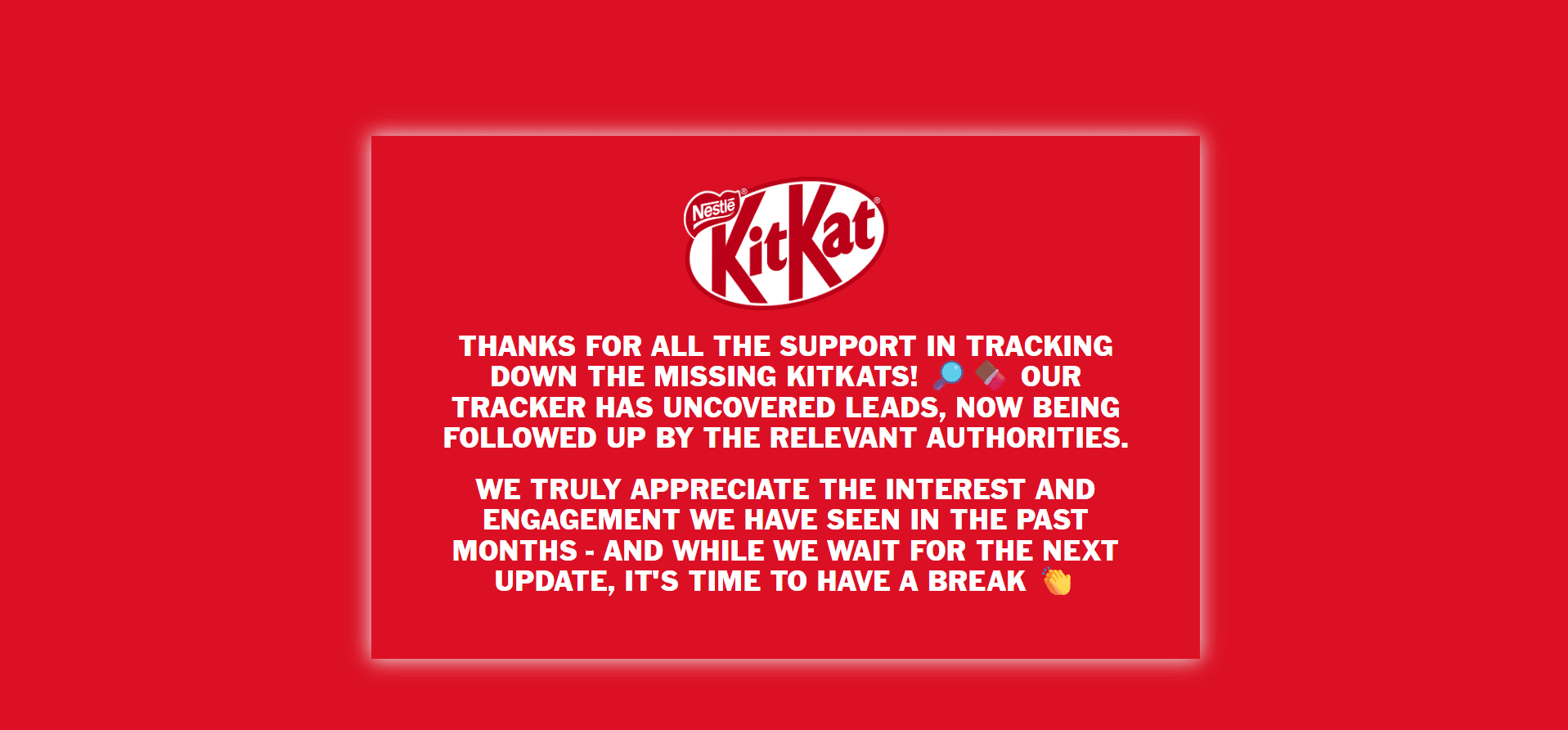
Source: https://nestlecorporate.qualifioapp.com/quiz/1776864_2455/CDCG-KITKAT-STOLEN-FORM.html
Suddenly, people had something to do. They could check their KitKat, share the result, and take part in the search, turning the campaign from “look at this bizarre story” into “help investigate this bizarre story.”
April 8–9: The Chocolate Gets Presidential Protection
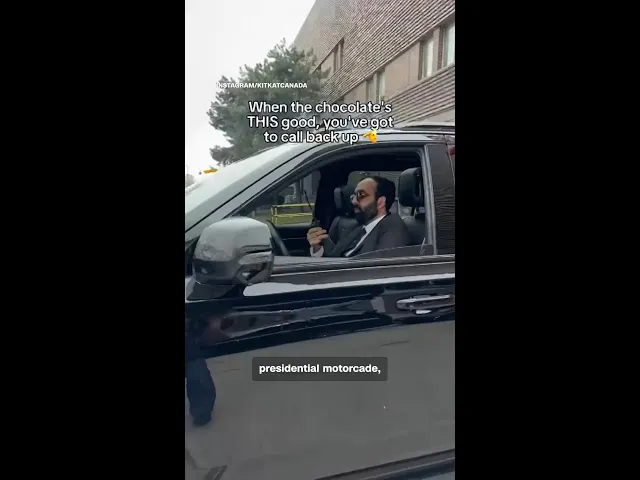
KitKat Canada extended the story into the real world with a delivery truck travelling through Toronto surrounded by black SUVs and suited security personnel, making the shipment look like a high-value diplomatic convoy.
The joke worked because it needed almost no explanation. After a truck carrying millions of dollars worth of chocolate disappeared, KitKat treated its next shipment like classified cargo, turning the original incident into another piece of content.
Then Other Brands Started Making KitKat Ads for Free
The story soon became bigger than KitKat as other brands joined the conversation, with VML reporting 115+ brands, $224 million in earned media value, and 70+ billion impressions without traditional paid media spend. While these are agency-reported figures, they show how KitKat created a story that other brands wanted to participate in.
Ryanair Found Its Connection
Ryanair responded with a visual suggesting its aircraft had something to do with the missing chocolate.
The joke worked because transportation was already at the center of the story, so the connection to Ryanair's brand felt natural and relevant to the moment.
Picsart Turned Its AI Identity Into the Punchline
Picsart posted an Official Statement suggested that its AI could create almost anything, but apparently stealing the truck was still beyond its capabilities.
The brand reported that the response became one of its strongest social moments, generating hundreds of thousands of views on X.
RØDE Took the ASMR Route
RØDE proposed an ASMR livestream involving the missing chocolate, connecting the heist to something the audio brand could naturally talk about: sound.
The response shows how strong reactive marketing works. Instead of simply repeating the joke, brands can find a way to make the moment feel relevant to their own identity.
Why the KitKat Heist Marketing Worked
The campaign's success came from a clear sequence: the theft created attention, KitKat created the story, the tracker created participation, and other brands added distribution. Consumers became part of the story while media outlets had a genuinely unusual event to cover, with each layer giving the next one something to build on. That is why the campaign expanded far beyond KitKat's own channels.
Decision 1: KitKat Went Public
The easiest response would have been to treat the theft as a private operational problem. Instead, KitKat publicly acknowledged what happened and explained that the decision also aimed to raise awareness of cargo theft, which it described as an increasingly common issue.
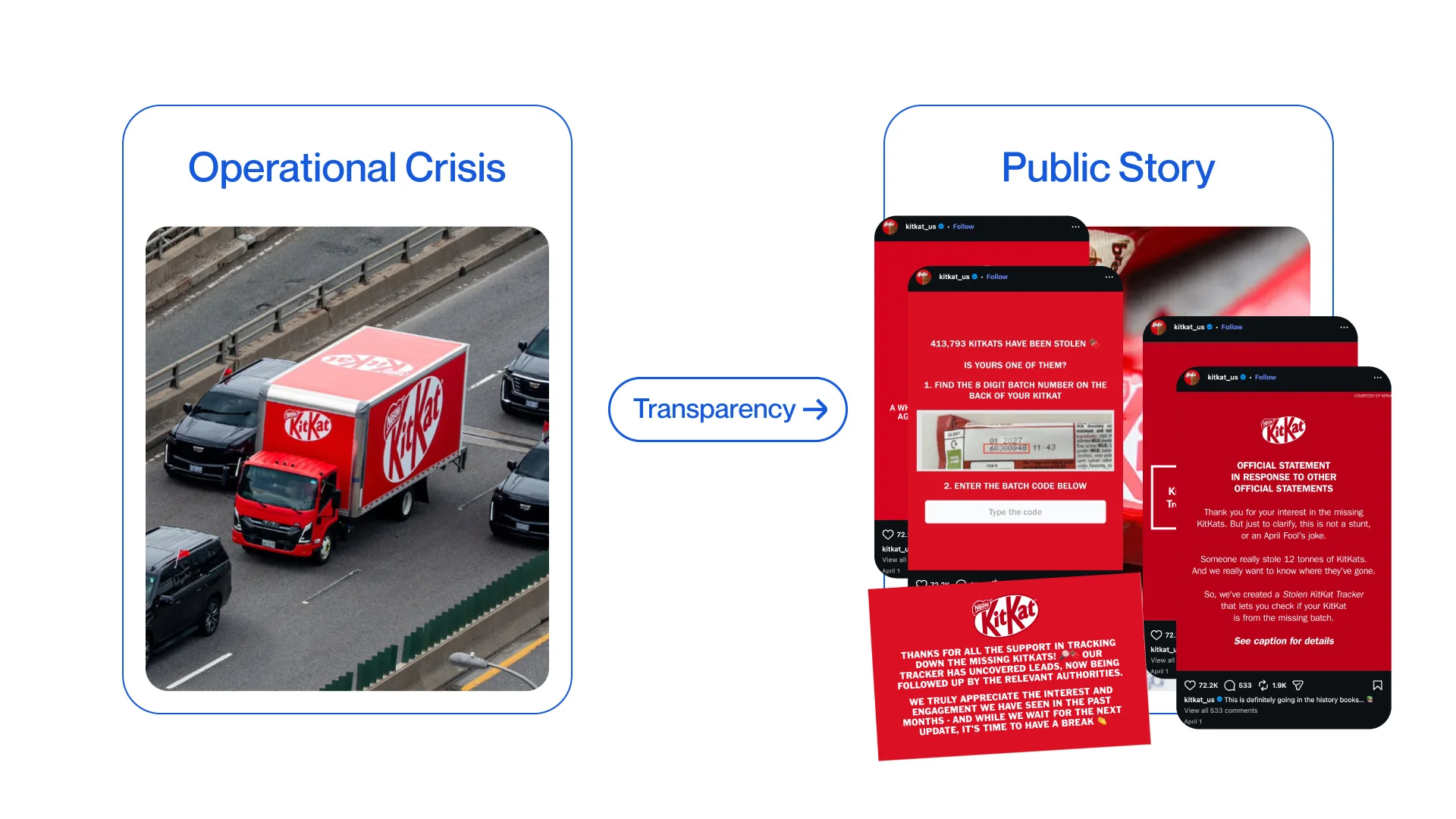
This gave the story a genuine reason to exist beyond marketing. KitKat didn't create the crisis, but they just refused to hide from it.
Decision 2: Give People Something to Do
The tracker was arguably the smartest part of the campaign. Without it, people could only read about the missing chocolate. With it, they could check their own KitKat, turning passive attention into participation.
VML reported more than 2.2 million tracker engagements, while Fortune reported that the tool flagged three suspicious batch codes and surfaced one lead that became part of an active police investigation. This gave the campaign something beyond a meme: it had real utility.
Decision 3: Keep the Humor Inside the Brand
KitKat already had an established connection with the idea of taking a break, and the theft created an almost absurd extension of that territory. The response therefore felt familiar rather than like a completely new personality created just because the story went viral.
This is one of the biggest lessons from the KitKat marketing campaign: humor is easier to share when people already understand why the brand would make that joke.
The Difference Between a Meme and a Brand MomentA meme can generate attention, but a brand moment gives people a reason to contribute. The KitKat heist had both. The story was naturally memeable because the details were so unusual: 413,793 chocolate bars, 12 tonnes, a missing truck, and Easter just days away. |
What Brands Can Learn From the Heist
1. A Crisis Can Become a Distribution Opportunity
This does not mean brands should manufacture problems. It means unexpected events can create attention that traditional campaigns may struggle to buy. The important question is what the brand does with that attention. KitKat turned a real supply chain incident into a story with a much larger media footprint.
VML reported more than 6,000 articles worldwide and over 800 million earned reach. The campaign also reportedly captured 44% of Meta view share during the Easter conversation, nearly three times the closest competitor. These results show the potential value of earned distribution when the underlying story is strong.
2. Participation Beats Passive Consumption
The tracker changed the audience's role. Instead of simply watching the campaign, people could check their own chocolate and become part of the story.
This is a useful design principle for brands: when audiences can contribute something, the campaign gains another path to distribution. The action does not need to be complicated. It just needs to make sense within the story.
3. The Best Reactive Marketing Has a Reason
Ryanair already had a natural connection to transportation, Picsart to AI, and RØDE to sound. Their existing brand identities gave them a clear reason to join the conversation. That is why their responses felt like contributions to the conversation rather than advertisements interrupting it. The strongest reactive marketing works when the connection feels natural instead of forced.
What Brands Should Avoid Copying
The lesson is not to manufacture a fake crisis. There is no evidence that KitKat orchestrated the theft, and the company publicly confirmed that the incident was genuine. The campaign worked because the event was real, while the creative opportunity came from the brand's response.
Brands should study the mechanics instead of trying to recreate the circumstances: go public when appropriate, find a natural brand angle, give people something to do, make participation easy, and move while the conversation is still alive.
Why This Belongs Among the Best Brand Campaigns of 2026
What makes the KitKat moment stand out is its simple formula: Real Event → Fast Response → Participation → Brand Ecosystem → Earned Distribution. KitKat created a story worth joining, then other brands and audiences helped expand it through their own content.
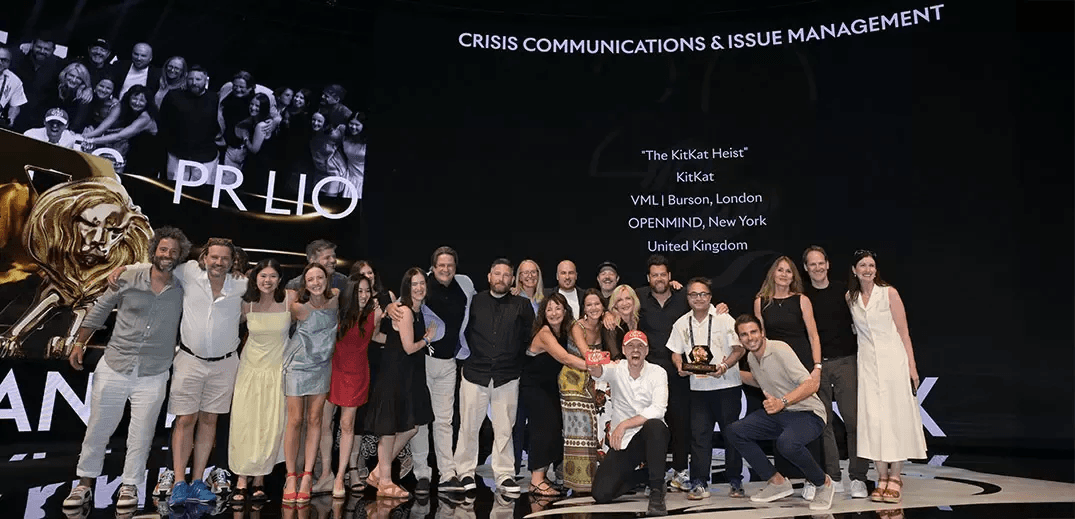
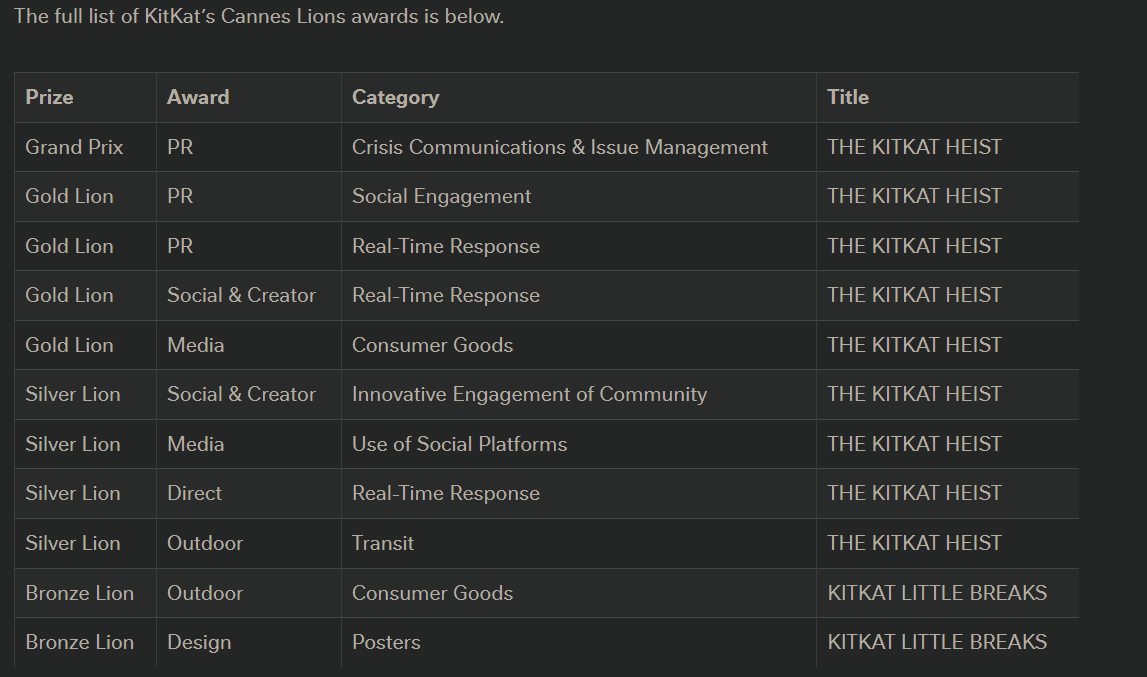
Source: https://www.nestle.com/media/news/kitkat-heist-brand-cannes-lions-win
This approach proved successful, generating $224 million in earned media value and winning the PR Grand Prix at the 2026 Cannes Lions, the industry’s most prestigious PR award. The bigger lesson is that KitKat turned a real-world problem into a cultural moment that people wanted to engage with, build upon, and share.
From Crisis Response to Creative Distribution
The biggest lesson from the KitKat heist is not that brands should try to be funny during a crisis. It's that giving people a real role in the story turns attention into distribution other brands want to join.
Masterhooks takes a similar approach from the creative side, helping brands build content systems that give people something worth watching, sharing, or joining. The KitKat case shows that the strongest campaigns do not simply create more content. They create an idea that gives everyone else a reason to add to the story.
Not sure how to turn an unexpected moment into content people want to share?
Not sure how to turn an unexpected moment into content people want to share?
On March 26, 413,793 KitKat bars weighing around 12 tonnes disappeared while being transported from Italy to Poland. The shipment included special Formula 1-themed products, and Nestlé warned they could enter unofficial sales channels. Each bar also had a unique batch code, giving KitKat a simple way to turn the theft into a real-world mystery.
The Timeline That Changed the Story
March 26: The Shipment Disappears
The theft occurred during transit from Italy toward Poland, with more than 400,000 bars suddenly missing. At this point, there was no campaign, just a genuine supply chain problem.
March 28: KitKat Goes Public
KitKat publicly confirmed the theft, but the timing made the situation even trickier with April Fools' Day approaching. The brand needed to make it clear that the story was real, while still keeping its usual sense of humor.
Its statement joked that the thieves had taken KitKat's “Have a Break” message too literally. This became an important marketing decision because KitKat did not hide the problem. Instead, it made the situation memorable, relatable, and unmistakably on-brand.
April 1: The Stolen KitKat Tracker
The next move changed the audience's role. KitKat launched the Stolen KitKat Tracker, allowing people to enter the eight-digit batch code on their chocolate bars and check whether their product came from the stolen shipment.
Source: https://nes.tl/HaveABreak
Source: https://nestlecorporate.qualifioapp.com/quiz/1776864_2455/CDCG-KITKAT-STOLEN-FORM.html
Suddenly, people had something to do. They could check their KitKat, share the result, and take part in the search, turning the campaign from “look at this bizarre story” into “help investigate this bizarre story.”
April 8–9: The Chocolate Gets Presidential Protection
KitKat Canada extended the story into the real world with a delivery truck travelling through Toronto surrounded by black SUVs and suited security personnel, making the shipment look like a high-value diplomatic convoy.
The joke worked because it needed almost no explanation. After a truck carrying millions of dollars worth of chocolate disappeared, KitKat treated its next shipment like classified cargo, turning the original incident into another piece of content.
Then Other Brands Started Making KitKat Ads for Free
The story soon became bigger than KitKat as other brands joined the conversation, with VML reporting 115+ brands, $224 million in earned media value, and 70+ billion impressions without traditional paid media spend. While these are agency-reported figures, they show how KitKat created a story that other brands wanted to participate in.
Ryanair Found Its Connection
Ryanair responded with a visual suggesting its aircraft had something to do with the missing chocolate.
The joke worked because transportation was already at the center of the story, so the connection to Ryanair's brand felt natural and relevant to the moment.
Picsart Turned Its AI Identity Into the Punchline
Picsart posted an Official Statement suggested that its AI could create almost anything, but apparently stealing the truck was still beyond its capabilities.
The brand reported that the response became one of its strongest social moments, generating hundreds of thousands of views on X.
RØDE Took the ASMR Route
RØDE proposed an ASMR livestream involving the missing chocolate, connecting the heist to something the audio brand could naturally talk about: sound.
The response shows how strong reactive marketing works. Instead of simply repeating the joke, brands can find a way to make the moment feel relevant to their own identity.
Why the KitKat Heist Marketing Worked
The campaign's success came from a clear sequence: the theft created attention, KitKat created the story, the tracker created participation, and other brands added distribution. Consumers became part of the story while media outlets had a genuinely unusual event to cover, with each layer giving the next one something to build on. That is why the campaign expanded far beyond KitKat's own channels.
Decision 1: KitKat Went Public
The easiest response would have been to treat the theft as a private operational problem. Instead, KitKat publicly acknowledged what happened and explained that the decision also aimed to raise awareness of cargo theft, which it described as an increasingly common issue.
This gave the story a genuine reason to exist beyond marketing. KitKat didn't create the crisis, but they just refused to hide from it.
Decision 2: Give People Something to Do
The tracker was arguably the smartest part of the campaign. Without it, people could only read about the missing chocolate. With it, they could check their own KitKat, turning passive attention into participation.
VML reported more than 2.2 million tracker engagements, while Fortune reported that the tool flagged three suspicious batch codes and surfaced one lead that became part of an active police investigation. This gave the campaign something beyond a meme: it had real utility.
Decision 3: Keep the Humor Inside the Brand
KitKat already had an established connection with the idea of taking a break, and the theft created an almost absurd extension of that territory. The response therefore felt familiar rather than like a completely new personality created just because the story went viral.
This is one of the biggest lessons from the KitKat marketing campaign: humor is easier to share when people already understand why the brand would make that joke.
The Difference Between a Meme and a Brand MomentA meme can generate attention, but a brand moment gives people a reason to contribute. The KitKat heist had both. The story was naturally memeable because the details were so unusual: 413,793 chocolate bars, 12 tonnes, a missing truck, and Easter just days away. |
What Brands Can Learn From the Heist
1. A Crisis Can Become a Distribution Opportunity
This does not mean brands should manufacture problems. It means unexpected events can create attention that traditional campaigns may struggle to buy. The important question is what the brand does with that attention. KitKat turned a real supply chain incident into a story with a much larger media footprint.
VML reported more than 6,000 articles worldwide and over 800 million earned reach. The campaign also reportedly captured 44% of Meta view share during the Easter conversation, nearly three times the closest competitor. These results show the potential value of earned distribution when the underlying story is strong.
2. Participation Beats Passive Consumption
The tracker changed the audience's role. Instead of simply watching the campaign, people could check their own chocolate and become part of the story.
This is a useful design principle for brands: when audiences can contribute something, the campaign gains another path to distribution. The action does not need to be complicated. It just needs to make sense within the story.
3. The Best Reactive Marketing Has a Reason
Ryanair already had a natural connection to transportation, Picsart to AI, and RØDE to sound. Their existing brand identities gave them a clear reason to join the conversation. That is why their responses felt like contributions to the conversation rather than advertisements interrupting it. The strongest reactive marketing works when the connection feels natural instead of forced.
What Brands Should Avoid Copying
The lesson is not to manufacture a fake crisis. There is no evidence that KitKat orchestrated the theft, and the company publicly confirmed that the incident was genuine. The campaign worked because the event was real, while the creative opportunity came from the brand's response.
Brands should study the mechanics instead of trying to recreate the circumstances: go public when appropriate, find a natural brand angle, give people something to do, make participation easy, and move while the conversation is still alive.
Why This Belongs Among the Best Brand Campaigns of 2026
What makes the KitKat moment stand out is its simple formula: Real Event → Fast Response → Participation → Brand Ecosystem → Earned Distribution. KitKat created a story worth joining, then other brands and audiences helped expand it through their own content.
Source: https://www.nestle.com/media/news/kitkat-heist-brand-cannes-lions-win
This approach proved successful, generating $224 million in earned media value and winning the PR Grand Prix at the 2026 Cannes Lions, the industry’s most prestigious PR award. The bigger lesson is that KitKat turned a real-world problem into a cultural moment that people wanted to engage with, build upon, and share.
From Crisis Response to Creative Distribution
The biggest lesson from the KitKat heist is not that brands should try to be funny during a crisis. It's that giving people a real role in the story turns attention into distribution other brands want to join.
Masterhooks takes a similar approach from the creative side, helping brands build content systems that give people something worth watching, sharing, or joining. The KitKat case shows that the strongest campaigns do not simply create more content. They create an idea that gives everyone else a reason to add to the story.
Not sure how to turn an unexpected moment into content people want to share?
Related Reading
Related Reading

How Widow's Bay Went From Obscure to 1 Million Searches in One Night
5 min
|
Case Study
How Widow's Bay Went From Obscure to 1 Million Searches in One Night
How Widow’s Bay turned 14 Emmy wins into a massive discovery wave, and what brands can learn about validation, word of mouth, and growth.
5 min
|
Case Study

How Marvel Built a 2.86 Billion Reach UGC Machine for Spider-Man: Brand New Day
4 min
|
Case Study
How Marvel Built a 2.86 Billion Reach UGC Machine for Spider-Man: Brand New Day
Discover how Marvel generated 2.86 billion social reach for Spider-Man: Brand New Day using fan contests, brand partnerships, and emotional storytelling.
4 min
|
Case Study

How Latin America Became Spain's UGC Army at the World Cup Final
2 min
|
Case Study
How Latin America Became Spain's UGC Army at the World Cup Final
Spain won the World Cup, but its biggest advantage was millions of unpaid creators. Learn why emotional stakes generate stronger UGC than budgets.
2 min
|
Case Study


Need help scaling?
Book a strategy call with our expert team to audit your current UGC setup.
