


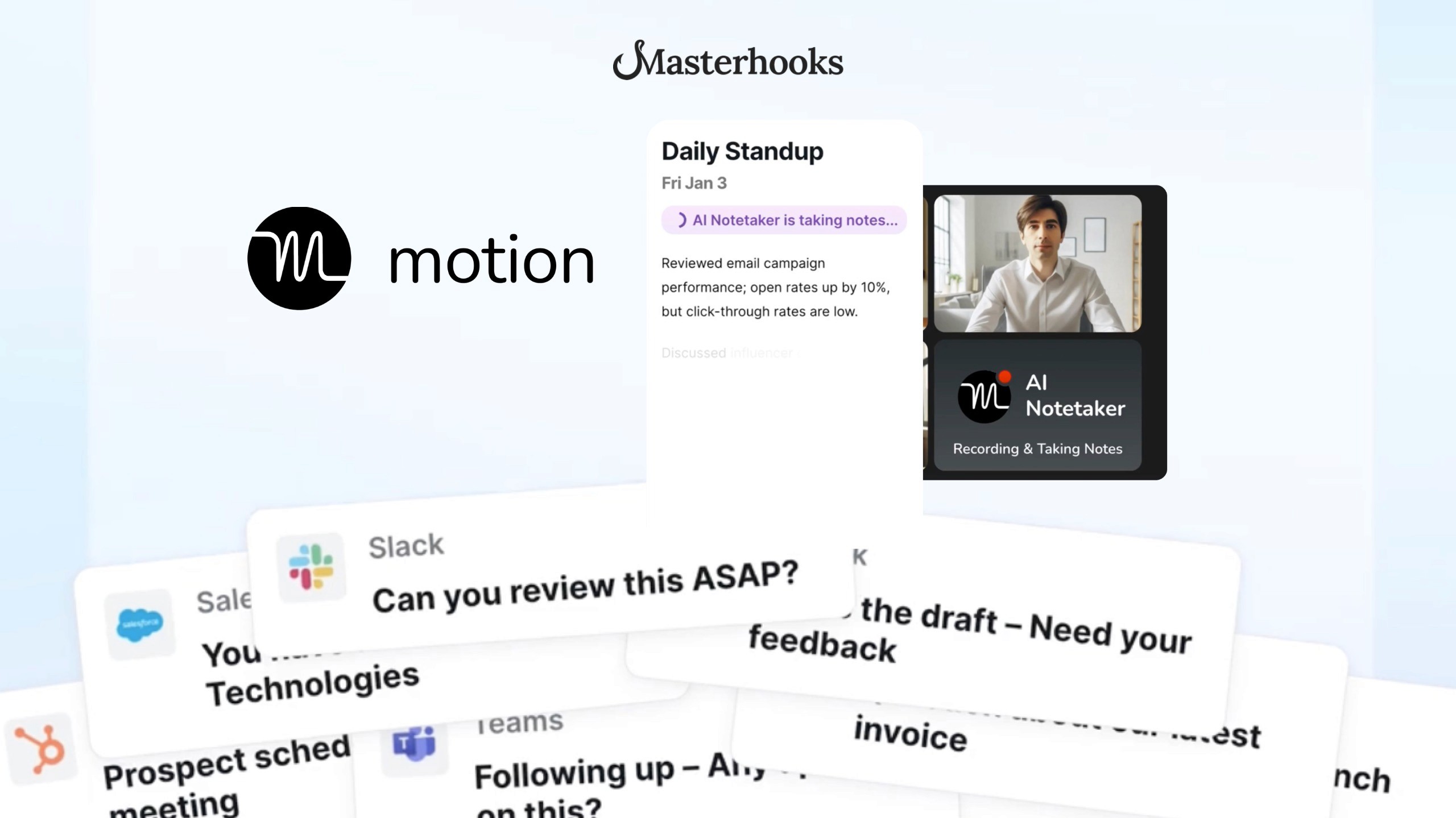
This is How Motion Wins on TikTok: 3 UGC Hook Strategies
This is How Motion Wins on TikTok: 3 UGC Hook Strategies
Most productivity apps lead with features. Motion leads with the problem — and 3 specific hook strategies explain why that converts.
Published:

Read Time:

1 min

Written by:
Fawwaz
Trend Research and Copywriter
PEOPLE DON'T BUY FEATURES
The fastest-growing products connect with pain points first and explain functionality second.
PEOPLE DON'T BUY FEATURES
The fastest-growing products connect with pain points first and explain functionality second.
PEOPLE DON'T BUY FEATURES
The fastest-growing products connect with pain points first and explain functionality second.
These three UGC hook strategies are built around leading with the emotional reality first, and letting the product enter as the explanation for how that reality can change.
Why Most Productivity App UGC Underperforms

The standard productivity app ad follows a predictable structure: a clean screen recording, a voiceover listing features, and a CTA asking viewers to start a free trial. This format fails not because the product is unconvincing, but because it opens with the solution before the viewer has felt the problem.
On TikTok and Reels, the viewer is not in a buying mindset. They're in a scrolling mindset. An ad that leads with a feature demo requires the viewer to bridge from "here is a feature" to "this is relevant to my life" on their own, in under two seconds. Most don't.

High-performing UGC for productivity apps inverts this structure: lead with the problem, the emotion, or the relatable moment first. The product enters as the answer to something the viewer is already feeling.
Strategy 1: The ADHD Brain Hook
Why it works:
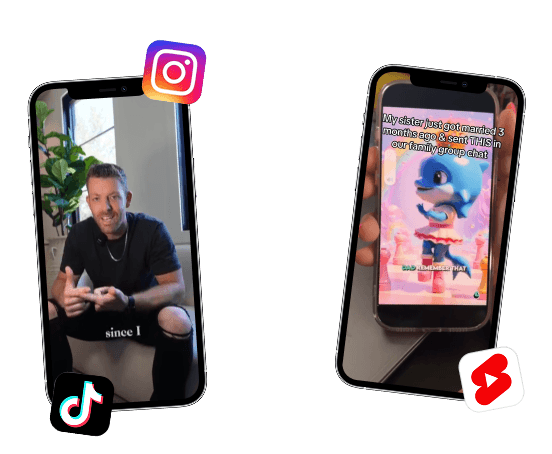
The ADHD creator-to-camera format has consistently generated strong engagement because it taps into a specific and underserved identity. Viewers who struggle with focus, task-switching, and time blindness feel immediately seen — and a tool that addresses those specific friction points feels like a personal recommendation rather than an ad.
How to execute it:
The creator speaks directly to camera in a confessional, low-production style — the format that feels like a friend sharing something that actually works rather than a brand pushing a product. The hook leads with the identity: "Tactic I've had to develop with my ADHD brain" or "Productivity system for people whose brain won't cooperate."
The body of the video walks through the specific workflow the creator uses — where Motion fits is as one component of a genuine daily system, not the centerpiece of a feature demo. The key detail is specificity: vague claims about "staying organized" are easy to scroll past; specific claims about how long a task used to take before vs. after are not.
What to avoid:
Scripted language that sounds like a product brief rather than a real person talking. If the hook sounds like it came from a marketing deck, it loses the authenticity that makes this format work.
Strategy 2: The Burnout Recovery Hook
Why it works:
Burnout has become one of the most widely shared emotional experiences among working adults and knowledge workers. Content that addresses it directly generates saves and shares at rates that feature-focused content rarely matches, because people forward it to colleagues or bookmark it for themselves.
How to execute it:
This format works equally well as a short video or a photo carousel with captions. The hook leads with the shared experience: "The easy way to stop ending every week feeling like you failed" or "What I changed when I realized I was working more but getting less done."
The format follows a relatable sequence of changes and positions Motion as part of a broader system. The strongest framing focuses on a specific use case rather than promoting Motion directly.
It works because it teaches a useful idea that feels relevant to the viewer, while the product recommendation appears naturally as part of the solution.
Strategy 3: The Deadline Rush Hook
Why it works: The "forgotten deadline" POV is one of the most universally relatable moments in professional life. The visceral anxiety of realizing something is due and you're not ready creates an immediate emotional response — and content that captures that moment authentically generates strong watch-through rates because viewers want to see how it resolves.
How to execute it:
The creator opens mid-situation: already stressed, already moving fast, clearly behind. The visual pacing reflects the emotional state — quick cuts, slightly chaotic energy, the physical sensation of being under pressure. Motion enters not as a rescue but as a tool that makes the chaos manageable: "Even with three things due by 5pm, at least I can see exactly what needs to happen in what order."
The key distinction:
Motion doesn't save the creator from the deadline. It gives them clarity inside the chaos. That's a more honest and more believable product claim than "Motion will fix your time management," and believable claims convert better than aspirational ones.
The Underlying Pattern Across All Three
Each of these formats leads with an emotional reality that the target audience is already living and positions Motion as something that makes that reality more manageable rather than something that eliminates it entirely.
The difference between content that converts and content that gets skipped is often this: does the viewer feel understood before they're asked to consider the product? These three hook structures are designed to answer yes in the first three seconds.

Building UGC for an AI app and trying to find hook angles that consistently convert to installs?
Building UGC for an AI app and trying to find hook angles that consistently convert to installs?
These three UGC hook strategies are built around leading with the emotional reality first, and letting the product enter as the explanation for how that reality can change.
Why Most Productivity App UGC Underperforms
The standard productivity app ad follows a predictable structure: a clean screen recording, a voiceover listing features, and a CTA asking viewers to start a free trial. This format fails not because the product is unconvincing, but because it opens with the solution before the viewer has felt the problem.
On TikTok and Reels, the viewer is not in a buying mindset. They're in a scrolling mindset. An ad that leads with a feature demo requires the viewer to bridge from "here is a feature" to "this is relevant to my life" on their own, in under two seconds. Most don't.
High-performing UGC for productivity apps inverts this structure: lead with the problem, the emotion, or the relatable moment first. The product enters as the answer to something the viewer is already feeling.
Strategy 1: The ADHD Brain Hook
Why it works:
The ADHD creator-to-camera format has consistently generated strong engagement because it taps into a specific and underserved identity. Viewers who struggle with focus, task-switching, and time blindness feel immediately seen — and a tool that addresses those specific friction points feels like a personal recommendation rather than an ad.
How to execute it:
The creator speaks directly to camera in a confessional, low-production style — the format that feels like a friend sharing something that actually works rather than a brand pushing a product. The hook leads with the identity: "Tactic I've had to develop with my ADHD brain" or "Productivity system for people whose brain won't cooperate."
The body of the video walks through the specific workflow the creator uses — where Motion fits is as one component of a genuine daily system, not the centerpiece of a feature demo. The key detail is specificity: vague claims about "staying organized" are easy to scroll past; specific claims about how long a task used to take before vs. after are not.
What to avoid:
Scripted language that sounds like a product brief rather than a real person talking. If the hook sounds like it came from a marketing deck, it loses the authenticity that makes this format work.
Strategy 2: The Burnout Recovery Hook
Why it works:
Burnout has become one of the most widely shared emotional experiences among working adults and knowledge workers. Content that addresses it directly generates saves and shares at rates that feature-focused content rarely matches, because people forward it to colleagues or bookmark it for themselves.
How to execute it:
This format works equally well as a short video or a photo carousel with captions. The hook leads with the shared experience: "The easy way to stop ending every week feeling like you failed" or "What I changed when I realized I was working more but getting less done."
The format follows a relatable sequence of changes and positions Motion as part of a broader system. The strongest framing focuses on a specific use case rather than promoting Motion directly.
It works because it teaches a useful idea that feels relevant to the viewer, while the product recommendation appears naturally as part of the solution.
Strategy 3: The Deadline Rush Hook
Why it works: The "forgotten deadline" POV is one of the most universally relatable moments in professional life. The visceral anxiety of realizing something is due and you're not ready creates an immediate emotional response — and content that captures that moment authentically generates strong watch-through rates because viewers want to see how it resolves.
How to execute it:
The creator opens mid-situation: already stressed, already moving fast, clearly behind. The visual pacing reflects the emotional state — quick cuts, slightly chaotic energy, the physical sensation of being under pressure. Motion enters not as a rescue but as a tool that makes the chaos manageable: "Even with three things due by 5pm, at least I can see exactly what needs to happen in what order."
The key distinction:
Motion doesn't save the creator from the deadline. It gives them clarity inside the chaos. That's a more honest and more believable product claim than "Motion will fix your time management," and believable claims convert better than aspirational ones.
The Underlying Pattern Across All Three
Each of these formats leads with an emotional reality that the target audience is already living and positions Motion as something that makes that reality more manageable rather than something that eliminates it entirely.
The difference between content that converts and content that gets skipped is often this: does the viewer feel understood before they're asked to consider the product? These three hook structures are designed to answer yes in the first three seconds.
Building UGC for an AI app and trying to find hook angles that consistently convert to installs?
Related Reading


Need help scaling?
Book a strategy call with our expert team to audit your current UGC setup.
Related Reading

How Marvel Built a 2.86 Billion Reach UGC Machine for Spider-Man: Brand New Day
Discover how Marvel generated 2.86 billion social reach for Spider-Man: Brand New Day using fan contests, brand partnerships, and emotional storytelling.
4 min
|
How Marvel Built a 2.86 Billion Reach UGC Machine for Spider-Man: Brand New Day
Discover how Marvel generated 2.86 billion social reach for Spider-Man: Brand New Day using fan contests, brand partnerships, and emotional storytelling.
4 min
|

How Latin America Became Spain's UGC Army at the World Cup Final
Spain won the World Cup, but its biggest advantage was millions of unpaid creators. Learn why emotional stakes generate stronger UGC than budgets.
2 min
|
How Latin America Became Spain's UGC Army at the World Cup Final
Spain won the World Cup, but its biggest advantage was millions of unpaid creators. Learn why emotional stakes generate stronger UGC than budgets.
2 min
|

Top 10 Best UGC Agencies in America (2026)
We ranked the top 10 UGC agencies in the US by model type creator quality and paid social performance. See who made the cut and why.
7 min
|
Top 10 Best UGC Agencies in America (2026)
We ranked the top 10 UGC agencies in the US by model type creator quality and paid social performance. See who made the cut and why.
7 min
|