



Why the D23 X-Men Ensemble Reveal Generated More UGC in 24 Hours Than Most Film Trailers Generate in a Week
Why the D23 X-Men Ensemble Reveal Generated More UGC in 24 Hours Than Most Film Trailers Generate in a Week
The X-Men cast reveal activated multiple fan communities at once. Here is how brands can use the same structure to generate more UGC.
Published:

Read Time:

5 min

Written by:
Fawwaz
Trend Research and Copywriter
NOT JUST ONE, BUT MANY GROUPS
Movie announcements typically target only one audience group, but the X-Men announcement at D23 engaged multiple groups at once. This made it more than just a single announcement, but a series of announcements happening simultaneously.
NOT JUST ONE, BUT MANY GROUPS
Movie announcements typically target only one audience group, but the X-Men announcement at D23 engaged multiple groups at once. This made it more than just a single announcement, but a series of announcements happening simultaneously.
NOT JUST ONE, BUT MANY GROUPS
Movie announcements typically target only one audience group, but the X-Men announcement at D23 engaged multiple groups at once. This made it more than just a single announcement, but a series of announcements happening simultaneously.
When Kevin Feige introduced the new X-Men cast at the 2026 Disney D23 event, each name mentioned brought with it its own fan base, history, references, and expectations. Sadie Sink drew Stranger Things fans into the conversation. Kit Connor brought in Heartstopper fans. Inde Navarrette drew in viewers familiar with Obsession. Meanwhile, Adam Driver has a fan base that needs no introduction.
The Announcement Was Really Seven Entry Points
You need to pay attention to how this announcement was structured. Marvel didn’t just introduce a single actor and then ask the entire internet to react to the same piece of information. Marvel introduced them one by one, giving those present time to react to the announcements of each character.
Sadie Sink
For those already familiar with Sink from Stranger Things, this announcement immediately sparked discussions about what Sadie Sink’s portrayal of Jean Grey or Phoenix in X-Men might look like. Sink did briefly appear as Jean Grey in Spider-Man: Brand New Day, but this remains a hot topic regarding what her performance in X-Men will be like.
Kit Connor
Connor comes with a large fan base that already has an emotional connection to her previous work, so her casting is sure to spark its own round of discussions. Fans can compare her past roles, discuss whether they can envision her in this new role, and create fan content related to the announcement.
Inde Navarrette
Navarrette has opened the door to another discussion through her fan base and previous works, including Obsession. A report on initial reactions to her casting cited a post that reached 1.7 million impressions and 259,000 likes, making it one example of a broader phenomenon. The announcement gave the existing community a reason to discuss something they already understood.
Samara Weaving
Weaving once again appeals to a different audience. Her filmography provides its own points of reference and expectations for moviegoers.
Christopher Abbott
Abbott brings in another audience with a different cultural background. Those who follow independent and arthouse cinema can join the conversation about Marvel from their own perspective.
Adam Driver
Adam Driver’s casting also adds a significant layer of recognition to the announcement.

Each audience group doesn’t need to be an X-Men expert to participate because they already have a reason to pay attention to one aspect of the announcement.
This Is What "Simultaneous Multi-Community Activation" Means
The easiest way to understand how this works is to imagine a typical trailer that might reach:
Marvel fans → reactions → discussions
Meanwhile, an announcement featuring an ensemble cast, like the one X-Men made at D23, can spark discussions not only among Marvel fans, but also:
Stranger Things fans → discussions
Heartstopper fans → discussions
Movie fans → discussion
Communities of fans of specific actors → discussion
Then, these conversations intersect, so someone who sees a post about Kit Connor might stumble upon a discussion about Sadie Sink. Someone discussing Sadie Sink might then start talking about the relationships between various characters. Someone who only knows Adam Driver might suddenly become curious about the rest of the cast.
These communities then begin to influence and connect with one another. This is what creates a much broader conversation than if the announcement had only attracted people for exactly the same reason.
Why a Cast Reveal Can Outperform a Trailer
The reason is that trailers only present snippets of footage that are indeed useful, but they provide direct answers too quickly. This is because the audience can see the characters, the visual style, the dialogue, and even grasp the basic premise. It’s true that there’s still plenty to discuss, but the core material is already relatively set in stone.
Casting announcements work differently. The audience is given a name, and their minds begin to fill in the other details not mentioned in the announcement. It is these imagination that can then prompt them to create content to express their opinions on the details they’ve imagined.
Reactions to trailers often prompt the question, “What do you think?” Whereas casting announcements prompt the question, “What do you think should happen?” It is this second question that is far easier to turn into content.
The Announcement Creates Multiple Content Formats Automatically
This is where the UGC mechanism becomes especially useful, because a single casting announcement can generate:
Reaction content"KIT CONNOR IS ACTUALLY CYCLOPS?" This one is very simple, fast, and native to TikTok, Reels, and even X. |
Casting analysis"Three reasons Kit Connor actually makes sense as Cyclops." Now the creator has moved from reaction into commentary. |
Comparison editsAn actor's previous roles can be edited alongside the newly announced character. |
Fan castingOne announcement can trigger people to start discussing the characters and actors who have not yet been revealed. |
Theory contentCreators can speculate about relationships, storylines, and future announcements. |
With this scheme, the brand does not have to commission each format individually since the announcement itself provides the raw material.
The Communities Do Not Need the Same Motivation
This may be the most important part of the strategy. The fact that Marvel attracts a huge fan base from each of the selected cast members makes the distribution of X-Men content extremely wide-reaching. This is because:
Marvel fans might be interested in the X-Men.
Heartstopper fans might be interested in Kit Connor.
Movie fans might be interested in Adam Driver.
Stranger Things fans might be interested in Sadie Sink.
Although they start out as fans of different things, these people can engage in the same conversation because the figures they admire are gathered in the same place. That’s why simultaneous activations can be more effective than simply trying to reach a wider audience through a single announcement.
The goal isn’t always to expand a single audience group, but rather to give different audience groups a reason to engage in the same conversation.
The Same Mechanism Exists Outside Entertainment
For sure, this mechanism isn’t limited to Marvel. Take a look at Apple’s product launch events, where they rarely hold a major event just to announce a single product.
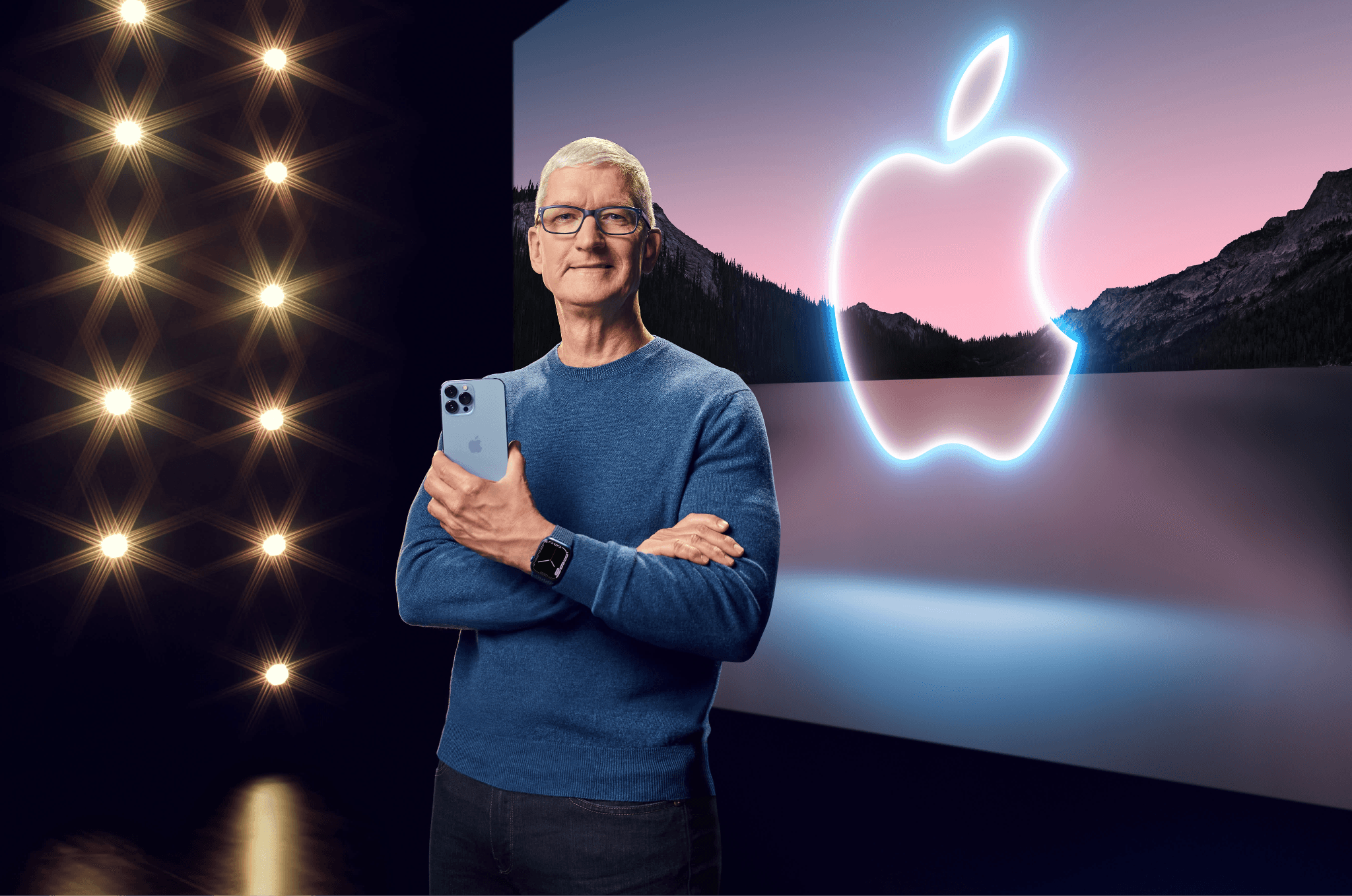
In a single event, they might introduce a new iPhone, Apple Watch, AirPods, software updates, new features, and accessories. This is because each product has its own target audience.
Someone who loves photography will pay more attention to the camera, a runner will be more interested in the Apple Watch features, a content creator will care more about the video capabilities, a developer will focus more on the software, while the average consumer might be more interested in the design.
These announcements thus become a collection of smaller conversations taking place simultaneously, and a similar structure can also be applied by various brands.
How Brands Can Build a Multi-Community Announcement
The valuable lesson isn’t “announce more things,” because doing so without a clear strategy will only create unnecessary information noise. The useful lesson is to identify which communities already have a reason to care, and then provide something specific for each community to respond to.
Step 1: Map your existing communitiesBefore making an announcement, create a list of groups that are already connected to your brand. For example, for a fitness product, these groups might include runners, gym-goers, trainers, fitness beginners, and fitness content creators. Make sure each group has a clear reason to care. |
Step 2: Give each community a specific entry pointA general announcement provides the same information to everyone, whereas a more impactful announcement includes specific details that can capture the attention of different communities. This is because product launch is a single event, but the reasons to talk about it can vary. |
Step 3: Make those entry points easy to turn into contentDon’t just figure out what your audience needs to know, try to figure out what someone could turn into video content. It could be a reaction, a comparison, a challenge, a prediction, a tutorial, a debate, or a personal experience. |
Step 4: Let the communities cross overThe most valuable part happens after the initial wave, when the audience discovers something useful to them and starts talking about it. This discovery encourages communities to start interacting with one another, and this is where a single announcement begins to function as a distribution system |
The Bigger UGC Lesson
The D23 X-Men reveal shows that reach does not always come from pushing one message to a larger audience. Sometimes, it comes from giving different groups their own reasons to share it. One casting announcement became several smaller cultural moments, which then overlapped to create a much larger conversation.

Brands can apply the same idea to product launches, partnerships, and campaigns by identifying communities that already have a reason to care. Masterhooks uses this creator-first approach to build UGC that feels natural within those conversations. The key question is simple: how many different communities could find their own reason to talk about this?
Create your own “Product Ensemble Launch” and scale its distribution now!
Create your own “Product Ensemble Launch” and scale its distribution now!
When Kevin Feige introduced the new X-Men cast at the 2026 Disney D23 event, each name mentioned brought with it its own fan base, history, references, and expectations. Sadie Sink drew Stranger Things fans into the conversation. Kit Connor brought in Heartstopper fans. Inde Navarrette drew in viewers familiar with Obsession. Meanwhile, Adam Driver has a fan base that needs no introduction.
The Announcement Was Really Seven Entry Points
You need to pay attention to how this announcement was structured. Marvel didn’t just introduce a single actor and then ask the entire internet to react to the same piece of information. Marvel introduced them one by one, giving those present time to react to the announcements of each character.
Sadie Sink
For those already familiar with Sink from Stranger Things, this announcement immediately sparked discussions about what Sadie Sink’s portrayal of Jean Grey or Phoenix in X-Men might look like. Sink did briefly appear as Jean Grey in Spider-Man: Brand New Day, but this remains a hot topic regarding what her performance in X-Men will be like.
Kit Connor
Connor comes with a large fan base that already has an emotional connection to her previous work, so her casting is sure to spark its own round of discussions. Fans can compare her past roles, discuss whether they can envision her in this new role, and create fan content related to the announcement.
Inde Navarrette
Navarrette has opened the door to another discussion through her fan base and previous works, including Obsession. A report on initial reactions to her casting cited a post that reached 1.7 million impressions and 259,000 likes, making it one example of a broader phenomenon. The announcement gave the existing community a reason to discuss something they already understood.
Samara Weaving
Weaving once again appeals to a different audience. Her filmography provides its own points of reference and expectations for moviegoers.
Christopher Abbott
Abbott brings in another audience with a different cultural background. Those who follow independent and arthouse cinema can join the conversation about Marvel from their own perspective.
Adam Driver
Adam Driver’s casting also adds a significant layer of recognition to the announcement.
Each audience group doesn’t need to be an X-Men expert to participate because they already have a reason to pay attention to one aspect of the announcement.
This Is What "Simultaneous Multi-Community Activation" Means
The easiest way to understand how this works is to imagine a typical trailer that might reach:
Marvel fans → reactions → discussions
Meanwhile, an announcement featuring an ensemble cast, like the one X-Men made at D23, can spark discussions not only among Marvel fans, but also:
Stranger Things fans → discussions
Heartstopper fans → discussions
Movie fans → discussion
Communities of fans of specific actors → discussion
Then, these conversations intersect, so someone who sees a post about Kit Connor might stumble upon a discussion about Sadie Sink. Someone discussing Sadie Sink might then start talking about the relationships between various characters. Someone who only knows Adam Driver might suddenly become curious about the rest of the cast.
These communities then begin to influence and connect with one another. This is what creates a much broader conversation than if the announcement had only attracted people for exactly the same reason.
Why a Cast Reveal Can Outperform a Trailer
The reason is that trailers only present snippets of footage that are indeed useful, but they provide direct answers too quickly. This is because the audience can see the characters, the visual style, the dialogue, and even grasp the basic premise. It’s true that there’s still plenty to discuss, but the core material is already relatively set in stone.
Casting announcements work differently. The audience is given a name, and their minds begin to fill in the other details not mentioned in the announcement. It is these imagination that can then prompt them to create content to express their opinions on the details they’ve imagined.
Reactions to trailers often prompt the question, “What do you think?” Whereas casting announcements prompt the question, “What do you think should happen?” It is this second question that is far easier to turn into content.
The Announcement Creates Multiple Content Formats Automatically
This is where the UGC mechanism becomes especially useful, because a single casting announcement can generate:
Reaction content"KIT CONNOR IS ACTUALLY CYCLOPS?" This one is very simple, fast, and native to TikTok, Reels, and even X. |
Casting analysis"Three reasons Kit Connor actually makes sense as Cyclops." Now the creator has moved from reaction into commentary. |
Comparison editsAn actor's previous roles can be edited alongside the newly announced character. |
Fan castingOne announcement can trigger people to start discussing the characters and actors who have not yet been revealed. |
Theory contentCreators can speculate about relationships, storylines, and future announcements. |
With this scheme, the brand does not have to commission each format individually since the announcement itself provides the raw material.
The Communities Do Not Need the Same Motivation
This may be the most important part of the strategy. The fact that Marvel attracts a huge fan base from each of the selected cast members makes the distribution of X-Men content extremely wide-reaching. This is because:
Marvel fans might be interested in the X-Men.
Heartstopper fans might be interested in Kit Connor.
Movie fans might be interested in Adam Driver.
Stranger Things fans might be interested in Sadie Sink.
Although they start out as fans of different things, these people can engage in the same conversation because the figures they admire are gathered in the same place. That’s why simultaneous activations can be more effective than simply trying to reach a wider audience through a single announcement.
The goal isn’t always to expand a single audience group, but rather to give different audience groups a reason to engage in the same conversation.
The Same Mechanism Exists Outside Entertainment
For sure, this mechanism isn’t limited to Marvel. Take a look at Apple’s product launch events, where they rarely hold a major event just to announce a single product.
In a single event, they might introduce a new iPhone, Apple Watch, AirPods, software updates, new features, and accessories. This is because each product has its own target audience.
Someone who loves photography will pay more attention to the camera, a runner will be more interested in the Apple Watch features, a content creator will care more about the video capabilities, a developer will focus more on the software, while the average consumer might be more interested in the design.
These announcements thus become a collection of smaller conversations taking place simultaneously, and a similar structure can also be applied by various brands.
How Brands Can Build a Multi-Community Announcement
The valuable lesson isn’t “announce more things,” because doing so without a clear strategy will only create unnecessary information noise. The useful lesson is to identify which communities already have a reason to care, and then provide something specific for each community to respond to.
Step 1: Map your existing communitiesBefore making an announcement, create a list of groups that are already connected to your brand. For example, for a fitness product, these groups might include runners, gym-goers, trainers, fitness beginners, and fitness content creators. Make sure each group has a clear reason to care. |
Step 2: Give each community a specific entry pointA general announcement provides the same information to everyone, whereas a more impactful announcement includes specific details that can capture the attention of different communities. This is because product launch is a single event, but the reasons to talk about it can vary. |
Step 3: Make those entry points easy to turn into contentDon’t just figure out what your audience needs to know, try to figure out what someone could turn into video content. It could be a reaction, a comparison, a challenge, a prediction, a tutorial, a debate, or a personal experience. |
Step 4: Let the communities cross overThe most valuable part happens after the initial wave, when the audience discovers something useful to them and starts talking about it. This discovery encourages communities to start interacting with one another, and this is where a single announcement begins to function as a distribution system |
The Bigger UGC Lesson
The D23 X-Men reveal shows that reach does not always come from pushing one message to a larger audience. Sometimes, it comes from giving different groups their own reasons to share it. One casting announcement became several smaller cultural moments, which then overlapped to create a much larger conversation.
Brands can apply the same idea to product launches, partnerships, and campaigns by identifying communities that already have a reason to care. Masterhooks uses this creator-first approach to build UGC that feels natural within those conversations. The key question is simple: how many different communities could find their own reason to talk about this?
Create your own “Product Ensemble Launch” and scale its distribution now!
Related Reading
Related Reading

Why Pretty Little Liars and The Love Hypothesis Are Going Viral in the Same Week
5 min
|
Why Pretty Little Liars and The Love Hypothesis Are Going Viral in the Same Week
Learn how Pretty Little Liars and The Love Hypothesis turn fans into engines for fan-generated content, and what brands can learn about community-led growth.
5 min
|

What Is a Content Pillar? (And How to Build One That Actually Works for UGC)
4 min
|
What Is a Content Pillar? (And How to Build One That Actually Works for UGC)
Learn what a content pillar is, why it matters for UGC, and how to build a practical content pillar strategy with creator briefs and real examples.
4 min
|

First Day of Fall, First Day of Content: The UGC Formats That Win in October
4 min
|
First Day of Fall, First Day of Content: The UGC Formats That Win in October
Discover five October UGC formats brands can use this fall, from seasonal transitions and cozy routines to Halloween teasers and reset content.
4 min
|


Need help scaling?
Book a strategy call with our expert team to audit your current UGC setup.

